
Running a clean, safe business facility is not a passive outcome — it requires intentional systems. The businesses that consistently maintain high facility standards are not simply lucky or naturally tidy; they have built deliberate approaches to cleanliness that operate reliably regardless of who is in the building on any given day.
Here are five practical strategies that make the most difference in commercial facility cleanliness and safety.
1. Implement a Professional Janitorial Program
The foundation of any clean commercial facility is a professional, contracted janitorial service with a documented scope of work. In-house cleaning — whether by employees informally, a part-time cleaner, or a rotating staff responsibility — consistently underperforms professional service on both quality and consistency.
What a professional janitorial service provides that informal arrangements do not:
Documented procedures: Professional cleaning follows defined processes for each area of the facility — not whatever the cleaner happens to remember or feel like doing. Documentation makes cleaning auditable and correctable.
Commercial-grade products: Consumer cleaning products cannot match the efficacy of commercial-grade disinfectants and cleaning chemicals. A professional service uses products appropriate to each surface type and environment.
Accountability: A contracted cleaning company is accountable for results in a way that an employee performing cleaning duties as a secondary task is not. When standards slip, there is a defined recourse.
Consistency: Professional service happens on schedule regardless of individual circumstances — illness, turnover, holidays. The service happens because it is a contract obligation.
The businesses that try to save money by handling cleaning in-house typically end up with a facility that consistently falls below their own standards — and eventually pay more in remediation costs than a professional program would have cost.
2. Establish High-Touch Surface Disinfection Protocols
Standard janitorial cleaning removes visible soil and general surface contamination. It does not systematically address the specific surfaces that carry the highest pathogen loads in any commercial environment.
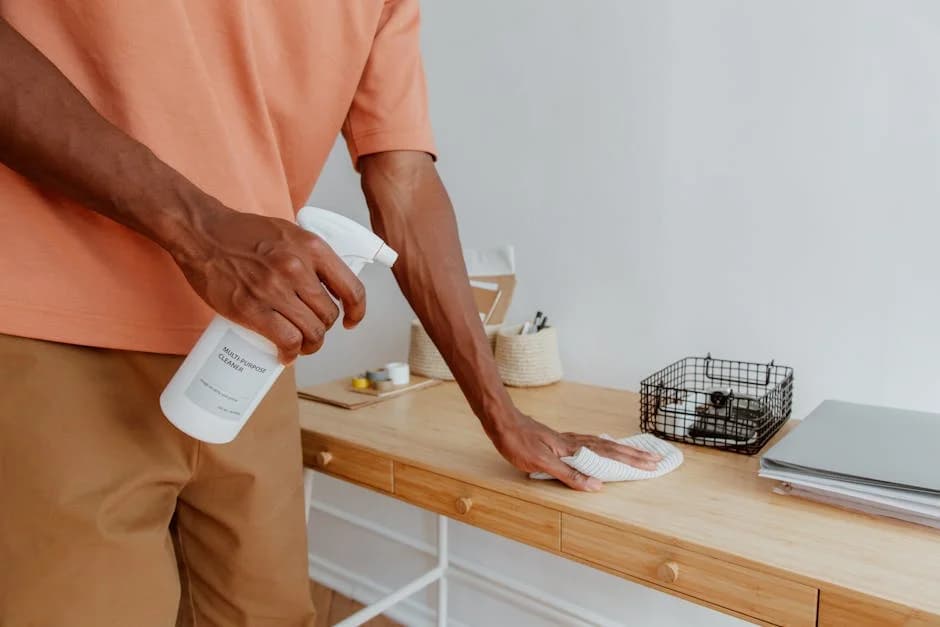
High-touch surfaces — door handles, light switches, elevator buttons, shared keyboards and mice, restroom fixtures, break room appliances, and conference room controls — receive the most contact and therefore accumulate the highest concentrations of pathogens. Without specific disinfection protocols targeting these surfaces, a facility can be visibly clean while remaining a significant transmission environment.
Effective high-touch surface disinfection requires:
- Identification of all high-touch surfaces in each area of the facility
- Regular disinfection with EPA-registered products (not just cleaning)
- Proper dwell time — the disinfectant must remain wet on the surface long enough to work
- Frequency appropriate to traffic volume (high-traffic areas may need multiple daily treatments)
Adding explicit high-touch surface disinfection to your cleaning program is one of the most direct ways to reduce illness transmission and protect employee health.
3. Create and Enforce Entrance Protocols
The entrance is where most soil enters your facility. Up to 80% of interior floor soil is tracked in from outside. Every visitor, employee, and vendor who enters brings with them whatever they have walked through.
Effective entrance protocols include:
Matting systems: Both outside and inside every entrance. Outdoor mats capture coarse debris; indoor absorptive mats capture remaining soil and moisture. Mats must be properly sized (industry standard is 15+ feet of matting at each entrance) and regularly cleaned — a dirty mat becomes a source of soil rather than a barrier.
Shoe cleaning areas: In facilities with particularly sensitive environments (food production, healthcare, cleanrooms), specific protocols for footwear at entrances may be appropriate.
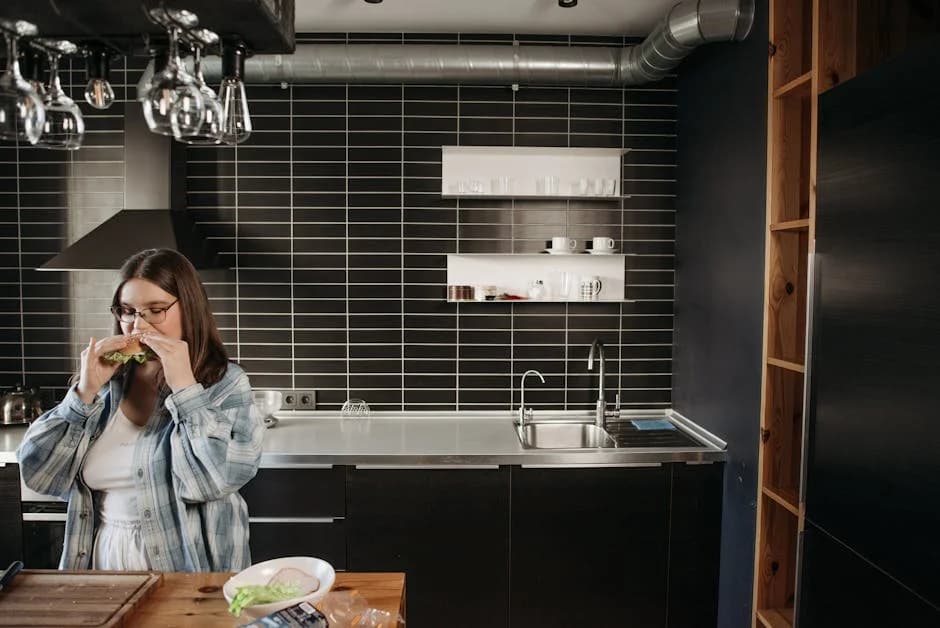
No-food-outside-designated-areas policies: Controlling where food is consumed controls where food soiling occurs. Common areas, break rooms, and cafeterias contain food soiling to manageable zones; open food consumption throughout a facility creates cleaning challenges throughout.
Visitor management: Controlling who enters your facility and when reduces the uncontrolled introduction of contaminants from external sources.
4. Maintain Floor Care Standards
Floors are the most visible surface in any commercial facility and the primary indicator of whether a facility is truly maintained. Floor care is also the area where deferred maintenance creates the most expensive long-term consequences.
A comprehensive floor care program includes:
Daily maintenance: Dust mopping and damp mopping for hard surfaces; daily vacuuming for carpet. The basics, done consistently.
Periodic restorative service: Strip and wax for VCT; encapsulation and extraction for carpet; appropriate restorative care for specialty surfaces. These services cannot be deferred indefinitely — the longer they are deferred, the more intensive and expensive the eventual restoration becomes.
Matting at transitions: Protecting high-value flooring from tracked-in soil at every entry point.
Immediate spill response: Spills on hard surfaces become slip hazards and staining risks if not addressed promptly. Spills on carpet set permanently if not treated quickly.
Floor care is an investment in facility assets that pay back through extended floor life and consistently professional appearance.
5. Address Restrooms as a Priority — Not an Afterthought
In virtually every facility type, restrooms are the single most important indicator of overall cleanliness standards in the minds of visitors, clients, and employees. Studies consistently show that restroom cleanliness has more impact on facility perception than any other single factor.
Yet restrooms are often the area where cleaning programs cut corners — serviced only once per shift, inadequately stocked, or cleaned quickly without thorough disinfection of all surfaces.
Keeping restrooms at a genuinely high standard requires:
Frequency appropriate to traffic: A single daily cleaning is inadequate for high-traffic restrooms. Multiple service visits per day — with documented check times — is the standard for any facility with meaningful daily traffic.
Complete disinfection, not just surface cleaning: All restroom fixtures, handles, dispensers, and high-touch surfaces require disinfection with appropriate contact time. Cleaning without disinfection in a restroom environment is cosmetic, not hygienic.
Consistent stocking: Running out of soap, paper, or hand drying supplies mid-day is both inconvenient and a health concern. Proactive restocking prevents outages.
Odor management: Odors in restrooms indicate inadequate cleaning, poor ventilation, or both. A properly cleaned and ventilated restroom does not have persistent odors.
Regular deep cleaning: Daily service does not address accumulated buildup in grout, behind fixtures, and in areas daily cleaning does not reach. Scheduled deep cleaning sessions maintain the surfaces that daily service cannot.
Mega Service Solutions helps businesses throughout Tampa Bay implement all five of these strategies through professional cleaning programs designed for each facility's specific needs. From daily janitorial service to specialized floor care, we deliver the consistent, professional standards that make a facility genuinely clean and safe. Request a quote and find out what a properly designed cleaning program looks like for your business.
Frequently Asked Questions
What should businesses know about 5 ways to keep your business clean and safe?
Professional 5 ways to keep your business clean and safe from Mega Service Solutions is tailored to your facility's specific needs and industry requirements. We conduct a free facility assessment before recommending a service plan, ensuring the scope, frequency, and methods match your operational environment. All services are performed by trained, background-checked crews using commercial-grade equipment.
How much does professional 5 ways to keep your business clean and safe cost for a commercial facility?
Cost depends on facility size, service frequency, scope of work, and access requirements. Mega Service Solutions provides free, no-obligation assessments and custom quotes for every facility. Call (813) 501-5001 or submit a quote request at megasvs.com to receive a proposal tailored to your facility.
Does Mega Service Solutions serve businesses throughout Florida?
Yes. Mega Service Solutions is headquartered in Tampa, FL and serves businesses statewide — including Tampa, Orlando, Miami, Jacksonville, Fort Lauderdale, Clearwater, St. Petersburg, Sarasota, Fort Myers, Naples, Tallahassee, Boca Raton, and Hollywood. We also serve clients nationwide. Call (813) 501-5001 or visit megasvs.com/get-a-quote to request a free assessment.
How do I get a quote from Mega Service Solutions?
Getting a quote is simple. Call us at (813) 501-5001 (available 24/7) or submit a request at megasvs.com/get-a-quote. We'll schedule a free, no-obligation facility walkthrough, assess your needs, and provide a custom proposal within 24–48 hours. There's no commitment required.
Written by
Mega Service Solutions
Tampa’s SBE & MBE certified commercial cleaning experts. Serving 500+ businesses across Florida. Learn more about our team and commitment to quality.
About our team →