Commercial kitchens do not stay clean on their own between professional service visits. Grease accumulates by the hour during active cooking. Food residue hardens on equipment surfaces within a shift. Drain buildup starts immediately after each service. Without consistent daily and weekly maintenance by kitchen staff, professional cleaning appointments are playing catch-up rather than resetting a well-maintained space.
This guide covers the practical maintenance tasks that restaurant operators and food service managers should implement as part of daily operations — not as a replacement for professional commercial kitchen cleaning, but as the layer of maintenance that makes professional service more effective and extends the interval between full deep cleans.
The Case for Consistent Daily Maintenance
The business argument for daily kitchen maintenance is straightforward: kitchens that are maintained consistently between professional cleanings require less intensive — and less expensive — professional service. Grease that is wiped daily never becomes the baked-on, chemically resistant accumulation that requires significant labor to remove. Drain buildup addressed daily never becomes the blockage that causes operational disruption.
There is also a compliance argument. Health inspectors evaluate kitchens in their current operating condition, not on the day after professional cleaning. A kitchen that maintains consistent daily cleanliness passes routine inspections regardless of when the last professional deep clean occurred. A kitchen that relies exclusively on periodic deep cleaning will show degradation during routine operation.
Daily Maintenance Tasks by Area
Cooking Equipment
Flat tops and griddles: Clean with a griddle brick or appropriate scraper while still hot enough to prevent grease from re-solidifying, then wipe with a damp cloth and dry. Apply a light oil film if appropriate for the equipment. Never use abrasive tools on non-stick or seasoned surfaces.
Fryers: Check oil condition daily. Skim debris from oil after each service. Filter oil according to the manufacturer's recommendation — typically daily or after every 8–12 hours of use. At the end of service, wipe exterior surfaces and surrounding area. Conduct a full fryer boil-out weekly or when oil is completely changed.
Ranges and burners: Wipe down range exterior surfaces at end of service. Remove grates and drip pans, wipe clean, and replace. Accumulated spills on range surfaces harden quickly and become significantly harder to remove.
Ovens: Wipe interior surfaces at end of service or at minimum weekly if the oven is not heavily used. Oven interiors accumulate carbonized food residue that, if not removed regularly, builds up into a layer that affects oven performance and creates smoke and odor.
Grills and broilers: Brush grill grates while hot after service. Remove and clean grates weekly, cleaning the interior tray and burner areas.
Prep Surfaces
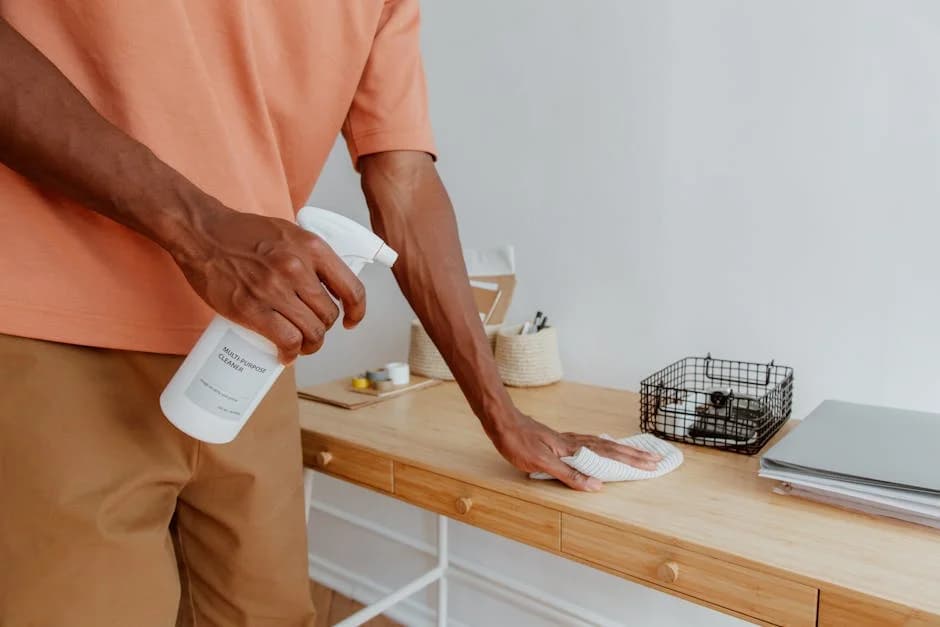
Food contact surfaces — cutting boards, prep tables, stainless counters — must be cleaned and sanitized before each use, after contact with different food categories (raw proteins especially), and at the end of each shift. This is a regulatory requirement, not a recommendation.
Use a three-step process:
- Scrape and rinse visible debris
- Apply food-safe cleaner and scrub
- Apply food-safe sanitizer at appropriate concentration and allow dwell time per product label
Hood Filters
Hood filters should be inspected and cleaned regularly, with frequency determined by cooking volume and type:
- High-volume cooking operations (full-service restaurants, high-temperature cooking): weekly cleaning of hood filters
- Moderate-volume operations: every two weeks
- Lower-volume operations (cafeterias, limited cooking): monthly
Filter cleaning involves removing filters from the hood, soaking in hot alkaline degreaser solution, scrubbing, rinsing thoroughly, and replacing when fully dried or with dry backup filters to prevent grease migration during the cleaning window.
This is a maintenance task that can be performed by kitchen staff. However, the hood system interior — plenum, ductwork, and exhaust fan — requires professional hood cleaning service at intervals specified by NFPA 96. Filter cleaning by staff does not substitute for professional hood system service.
Floors and Drains
Commercial kitchen floors require more than standard mopping. Kitchen floors accumulate grease that standard mopping with a neutral cleaner does not remove effectively.
Daily floor protocol:
- Sweep or scrape all solid debris from floor surface
- Apply appropriate commercial degreaser to floor surface
- Allow dwell time as specified on product label
- Scrub with a deck brush — do not mop without scrubbing, as mopping simply redistributes grease
- Rinse thoroughly and allow to dry or squeegee dry
Floor drains require daily cleaning. Remove the drain cover and rinse the drain, removing any debris. Weekly, pour an enzymatic drain treatment into drains to break down organic buildup that creates odor and eventually contributes to blockage. This is an inexpensive, straightforward preventive measure.
Drain note: Excessive grease disposal down drains — including rinse water from cooking equipment — accelerates grease trap buildup and can result in drain blockages. Liquid grease should be disposed of in designated grease containers, not rinsed into the drain.
Walls and Splash Zones
Cooking produces grease vapor and splatter that settles on all surfaces within range of the cooking area. At end of service or at minimum weekly, wipe down:
- Wall tile from the cooking line to the height of the hood
- Equipment sides and backs that face the cooking line
- Splash guards and dividers between stations
These surfaces are commonly overlooked because they are not cooking surfaces, but grease accumulation on walls contributes to the overall grease load in the kitchen environment and becomes a fire risk and health inspection concern.
Refrigeration and Cold Storage
Walk-in coolers and freezers:
- Clean spills immediately — organic material in cold storage grows mold quickly
- Weekly: wipe shelving surfaces, check and clean door gaskets, sweep and mop floor
- Monthly: deep clean including moving items off shelving for full wipe-down, cleaning interior walls, inspecting gaskets for damage
Reach-in refrigerators and prep coolers:
- Clean exterior handles and door frames daily
- Weekly: remove shelves and wipe interior, clean door gaskets
Gaskets deserve particular attention. Torn or dirty door gaskets on refrigeration equipment allow warm air infiltration, affect temperature control, and create surfaces where mold grows readily. Inspect gaskets weekly and replace damaged gaskets promptly.
Stainless Steel Equipment Maintenance
Stainless steel is the dominant surface material in commercial kitchens. Maintaining it correctly involves:
- Use cleaners appropriate for stainless — avoid chlorine-based cleaners on stainless steel as chlorine can cause pitting and staining
- Always wipe with the grain (direction of the metal finish) to avoid scratching
- Dry after cleaning to prevent water spotting and mineral deposits
- Apply a light coat of stainless steel polish periodically to protect the surface and make subsequent cleaning easier
Polished and clean stainless steel also matters for health inspection — inspectors look for the condition of equipment surfaces as an indicator of overall sanitation practices.
Weekly Maintenance Tasks
Beyond daily tasks, weekly attention is needed for:
- Full disassembly and cleaning of fryer units (boil-out procedure)
- Behind and underneath movable equipment — move equipment and clean the floor and wall behind it
- Inside cabinets and storage areas
- Exhaust fans in the kitchen area
- Ice machine exterior surfaces and dispenser nozzles
- Full cleaning of walk-in cooler and freezer interiors per the protocol above
When to Schedule Professional Cleaning
Daily and weekly maintenance by staff cannot replace professional commercial kitchen cleaning. The tasks that require professional service include:
Hood system deep cleaning — full interior of hood plenum, ductwork from hood to exterior, and exhaust fan housing. This requires specialized chemical and mechanical treatment that kitchen staff are not equipped to perform. NFPA 96 intervals must be followed for fire code compliance.
Grease trap service — pumping and cleaning of the grease trap requires a licensed hauler. Frequency depends on volume and local requirements.
Deep equipment cleaning — periodic disassembly and cleaning of equipment that cannot be fully cleaned during routine service, including behind panels and in internal components.
Floor scrubbing and degreasing — professional floor machines produce results that manual scrubbing cannot match, particularly for tile grout and concrete flooring.
Pressure washing — exterior kitchen areas, grease pads, dumpster enclosures, and loading docks accumulate grease and organic material that requires commercial pressure washing to address effectively.
Coordinate with your professional cleaning vendor to ensure that staff maintenance tasks and professional cleaning intervals work together. A well-maintained kitchen requires both.
If your kitchen needs a deep cleaning reset or you want to establish a professional cleaning schedule that coordinates with your staff maintenance program, request a quote from Mega Service Solutions. We serve restaurants and food service facilities throughout Tampa Bay.
Frequently Asked Questions
What is included in a professional commercial kitchen cleaning service?
Professional commercial kitchen cleaning covers hood and exhaust cleaning, equipment degreasing, floor drains, grease traps, tile and grout scrubbing, and all food-contact surfaces. Mega Service Solutions follows NFPA 96 standards for hood cleaning and uses commercial-grade degreasers safe for food service environments.
How often do commercial kitchens need to be professionally deep cleaned?
Commercial kitchens in high-volume restaurants typically require monthly hood cleaning and quarterly deep cleans of equipment and surfaces. Lower-volume operations may schedule quarterly hood cleanings. Hillsborough County health inspections evaluate kitchen cleanliness — regular professional cleaning helps maintain compliance and avoid violations.
Does Mega Service Solutions serve businesses throughout Florida?
Yes. Mega Service Solutions is headquartered in Tampa, FL and serves businesses statewide — including Tampa, Orlando, Miami, Jacksonville, Fort Lauderdale, Clearwater, St. Petersburg, Sarasota, Fort Myers, Naples, Tallahassee, Boca Raton, and Hollywood. We also serve clients nationwide. Call (813) 501-5001 or visit megasvs.com/get-a-quote to request a free assessment.
How do I get a quote from Mega Service Solutions?
Getting a quote is simple. Call us at (813) 501-5001 (available 24/7) or submit a request at megasvs.com/get-a-quote. We'll schedule a free, no-obligation facility walkthrough, assess your needs, and provide a custom proposal within 24–48 hours. There's no commitment required.
Written by
Mega Service Solutions
Tampa’s SBE & MBE certified commercial cleaning experts. Serving 500+ businesses across Florida. Learn more about our team and commitment to quality.
About our team →