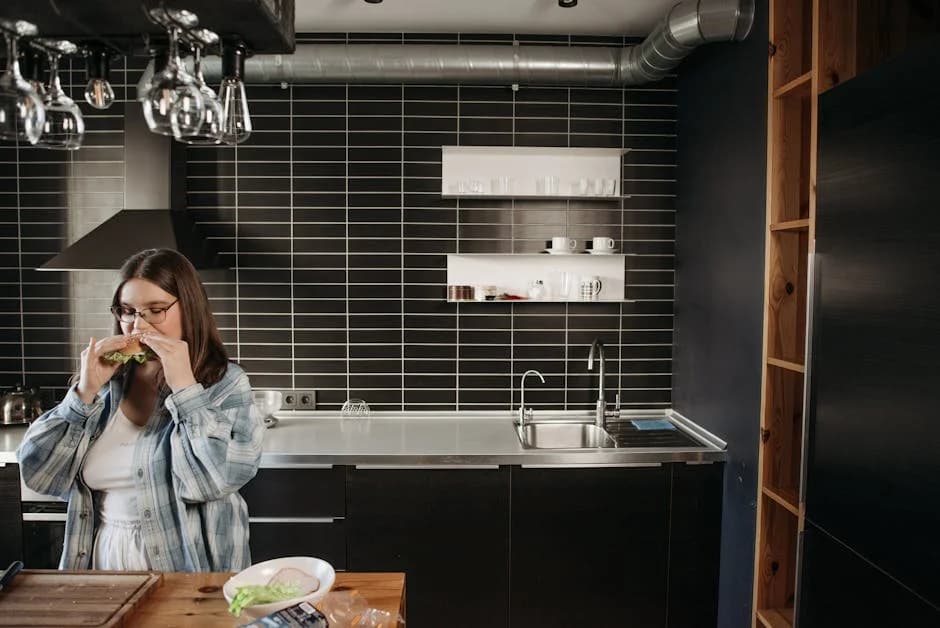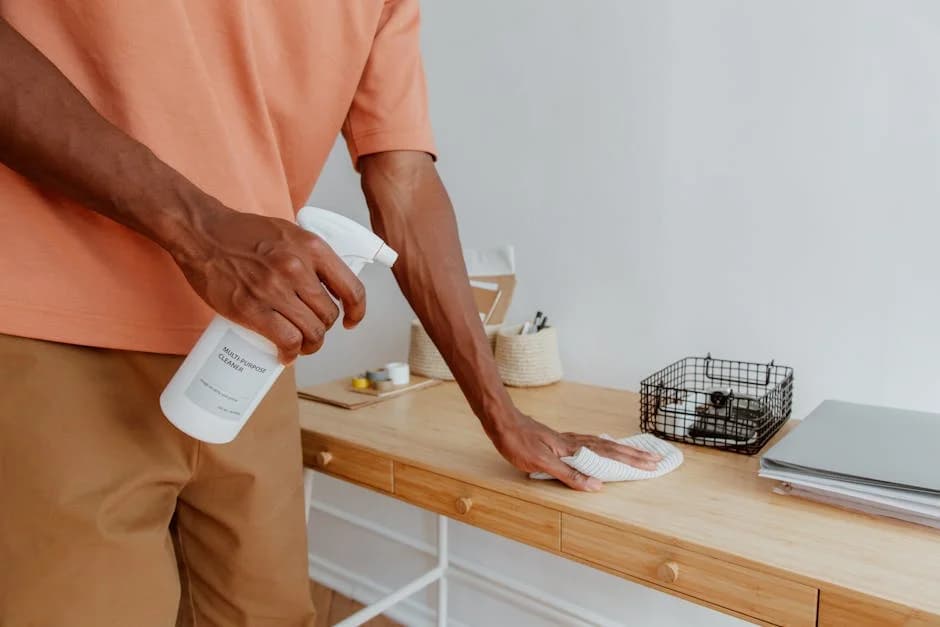
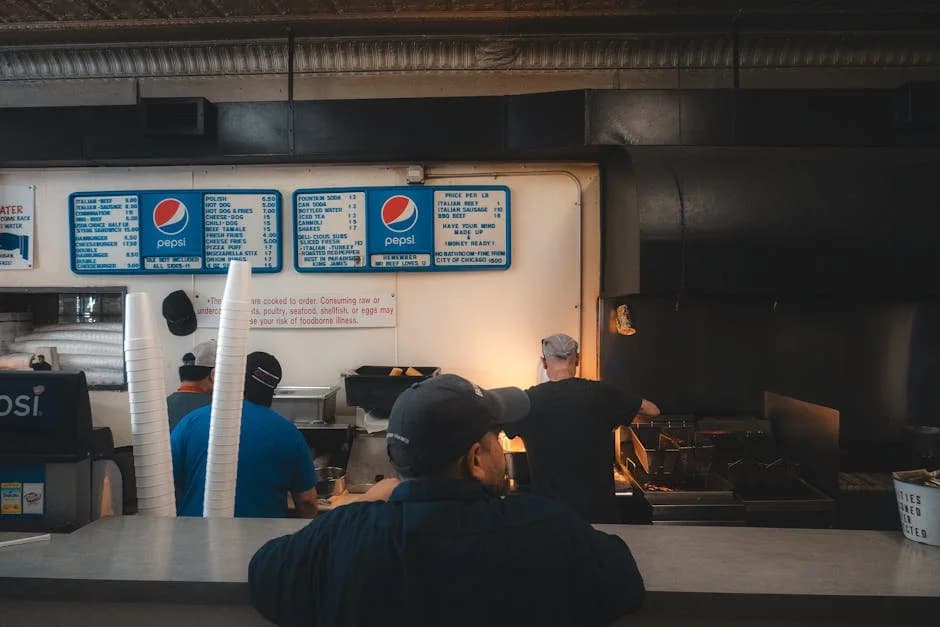
Commercial kitchen cleaning is one of the most technically demanding types of facility cleaning. Grease accumulates on every surface from the floor to the ceiling. Equipment operates at high temperatures that bake on residue. Organic material from food handling creates pathogen risks that directly affect public health. And health inspectors are looking for all of it.
This post breaks down what professional commercial kitchen cleaning actually covers, how frequency requirements map to regulatory expectations, and what operators need to understand before they schedule service.
Why Commercial Kitchen Cleaning Is Specialized
A general janitorial crew is not equipped to clean a commercial kitchen properly. The tools, chemistry, and safety training required are different. Grease is a fire hazard, not just a cleaning challenge — the buildup inside hood systems and ductwork is among the leading causes of commercial kitchen fires. Chemical degreasers used in commercial kitchens require proper handling and rinsing. Steam cleaning equipment is used for surfaces where chemical residue cannot be tolerated near food contact zones.
Restaurant facilities require cleaning vendors who understand the distinction between food contact surfaces, equipment surfaces, non-contact surfaces, and structural surfaces — and who apply the appropriate products and methods to each.
What Commercial Kitchen Cleaning Covers
Surface Cleaning by Category
Food contact surfaces — cutting boards, food prep counters, steam tables, storage shelves — require sanitation to a standard that eliminates pathogens. The FDA Food Code requires food contact surfaces to be cleaned and sanitized before each use, after any contamination, and at regular intervals during continuous use. These surfaces must be cleaned with appropriate food-safe products and sanitized with a solution that meets minimum EPA registration requirements for food surface sanitizers.
Equipment surfaces — fryers, grills, ovens, ranges, steam equipment — accumulate baked-on grease and carbonized food residue that must be mechanically and chemically removed. These surfaces are cleaned using degreasers appropriate for food service environments, mechanical scrubbing, and where applicable, steam cleaning.
Non-food contact surfaces — exterior panels of equipment, hood exterior surfaces, storage rack frames, and walls — accumulate grease film and dust from the cooking environment. These require regular degreasing to prevent buildup and reduce fire risk.
Floors and floor drains — commercial kitchen floors accumulate grease at a rate that makes standard mopping inadequate. Floors must be cleaned with degreasing products and scrubbed rather than mopped for effective cleaning. Floor drains must be cleaned to prevent organic buildup that creates odor, pest attraction, and potential drain backup.
Walls, ceilings, and overhead surfaces — vaporized grease from cooking settles on all overhead surfaces including walls, ceilings, light fixtures, and overhead pipes. These surfaces accumulate a film that, over time, becomes a fire hazard and a health inspection problem. Deep cleaning of overhead surfaces is typically a periodic rather than daily task.
Hood System Cleaning
Hood system cleaning deserves particular attention because it is both the most commonly neglected area and the most significant fire hazard in a commercial kitchen.
The hood system draws air from the cooking area, filtering grease from exhaust air before it reaches the ductwork. Over time, grease accumulates on:
- Hood filters (baffle filters or mesh filters)
- Hood plenum interior surfaces
- Fan blades and fan housing
- Duct interior from the hood to the exhaust point at the roof
- Roof exhaust fan housing and surrounding area
Hood cleaning requires dismantling these components and cleaning them thoroughly with high-alkalinity degreasers, hot water pressure, and mechanical scrubbing. The ductwork must be cleaned to bare metal — not just the accessible sections but the full length from hood to exhaust.
NFPA 96, the standard for ventilation control and fire protection of commercial cooking operations, specifies cleaning frequency based on the volume and type of cooking:
- Monthly or more frequently: High-volume operations, charbroiling, wood-burning equipment
- Quarterly: Moderate volume, fryers, ranges
- Semi-annually: Low-volume operations, cafeterias with limited cooking
- Annually: Pizza ovens and operations using solid fuel burning equipment with very low cooking volume
After cleaning, a properly cleaned hood system should display a service sticker showing the date of service and the frequency the technician recommends based on observed accumulation. Insurance carriers and health departments may request this documentation.
Grease Trap Maintenance
Grease traps collect grease and solid waste from kitchen drains before they enter the municipal sewer system. They require regular pumping and cleaning — typically every one to three months depending on volume, though local regulations specify minimum requirements.
A full-service commercial kitchen cleaning vendor should coordinate grease trap service or refer you to a licensed hauler. Overflowing or non-functional grease traps are a health code violation and a significant operational problem.
Recommended Cleaning Frequencies
Commercial kitchens require cleaning at multiple intervals. Here is a practical framework:
Daily Cleaning Tasks
- Clean and sanitize all food contact surfaces throughout the day and at close
- Clean and degrease cooking equipment exteriors (fryers, grills, ranges)
- Drain and clean fryer baskets and oil if not changed that day
- Sweep and mop floors with appropriate degreaser product
- Clean floor drains
- Empty and clean grease traps on equipment that collects grease directly (flat tops, ovens)
- Wipe down hood filters and exterior hood surfaces
- Clean sinks and surrounding surfaces
- Clean all walls and surfaces at splatter height
Weekly Cleaning Tasks
- Disassemble and deep clean fryers (full boil-out if oil is not changed weekly)
- Clean inside oven cavities
- Clean behind and beneath movable equipment
- Scrub tile grout on floors and walls
- Clean refrigerator interiors and gaskets
- Clean walk-in cooler and freezer interiors including floors, walls, shelving, and door gaskets
Monthly Cleaning Tasks
- High-detail cleaning of all overhead surfaces — ceiling tiles, overhead pipes, light fixtures
- Clean interior surfaces of HVAC vents and exhaust fans in kitchen area
- Detailed cleaning of wall tile grout throughout the kitchen
- Deep clean of all storage areas and dry goods shelving
Periodic Deep Cleaning (Quarterly or Semi-Annual)
Deep cleaning of the full facility at an interval appropriate to volume. This includes all daily and weekly tasks plus:
- Complete hood system cleaning per NFPA 96 schedule
- Pressure washing of exterior equipment areas, grease pad, dumpster enclosure
- Full floor scrubbing including moving all immovable equipment with effort
- Cleaning of all wall surfaces from floor to ceiling
What Health Inspectors Look For
Florida Department of Business and Professional Regulation (DBPR) inspectors evaluate commercial kitchens against a detailed checklist. Common cleaning-related violations include:
- Grease buildup on hood filters, hood interior, and ductwork
- Food residue on equipment surfaces that should be clean
- Soiled floor drains
- Grease accumulation on floor surfaces and in corners
- Dirty walk-in cooler interiors
- Mold or organic buildup in low-traffic areas
- Pest evidence (often related to cleaning failures) — inspection findings that involve pests may trigger more detailed pest control requirements than a standard pest control program covers
Understanding the inspection criteria helps operators prioritize cleaning tasks and ensure areas that inspectors specifically examine are maintained at a defensible standard.
Choosing a Commercial Kitchen Cleaning Vendor
Several factors distinguish professional commercial kitchen cleaning vendors from general cleaning companies that attempt to service kitchens:
Chemical knowledge. Commercial kitchen degreasers range from light-duty to high-alkalinity industrial products. The right product depends on the surface type, the degree of soiling, and whether the surface is near food contact areas. A vendor who uses one product for everything does not have sufficient expertise for a commercial kitchen.
Equipment. High-temperature steam cleaners, commercial pressure washing equipment, and specialized scrubbing machines are required for thorough kitchen cleaning. A vendor relying only on mops, buckets, and spray bottles cannot clean a commercial kitchen to an appropriate standard.
Hood system certification. NFPA 96 recommends that hood cleaning be performed by "properly trained, qualified, and certified company or person." Technicians should have demonstrable training and experience specific to hood systems.
Documentation. After each service, a professional vendor should provide documentation of what was cleaned, any deficiencies found, and photographic evidence of hood cleaning. This documentation is relevant for insurance, health inspections, and fire marshal compliance.
If your kitchen has not received professional cleaning recently, or if your current vendor is not covering all the areas outlined here, request a quote from Mega Service Solutions. We provide commercial kitchen cleaning and hood cleaning services for restaurants, hotels, institutional kitchens, and food service operations throughout Tampa Bay.
Frequently Asked Questions
What is included in a professional commercial kitchen cleaning service?
Professional commercial kitchen cleaning covers hood and exhaust cleaning, equipment degreasing, floor drains, grease traps, tile and grout scrubbing, and all food-contact surfaces. Mega Service Solutions follows NFPA 96 standards for hood cleaning and uses commercial-grade degreasers safe for food service environments.
How often do commercial kitchens need to be professionally deep cleaned?
Commercial kitchens in high-volume restaurants typically require monthly hood cleaning and quarterly deep cleans of equipment and surfaces. Lower-volume operations may schedule quarterly hood cleanings. Hillsborough County health inspections evaluate kitchen cleanliness — regular professional cleaning helps maintain compliance and avoid violations.
Does Mega Service Solutions serve businesses throughout Florida?
Yes. Mega Service Solutions is headquartered in Tampa, FL and serves businesses statewide — including Tampa, Orlando, Miami, Jacksonville, Fort Lauderdale, Clearwater, St. Petersburg, Sarasota, Fort Myers, Naples, Tallahassee, Boca Raton, and Hollywood. We also serve clients nationwide. Call (813) 501-5001 or visit megasvs.com/get-a-quote to request a free assessment.
How do I get a quote from Mega Service Solutions?
Getting a quote is simple. Call us at (813) 501-5001 (available 24/7) or submit a request at megasvs.com/get-a-quote. We'll schedule a free, no-obligation facility walkthrough, assess your needs, and provide a custom proposal within 24–48 hours. There's no commitment required.
Written by
Mega Service Solutions
Tampa’s SBE & MBE certified commercial cleaning experts. Serving 500+ businesses across Florida. Learn more about our team and commitment to quality.
About our team →