
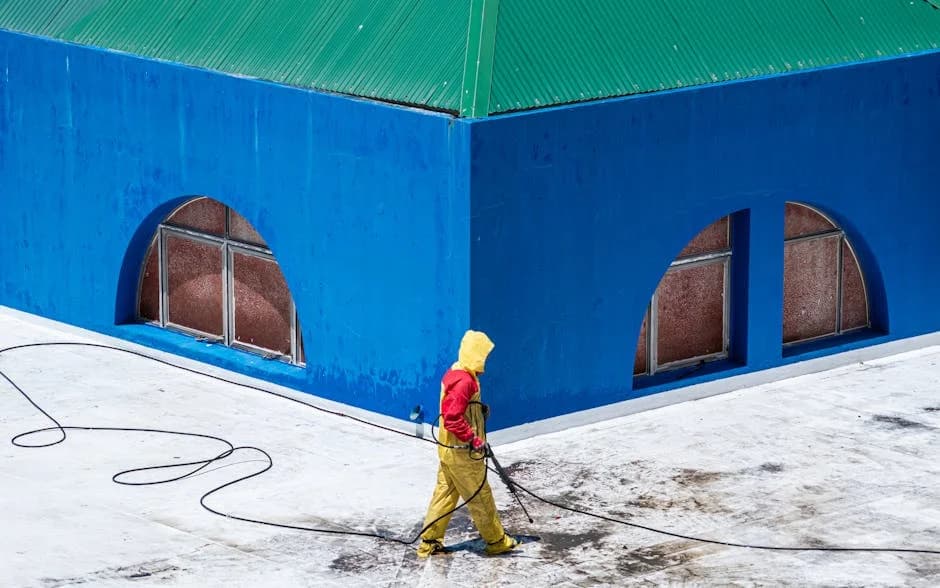
Florida's climate is relentless on commercial exteriors. The combination of intense UV exposure, high humidity, frequent rainfall, and subtropical organic growth — mold, mildew, algae, and lichen — means that commercial property exteriors in Florida degrade faster than in most of the country. Commercial pressure washing is not just cosmetic maintenance here; it is structural preservation.
This post covers what commercial pressure washing actually involves, which surfaces require it and how often, and what to expect from a professional service in Florida.
Why Florida Properties Need More Frequent Exterior Cleaning
In most northern states, commercial exterior cleaning might be a once-a-year task, typically in spring. In Florida, that schedule is inadequate for most properties.
The primary accelerants:
Humidity and rainfall — Florida averages 50–60 inches of rainfall per year, with summer months seeing near-daily afternoon storms. Constant moisture creates ideal conditions for biological growth on virtually every exterior surface.
Heat and UV intensity — High UV exposure breaks down surface treatments, sealers, and protective coatings faster than cooler climates. It also bakes organic growth into surfaces, making it harder to remove.
Algae and mildew — These are not just aesthetic problems. Algae create a slick surface layer that increases slip risk on walkways and parking areas. Mildew accelerates surface degradation on painted concrete, stucco, and wood-composite materials.
Hurricane and storm season — After significant storms, debris, water staining, and storm surge residue accumulate on building exteriors and hardscape. Post-storm cleaning is often necessary to assess and address storm damage.
For commercial properties in Florida, most building professionals recommend exterior cleaning at minimum twice per year, with some surfaces requiring quarterly attention.
What Commercial Pressure Washing Covers
The term "pressure washing" is broad. Professional commercial pressure washing includes several distinct applications:
Building Exteriors
Stucco, concrete block, brick, EIFS (exterior insulation and finish systems), and metal panel exteriors all accumulate mold, mildew, and biological growth in Florida's climate. Professional cleaning removes these without damaging the underlying surface.
Key considerations:
- Pressure calibration — Different surfaces require different PSI. Stucco and EIFS are particularly vulnerable to surface damage from excessive pressure. Professional crews use appropriate pressure settings for each surface type.
- Soft washing — For more delicate surfaces, low-pressure washing combined with specialized cleaning solutions is more appropriate than high-pressure water alone. This is standard for rooflines, older painted surfaces, and organic growth on porous materials.
- Chemical selection — Algaecides and mildewcides appropriate for the surface type are necessary for biological growth; water pressure alone does not kill organisms, it simply moves them.
Parking Lots and Concrete Hardscape
Commercial parking areas accumulate automotive fluids, tire marks, algae, and ground-in grime that surface sweeping does not address. Professional pressure washing of concrete surfaces uses hot water extraction or surface cleaners — rotating heads that deliver consistent pressure across the surface without striping.
In Florida's wet climate, algae growth on parking surfaces is common, and creates meaningful slip-and-fall liability. Regular pressure washing of these surfaces is both a maintenance and a risk management measure.
Sidewalks and Building Approaches
Entry walkways and building approaches are the first surface visitors contact. Staining, gum deposits, algae growth, and general accumulation of atmospheric grime make a negative impression regardless of how clean the interior is. In food service and retail environments, these areas are particularly important for both aesthetics and sanitation.
Loading Docks and Service Areas
Loading docks, dumpster enclosures, and service areas accumulate the heaviest soiling and are frequently the last areas addressed in routine maintenance programs. Grease accumulation near kitchen delivery areas, fuel staining near delivery vehicle staging areas, and organic waste accumulation near waste enclosures require regular, thorough pressure washing to prevent health code violations and pest attraction.
For properties with commercial kitchens, coordinating exterior pressure washing of service areas with hood cleaning schedules is a practical approach that ensures grease is addressed both inside and outside the building.
Awnings and Canopies
Canvas, metal, and polycarbonate awnings all accumulate biological growth in Florida's climate. Cleaning approaches vary significantly by material — canvas requires low pressure and appropriate pH-neutral cleaners, while metal can handle more aggressive treatment. Improper pressure washing of awnings causes premature fabric degradation and structural damage.
Signage and Building Features
Exterior signage, architectural features, planters, and decorative elements all benefit from periodic professional cleaning. These are often overlooked in standard maintenance programs but have significant impact on property appearance.
Soft Washing vs. Pressure Washing: Understanding the Difference
A common source of confusion — and sometimes of property damage — is the assumption that high pressure is always better for cleaning.
Pressure washing uses high-pressure water (typically 1,500–4,000 PSI) to remove surface soiling. It is appropriate for concrete, brick, and heavy-duty surfaces where the soiling is mechanically bonded to the surface.
Soft washing uses low pressure (under 500 PSI) combined with cleaning solutions to kill and remove biological growth. It is appropriate for:
- Rooflines and gutters
- Stucco and painted surfaces
- EIFS and synthetic materials
- Older concrete that has lost surface hardness
- Window frames and trim
The cleaning solutions used in soft washing do the chemical work; the water rinses and removes. This approach is far less likely to cause surface damage and more effective for biological growth, because it kills the organisms rather than simply moving them to another surface.
Any professional commercial pressure washing company operating in Florida should offer both capabilities and apply them appropriately based on surface type.
Scheduling: When to Clean Florida Commercial Exteriors
The optimal timing for commercial pressure washing in Florida:
Spring (March–May) — First cleaning of the year. Addresses winter accumulation and prepares the property for the busier spring and summer business season. Best timing before the rainy season begins.
Post-rainy season (October–November) — Second cleaning of the year. Addresses the heavy biological growth that occurs during the summer rainy season, plus any storm residue.
Pre-hurricane season (April–May) — For coastal properties or those in low-lying areas, cleaning building approaches and drainage surfaces before storm season helps ensure drainage systems are clear and surfaces are in the best possible condition heading into high-risk months.
Post-construction or renovation — Any construction activity on or near the property produces dust, debris, and residue that requires thorough cleaning before normal business operations resume.
For high-traffic properties — retail centers, food service facilities, hotels, and medical buildings — quarterly cleaning of high-priority exterior surfaces (building entry, walkways, parking areas) is standard.
The Property Value Connection
Commercial property managers and owners consistently underestimate the impact of exterior cleaning on property value and tenant retention. A building with visible algae streaking, stained concrete, and dirty windows signals neglect — regardless of how well-maintained the interior is. This affects:
Tenant retention and attraction — Tenants evaluating space choices compare properties. Exterior appearance is among the first data points they assess, before they ever walk inside.
Perceived property value — Appraisers and investors factor deferred maintenance into their assessments. Consistent exterior maintenance documentation supports value.
Lease compliance — Many commercial leases include exterior maintenance requirements. Failure to maintain exterior standards can create lease compliance issues.
Insurance — Some commercial insurance policies include exterior maintenance requirements related to slip-and-fall risk. Algae-covered walkways and parking surfaces create documented liability exposure.
Pairing Pressure Washing with Other Exterior Services
Pressure washing is more effective when paired with complementary services:
- Window cleaning — Building exterior cleaning and window cleaning scheduled together ensures windows are not recontaminated by runoff from the building cleaning process.
- Gutter cleaning — Clogged gutters cause water damage and staining. Gutter clearing combined with building washing is standard practice.
- Parking lot striping — Line restriping is best done on a freshly cleaned surface. Coordinate these services when both are due.
- Sealer application — Concrete and paver sealers applied after pressure washing provide extended protection against biological growth and staining.
What to Ask a Commercial Pressure Washing Vendor
Before hiring any pressure washing company for your commercial property in Florida:
- Do you have experience with the specific surface types on this property?
- Do you offer both pressure washing and soft washing, and how do you determine which is appropriate?
- What cleaning chemicals do you use, and are they appropriate for use near landscaping and drainage?
- Are you licensed and insured, with general liability coverage for any surface damage?
- Can you provide references from commercial properties of similar size in Florida?
- What is your cleanup and water recovery process for surface runoff?
Contractors who cannot answer these questions specifically should not be trusted with your commercial property.
Florida's climate demands a consistent, professional approach to exterior maintenance. If your building's exterior is showing algae growth, staining, or biological buildup, the damage accelerates the longer it is left unaddressed.
Contact Mega Service Solutions for a commercial pressure washing assessment — we serve commercial properties across Florida and will provide a clear scope and schedule recommendation based on your property's specific surfaces and conditions.
Frequently Asked Questions
What surfaces can be pressure washed on a commercial property?
Commercial pressure washing covers parking lots and garages, building exteriors, loading docks, sidewalks, dumpster pads, drive-throughs, concrete, brick, and pavers. Mega Service Solutions uses hot and cold water systems sized for commercial-scale jobs and can treat oil stains, gum, graffiti, and environmental buildup.
How often should commercial facilities schedule pressure washing?
Most commercial properties benefit from pressure washing 2–4 times per year. High-grease areas like drive-throughs and loading docks may need monthly service. Florida's climate — humidity, algae growth, and summer storms — accelerates buildup on building exteriors and parking surfaces, making regular pressure washing especially valuable.
Does Mega Service Solutions serve businesses throughout Florida?
Yes. Mega Service Solutions is headquartered in Tampa, FL and serves businesses statewide — including Tampa, Orlando, Miami, Jacksonville, Fort Lauderdale, Clearwater, St. Petersburg, Sarasota, Fort Myers, Naples, Tallahassee, Boca Raton, and Hollywood. We also serve clients nationwide. Call (813) 501-5001 or visit megasvs.com/get-a-quote to request a free assessment.
How do I get a quote from Mega Service Solutions?
Getting a quote is simple. Call us at (813) 501-5001 (available 24/7) or submit a request at megasvs.com/get-a-quote. We'll schedule a free, no-obligation facility walkthrough, assess your needs, and provide a custom proposal within 24–48 hours. There's no commitment required.
Written by
Mega Service Solutions
Tampa’s SBE & MBE certified commercial cleaning experts. Serving 500+ businesses across Florida. Learn more about our team and commitment to quality.
About our team →

