Property managers have many priorities: lease compliance, maintenance, vendor relationships, budget management, and tenant communication. Common area cleanliness sits at the intersection of nearly all of them — it affects tenant satisfaction, lease renewal decisions, property ratings, health and safety compliance, and the professional perception of the property. Getting it right requires more than hiring a cleaning crew; it requires a structured program matched to the property type and use patterns.
Why Common Areas Are Different from Tenant Spaces
In most commercial properties, tenants are responsible for cleaning their own leased spaces. The property manager or building owner is responsible for everything outside those spaces: lobbies, corridors, elevator cabs, stairwells, restrooms, parking structures, and any shared amenities.
This matters for a few reasons:
First impressions are set in common areas. Prospective tenants touring a property see the lobby, corridors, and restrooms before they see any leaseable space. Visitors to current tenants form impressions of the property — and by extension, the tenants' businesses — based on what they see before they even reach their destination.
Common areas serve everyone. Unlike tenant spaces that are primarily used by that tenant's employees and clients, common areas are used by everyone in the building, all day. This means soiling rates are higher, and the impact of inadequate cleaning is broader.
Maintenance standards are often defined in leases. Many commercial leases include language about property maintenance standards that the landlord is required to uphold. Failure to maintain common areas to those standards is a lease compliance issue, not just an aesthetic one.
Defining the Common Area Cleaning Scope
The scope of common area cleaning varies significantly by property type. The categories that apply most broadly:
Building Lobbies and Entries
The lobby and building entry are the highest-impact common areas for both first impressions and functional cleanliness. Key elements:
- Entry glass and door hardware — High-touch, high-visibility. Should be cleaned multiple times daily in busy properties.
- Flooring — Hard surface lobbies typically require daily mopping and periodic burnishing or polish, depending on floor type. Floor care protocols must match the specific floor material.
- Reception and security desk areas — If staffed, these surfaces should be included in daily cleaning scope.
- Seating and soft furnishings — Spot cleaning daily; deeper extraction or upholstery cleaning periodically.
- Trash receptacles — Should be emptied and liners replaced every cleaning cycle.
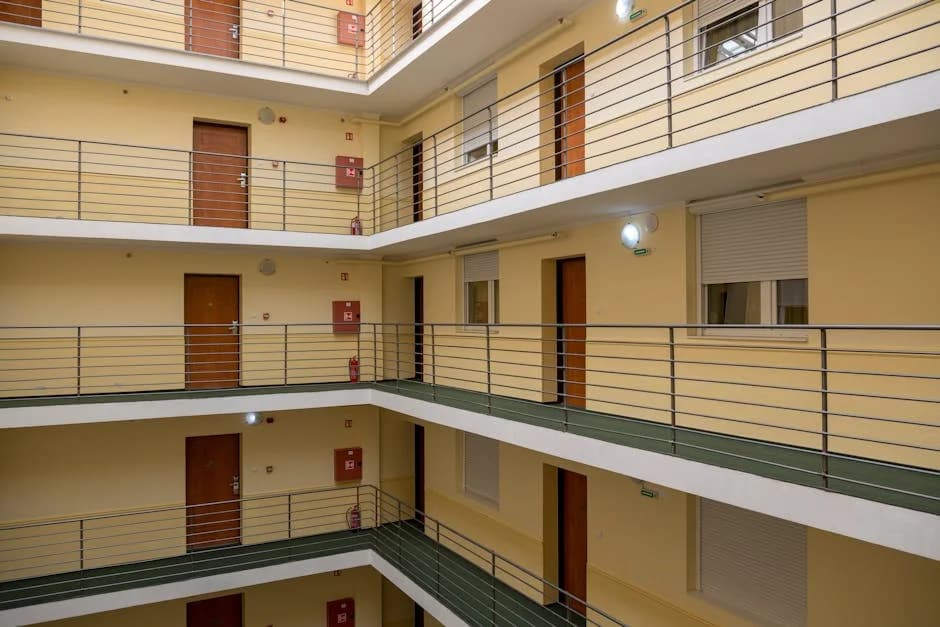
Corridors and Hallways
Corridors see concentrated traffic patterns — people move through them constantly but rarely stop, meaning soiling is linear and predictable. Standard requirements:
- Carpet vacuuming or hard floor cleaning at every cleaning cycle
- Wall spot cleaning weekly (and immediately when marked)
- Light fixture and overhead cleaning monthly
- Baseboards cleaned monthly or quarterly depending on traffic
- Signage and directory boards kept clean and current
Elevator Cabs
Elevators are the single highest-contact, highest-visibility common area surface relative to their size. Elevator cab cleaning should include:
- Cab floor cleaning at every service cycle
- All surface wipe-down including panels, buttons, and handrails
- Mirror and glass surfaces cleaned to streak-free standard
- Certificate and inspection documents in frame and visible
- Tracks and thresholds vacuumed and wiped
For multi-floor buildings, elevator appearance has an outsized impact on the property's overall impression. Elevators that look neglected undermine everything else the property does well.
Shared Restrooms
Shared restrooms in multi-tenant commercial buildings are among the most scrutinized spaces in property management. Inadequate restroom maintenance is the most common source of tenant complaints and the most damaging to property reputation.
A professional restroom cleaning program for commercial common areas should include:
- Full cleaning and disinfection at every service cycle (typically nightly minimum)
- Fixture disinfection using EPA-registered disinfectants with appropriate dwell time
- Restocking of all consumables at every visit (paper, soap, hand sanitizer, seat covers)
- Grout and tile cleaning weekly
- Deodorizing (sourced and addressed, not masked)
- Inspection log posted or logged digitally to document completion
Disinfection is not the same as cleaning. Wiping surfaces removes visible soil; disinfecting kills pathogenic organisms. Shared restrooms in commercial buildings require both, at every cleaning cycle.
For properties with heavy daytime traffic, daytime porter coverage of restrooms — inspection and restocking during business hours — is a meaningful improvement over nightly-only service.
Parking Structures and Exterior Areas
Parking areas are often the first physical contact visitors have with a property. Common area parking structure cleaning includes:
- Regular sweeping and debris removal
- Stairwell cleaning (the most neglected space in most parking structures)
- Elevator area within the parking structure
- Lighting inspection and reporting
- Entry and exit surface cleaning
Exterior hardscape — sidewalks, building approaches, and loading areas — should be pressure washed periodically. In Florida's climate, biological growth on concrete surfaces is accelerated, and algae on walkways creates slip-and-fall liability. Pressure washing of exterior surfaces at least twice per year is standard for Florida commercial properties.
Amenity Spaces
Many commercial properties offer shared amenity spaces — conference rooms, fitness centers, café areas, rooftop decks, or lounges. These spaces require cleaning programs tailored to their specific use:
- Shared conference rooms — Cleaned after each use (if managed by building operations) or at each cleaning cycle; particular attention to AV equipment, table surfaces, and water service areas.
- Fitness centers — Equipment disinfection multiple times daily; floor cleaning daily; complete deep cleaning weekly.
- Café and food service areas — Intensive cleaning protocols matching food safety requirements; surfaces that contact food require food-safe cleaners and proper sanitization.
Frequency and Scheduling Decisions
Cleaning frequency for commercial common areas should be based on actual usage, not on a generic schedule. Factors that drive frequency decisions:
Occupancy rate and tenant count — A fully occupied multi-tenant building sees substantially more common area use than a single-tenant property with 50% occupancy.
Business hours and traffic patterns — Properties with extensive evening and weekend tenant activity need cleaning coverage that matches those hours, not just standard business hours.
Seasonal variation — Rainy season in Florida (May–October) dramatically increases lobby and corridor soiling from tracked-in water and debris. Seasonal frequency adjustments are appropriate.
Special events — Move-ins, move-outs, large events, or construction activity temporarily increase cleaning requirements. Vendors should have protocols for increased-service periods.
The Tenant Relationship Impact
In multi-tenant commercial properties, common area cleanliness is directly connected to tenant satisfaction and renewal decisions. The connection is documented in tenant surveys across property types: common areas are consistently among the top three factors tenants cite when evaluating whether to renew.
Practically, this means:
- Tenant complaints about common area cleanliness should be treated as service failures with defined response times, not as informal feedback.
- Periodic tenant satisfaction surveys should specifically ask about common area cleanliness.
- A cleaning log or digital confirmation system creates accountability and allows you to demonstrate compliance when issues arise.
When tenants know their common area issues will be addressed quickly, they experience the property as well-managed. When they escalate the same issue multiple times without resolution, they start evaluating alternatives.
Building a Vendor Partnership That Works
Outsourcing common area cleaning to a professional vendor — rather than managing it with in-house staff — is cost-effective for most commercial properties. The key to making the relationship work:
Define the scope precisely — Not "clean the lobby" but "vacuum lobby carpet, mop hard surface entry, clean all entry glass, wipe door hardware, and empty trash receptacles — nightly, seven days per week."
Establish a named account contact — You should have a specific person at the vendor who is responsible for your property, not a general service line.
Set measurable service standards — Agreed-upon definitions of what "clean" means for each space type, with inspection protocols to verify.
Build in regular performance reviews — Quarterly walkthroughs with the vendor to assess performance, identify issues, and adjust scope as the property's needs evolve.
Document everything — Service completion logs, inspection records, and issue-resolution records are valuable for lease compliance, insurance, and vendor management.
Common area cleaning is one of the most controllable factors in commercial property management, and one of the most visible to everyone who uses or visits the building. A professional program matched to your property's specific needs pays dividends in tenant satisfaction, retention, and property reputation.
Contact Mega Service Solutions for a common area cleaning assessment and proposal for your commercial property. We serve multi-tenant office buildings, mixed-use properties, and commercial campuses throughout the Tampa Bay area.
Frequently Asked Questions
What is included in outsourced facility management services?
Outsourced facility management from Mega Service Solutions can include janitorial and cleaning coordination, floor care programs, exterior maintenance, vendor management for specialty services, and facility condition monitoring. We act as an extension of your property management team, providing a single accountable point of contact for facility cleanliness and maintenance.
What is the difference between janitorial services and facility management?
Janitorial services focus on routine cleaning — nightly cleaning, trash removal, restroom maintenance. Facility management is broader: coordinating all cleaning and maintenance activities, managing vendor relationships, tracking compliance, and keeping the overall facility in operational condition. Mega Service Solutions offers both standalone janitorial programs and full facility management partnerships.
Does Mega Service Solutions serve businesses throughout Florida?
Yes. Mega Service Solutions is headquartered in Tampa, FL and serves businesses statewide — including Tampa, Orlando, Miami, Jacksonville, Fort Lauderdale, Clearwater, St. Petersburg, Sarasota, Fort Myers, Naples, Tallahassee, Boca Raton, and Hollywood. We also serve clients nationwide. Call (813) 501-5001 or visit megasvs.com/get-a-quote to request a free assessment.
How do I get a quote from Mega Service Solutions?
Getting a quote is simple. Call us at (813) 501-5001 (available 24/7) or submit a request at megasvs.com/get-a-quote. We'll schedule a free, no-obligation facility walkthrough, assess your needs, and provide a custom proposal within 24–48 hours. There's no commitment required.
Written by
Mega Service Solutions
Tampa’s SBE & MBE certified commercial cleaning experts. Serving 500+ businesses across Florida. Learn more about our team and commitment to quality.
About our team →