Room readiness is arguably the most consequential operational metric in hotel management. Guests do not see your back-of-house operations, your staffing challenges, or your vendor relationships. They see their room — and whether it is ready when they arrive, clean to the standard they paid for, and responsive when something is not right. This post focuses on the systems and coordination structures that make room readiness work at a consistent level.
Why Room Readiness Fails
Most room readiness failures are not housekeeping failures in isolation — they are coordination failures. The most common root causes:
Communication gaps between housekeeping and front desk — When check-out information is delayed, housekeeping cannot prioritize rooms for arriving guests. This creates a cascade: the right rooms are not cleaned first, early-arriving guests wait, and the team operates reactively rather than by priority.
Inadequate turn time per room — When the number of rooms that need to turn over in a given window exceeds what the team can accomplish at a quality standard, something gets cut. Usually it is the things guests notice most: bathroom details, linens, and surface presentation.
Porter and housekeeping operating independently — In properties where porter services and housekeeping operate in silos, rooms that need furniture repositioning, linen delivery, maintenance reporting, or guest request response take longer to clear. Coordination between these functions is not a luxury; it is a prerequisite for consistent performance.
No real-time status visibility — Paper-based room status systems or manual whiteboard updates introduce delay and error. When supervisors do not have real-time visibility into which rooms are clean, being cleaned, or held for maintenance, deployment decisions are based on stale data.
The Porter's Role in Room Readiness
In most hotels, housekeeping gets credit (or blame) for room readiness, while the porter function is undervalued operationally. In practice, well-trained porter staff are multipliers for housekeeping efficiency.
Linen and supply management — Porters who manage linen carts, staging supplies on floors, and ensuring housekeepers have everything they need without leaving the floor significantly reduce turn time. A housekeeper who has to go to a storage room for supplies multiple times per shift loses meaningful time that adds up across a full day.
Room inspection and punch-out — Trained porters can perform first-pass inspections after housekeeping, identifying issues before the room is marked ready. This creates a quality gate that catches problems before the guest checks in rather than after.
Guest request response — When a guest calls for additional towels, a crib, extra pillows, or an iron, a responsive porter team fulfills that request without pulling housekeeping staff off their room turns. This is a meaningful performance driver in guest satisfaction scores.
Maintenance reporting — Porters moving through guest room floors are positioned to identify and report maintenance issues — dripping faucets, stuck drawers, burned-out bulbs, HVAC issues — that housekeepers may not have the authority or communication channel to escalate quickly.
At Mega Service Solutions, our porter teams are trained to work in active coordination with housekeeping rather than as a separate function. The handoffs and communication protocols are defined before the day begins, not improvised in the moment.
Room Readiness Standards: What the Checklist Should Include
A room is "ready" when it meets a defined standard, not when it looks approximately clean. The distinction matters because it is what makes inspections objective and allows you to identify where failures occur.
A professional room readiness checklist covers:
Bathroom
- All surfaces wiped and dried (toilet, sink, tub/shower, tile surround)
- Mirror and chrome fixtures cleaned to streak-free standard
- Floor mopped and dried
- Amenities restocked to full (shampoo, conditioner, soap, lotion, shower cap)
- Paper products restocked (toilet paper, tissue, paper cups)
- Towels replaced with fresh folded linens — bath towels, hand towels, washcloths
- Hair dryer and any other in-room equipment present and functioning
- No visible soap scum, water spots, or previous-guest residue
Sleeping Area
- Linens replaced per standard (full change or top-sheet change per stay-over protocol)
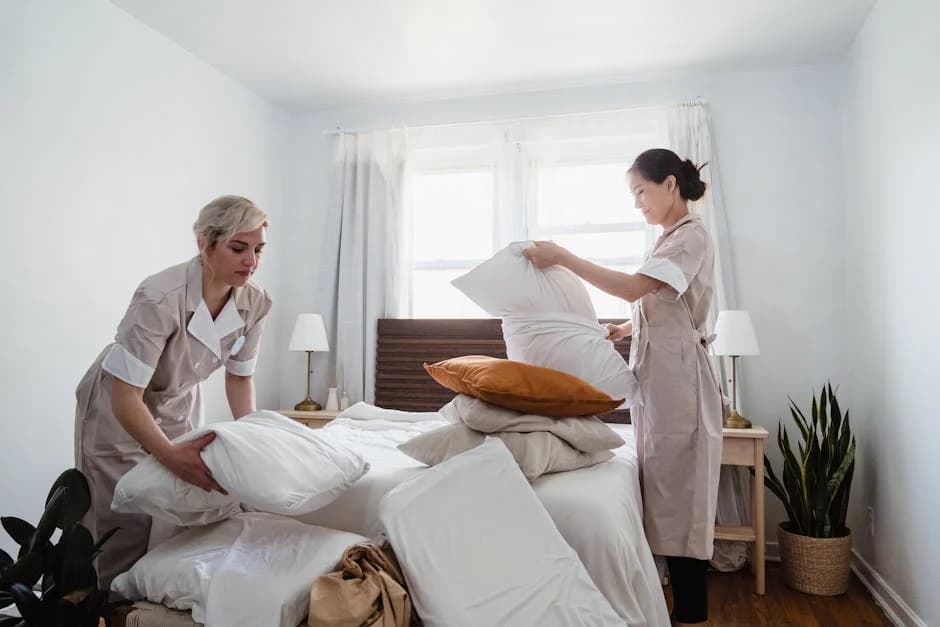
- Bedding made to property standard — corners, pillowcases, decorative elements
- All surfaces dusted — nightstands, lamps, headboard, picture frames
- TV remote wiped and functioning
- In-room stationery and collateral restocked
- Closet checked — hangers present, in-room safe cleared, extra blankets/pillows present
- Carpet vacuumed or hard floor swept and mopped
- Windows spot-cleaned, drapes positioned to standard
Common Areas of Room
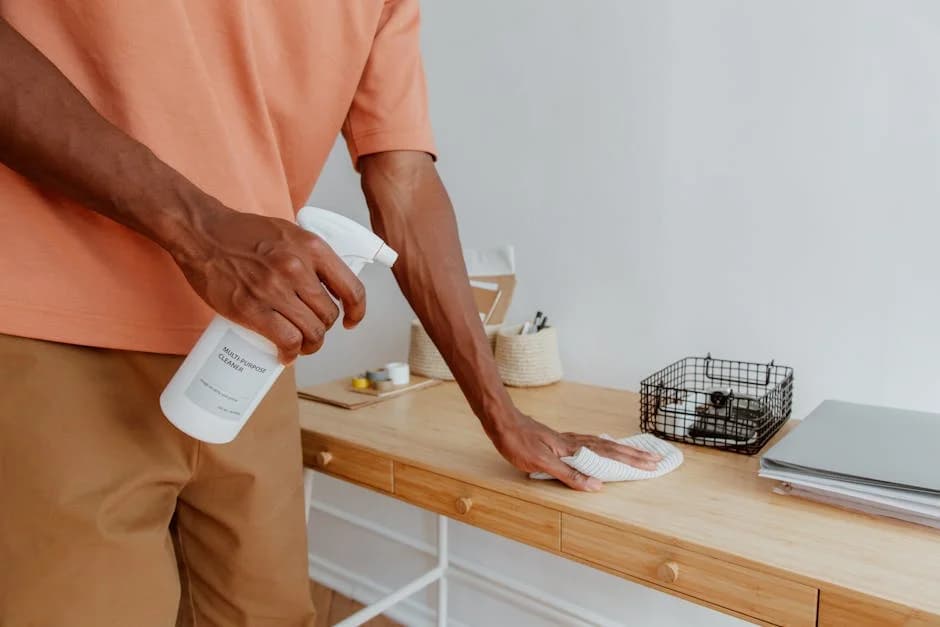
- Desk and seating area wiped
- All drawers and surfaces cleared of previous-guest items
- In-room coffee station cleaned and restocked
- Trash emptied in all receptacles
- All lights tested and functioning
- Thermostat set to property standard
- Do Not Disturb sign and room key cards present in standard location
Final Walk
- Room door check — view from doorway to confirm visual presentation
- Any odors addressed (not masked with spray, but sourced and resolved)
- Temperature confirmed at property standard
This level of specificity is what separates a professional housekeeping program from one that varies by worker. The checklist makes the standard objective.
Handling Guest Requests in Real Time
The ability to respond to guest requests promptly and without disruption to ongoing housekeeping operations is a service differentiator. Properties that handle this well have a few things in common:
Defined response time standards — A property commitment of, for example, "all in-room requests fulfilled within 15 minutes" only works if there is a team member with the bandwidth to fulfill it and a clear escalation path when that window is at risk.
Porter staff with knowledge of amenities and inventory — A porter who cannot tell a guest which spa services are available, when the pool closes, or whether the property has a business center is a missed opportunity for guest experience enhancement. Training on property amenities and local recommendations is a standard part of professional porter service onboarding.
Escalation clarity — When a request is beyond the porter's scope (a maintenance issue, a billing dispute, a medical concern), the escalation path needs to be clear and fast. Guests who watch a staff member fumble with a radio for three minutes before getting the right person are not impressed.
Documentation — Every guest request and its fulfillment time should be logged. Over time, this data reveals patterns — which rooms generate the most requests, which request types take longest to fulfill, which shifts have the most gaps — that allow management to make targeted operational improvements.
Common Areas: The Overlooked Part of Room Readiness
Guest room readiness does not exist in isolation from the property's common areas. A guest who is welcomed by a clean room but walks through a poorly maintained corridor, lobby, or elevator loses confidence in the property regardless of the room's condition.
High-priority common areas in terms of guest experience impact:
Elevator cabs — Among the highest-contact, highest-visibility surfaces in the property. Fingerprinted panels, debris on floors, and worn signage are noticed immediately.
Corridors — Spilled food and beverage, stained carpet, and room service trays left in corridors are among the most common guest complaints in hotel reviews. A porter pass through each corridor every two to three hours is the standard approach for properties serious about this metric.
Lobby and entrance — First and last impression. Entry glass, floor condition, seating cleanliness, and trash management all matter.
Fitness center and pool areas — These spaces require intensive daily cleaning, disinfection of equipment, and ongoing attention during operating hours. They are high-impact on reviews and highly perishable in terms of cleanliness — a half hour of use can undo a thorough morning clean.
Restrooms in public areas — The condition of public restrooms is consistently one of the highest-weighted factors in hotel guest satisfaction surveys. These areas require both scheduled cleaning and reactive monitoring during peak hours.
The Technology Layer
Modern hotel housekeeping operations are increasingly supported by property management system (PMS) integrations and task management applications that allow:
- Real-time room status updates from housekeeping staff via mobile devices
- Automated prioritization of rooms based on arrival time data from the PMS
- Guest request routing directly to the appropriate service team
- Inspection completion documented with timestamp and photo evidence
- Performance reporting by room, floor, shift, and individual worker
Properties that have implemented these systems consistently report faster average turn times, reduced re-cleans, and improved guest satisfaction scores. If you are operating a hotel without this kind of operational visibility, you are managing by approximation.
Building a Reliable Program
Room readiness consistency is not achieved through motivation or occasional training — it is the product of reliable systems. The specific elements:
- A clear, objective room readiness standard documented in checklist form
- Defined protocols for coordination between housekeeping, porter, maintenance, and front desk
- Real-time status communication tools
- Guest request response standards with accountability metrics
- Periodic inspection and calibration to ensure the standard is being applied consistently
Contact Mega Service Solutions to discuss housekeeping support, porter services, and room readiness programs for hotels and hospitality properties in the Tampa Bay area. We build programs around your property's specific requirements rather than applying a one-size approach.
Frequently Asked Questions
What does professional hotel cleaning cover?
Hotel cleaning services from Mega Service Solutions cover public areas (lobby, corridors, elevators, fitness center, pool areas), back-of-house (laundry, kitchen, staff areas), and can supplement housekeeping with deep cleaning programs for guest rooms, carpets, upholstery, and hard floors. We work around your operations schedule.
How do hotels maintain consistent cleanliness standards across a large property?
Consistent standards require documented cleaning protocols, trained and accountable cleaning staff, quality inspection systems, and the right equipment and products for each area. Mega Service Solutions implements standardized procedures with documented QC checks at each visit, giving property managers visibility into service completion.
Does Mega Service Solutions serve businesses throughout Florida?
Yes. Mega Service Solutions is headquartered in Tampa, FL and serves businesses statewide — including Tampa, Orlando, Miami, Jacksonville, Fort Lauderdale, Clearwater, St. Petersburg, Sarasota, Fort Myers, Naples, Tallahassee, Boca Raton, and Hollywood. We also serve clients nationwide. Call (813) 501-5001 or visit megasvs.com/get-a-quote to request a free assessment.
How do I get a quote from Mega Service Solutions?
Getting a quote is simple. Call us at (813) 501-5001 (available 24/7) or submit a request at megasvs.com/get-a-quote. We'll schedule a free, no-obligation facility walkthrough, assess your needs, and provide a custom proposal within 24–48 hours. There's no commitment required.
Written by
Mega Service Solutions
Tampa’s SBE & MBE certified commercial cleaning experts. Serving 500+ businesses across Florida. Learn more about our team and commitment to quality.
About our team →