The EPA estimates that indoor air quality in buildings can be two to five times more polluted than outdoor air. For commercial facilities where employees spend 40+ hours per week, this statistic has direct implications for health, productivity, and absenteeism. The sources of indoor air pollution are multiple, but many of the most significant ones are directly addressable through professional commercial cleaning.
Understanding how cleaning affects air quality — and why some cleaning approaches are better than others — helps facilities managers make better decisions about their cleaning programs.
Why Indoor Air Quality Matters for Businesses
Before covering the cleaning solutions, it helps to establish why indoor air quality is a business concern, not just an environmental one.
Direct health effects: Poor indoor air quality causes or exacerbates respiratory symptoms, allergic reactions, headaches, fatigue, and eye/nose/throat irritation. These effects are collectively called "sick building syndrome" when associated with specific buildings.
Productivity impact: Employees who are experiencing respiratory symptoms or other health effects from poor air quality work less effectively. Studies have linked improved indoor air quality with measurable productivity gains.
Absenteeism: Employees who are made ill by their work environment call in sick. The downstream productivity cost is significant.
Litigation and liability: Facilities with documented air quality problems that cause employee health effects create potential liability for the employer.
The business case for maintaining good indoor air quality is direct and financial, not abstract.
What Degrades Indoor Air Quality
The primary sources of indoor air quality problems in commercial facilities are:
Particulate Matter Accumulation
Dust, dead skin cells, fabric fiber, pollen, and other particulates accumulate on all surfaces in a commercial facility — floors, furniture, shelving, equipment, and HVAC components. These particulates do not stay in place; they are continuously re-suspended into the air through movement, HVAC airflow, and vibration.
High concentrations of airborne particulates cause respiratory irritation, trigger allergic reactions, and carry biological contaminants (bacteria, mold spores, dust mite allergens) throughout the facility.
Mold and Mildew
Mold grows wherever moisture and organic material coexist. In commercial facilities, moisture sources include plumbing leaks, HVAC condensation, roof penetrations, and in Florida's case, the constant ambient humidity. Organic material that supports mold growth accumulates in dust, carpet fibers, ceiling tiles, and building materials.
Mold releases spores and microbial volatile organic compounds (MVOCs) into the air. These are allergenic and, for some species, toxic. Mold in a commercial facility is a genuine health concern, not just an appearance problem.
Chemical Emissions
Cleaning products, building materials, furniture, equipment, and office supplies all emit volatile organic compounds (VOCs) into the indoor air. Most VOC levels from individual sources are low, but the cumulative effect in a tightly sealed commercial building can be significant.
Ironically, some cleaning products are themselves sources of VOC emissions. Fragranced cleaning products, traditional floor finishes, and solvent-based products all contribute to indoor chemical load.
Biological Contamination
Bacteria, viruses, dust mite allergens, pet dander (from employees who have pets), and other biological agents are distributed throughout commercial facilities through air handling systems, surface contact, and human activity. Carpet, upholstered furniture, and HVAC systems are the primary reservoirs.
HVAC System Distribution
The HVAC system in a commercial facility is the primary mechanism for distributing air throughout the building — and for distributing whatever is in that air. HVAC systems that have accumulated dust, biological growth, or other contamination become active distributors of those contaminants throughout the facility.
How Professional Cleaning Improves Indoor Air Quality
HEPA Filtration Vacuuming
Standard commercial vacuums without HEPA filtration do not actually remove fine particulates — they pick them up and then exhaust them back into the air through the vacuum's exhaust stream. A vacuum without HEPA filtration is not an air quality tool; it is a particulate redistribution device.
HEPA (High Efficiency Particulate Air) filters capture particles down to 0.3 microns — including the fine dust, mold spores, dust mite allergens, and bacteria that cause the most significant air quality problems. HEPA-filtered vacuuming in carpet and on hard surfaces actually removes these particles from the facility rather than recirculating them.
A professional janitorial service should use HEPA-filtered vacuuming as standard equipment — not as an upgrade.
Carpet and Upholstery Maintenance
Carpet and upholstered furniture are the largest reservoirs of particulates, allergens, and biological contamination in most commercial facilities. They act as filters — capturing airborne material and holding it until mechanical or chemical action releases it again.
Without regular professional cleaning:
- Carpet accumulates dust mite populations and significant allergen loads
- Upholstered furniture becomes saturated with skin cells, fabric fiber, and biological debris
- Both continue releasing these materials into the air throughout the building
Floor care services including regular carpet extraction and encapsulation cleaning significantly reduce the particulate load in carpet, improving air quality measurably. Upholstery cleaning addresses the same accumulation in furniture.
Surface Dust Removal
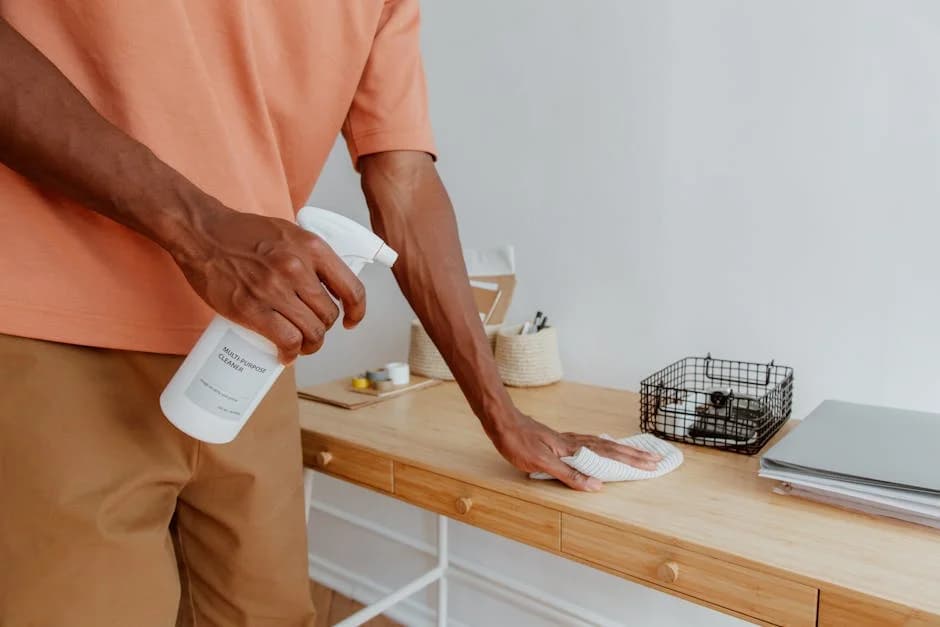
Dust on horizontal surfaces — desks, shelving, the tops of partitions, windowsills, ledges — is continuously re-suspended by air movement and human activity. Regular, thorough dusting removes this material from the facility rather than redistributing it.
The technique matters: dry dusting (using a dry cloth or feather duster) re-suspends dust into the air; microfiber dusting (using slightly damp or electrostatically charged microfiber) captures and removes dust from surfaces rather than redistributing it.
HVAC Vent and Register Cleaning
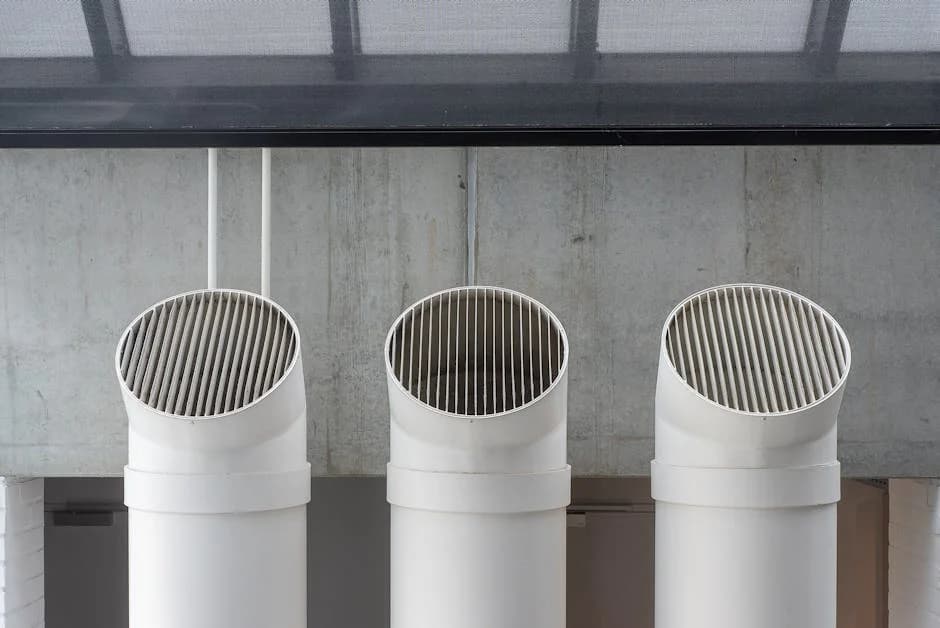
HVAC return air registers and supply vents accumulate dust rapidly and become active dust distributors every time the system runs. Regular cleaning of vent covers — removing and washing or vacuuming them — reduces the amount of accumulated debris the HVAC system distributes.
This is distinct from duct cleaning (the interior of the ductwork) and from HVAC filter maintenance — both of which are also relevant to air quality but managed separately from the cleaning program.
Green Cleaning Product Selection
Switching from conventional cleaning products to low-VOC alternatives reduces the chemical contribution to indoor air pollution. Green-certified products (EPA Safer Choice, Green Seal) are formulated to minimize VOC emissions while maintaining cleaning efficacy.
For commercial facilities with air quality concerns, green cleaning chemistry is part of the solution — not just an environmental preference.
Moisture and Mold Prevention
Professional cleaning prevents mold growth by:
- Removing the organic material (dust, soil) that feeds mold where moisture is present
- Addressing visible mold growth on surfaces before it becomes established
- Maintaining bathroom and kitchen surfaces where moisture concentrates
Preventing mold is dramatically easier and less expensive than remediating an established mold problem. Regular professional cleaning is part of the prevention strategy.
Signs Your Facility May Have Air Quality Problems
These indicators suggest air quality issues worth investigating:
- Employees report consistent headaches, fatigue, or eye/nose/throat irritation that resolves when they leave the building
- Visible mold growth anywhere in the facility
- Persistent musty odors — particularly in areas near HVAC components
- Employees with allergies or asthma reporting worse symptoms at work than elsewhere
- Visibly dirty HVAC vents
- Dusty surfaces that accumulate quickly between cleanings
If your facility shows multiple signs, an air quality assessment by a qualified industrial hygienist may be warranted — combined with improvements to the cleaning program.
Mega Service Solutions provides commercial cleaning programs that specifically address indoor air quality concerns, including HEPA-filtered vacuuming, green cleaning product options, and comprehensive floor care services. Request a quote and let's discuss what your facility needs.
Frequently Asked Questions
What should businesses know about how commercial cleaning improves indoor air quality in your office?
Professional how commercial cleaning improves indoor air quality in your office from Mega Service Solutions is tailored to your facility's specific needs and industry requirements. We conduct a free facility assessment before recommending a service plan, ensuring the scope, frequency, and methods match your operational environment. All services are performed by trained, background-checked crews using commercial-grade equipment.
How much does professional how commercial cleaning improves indoor air quality in your office cost for a commercial facility?
Cost depends on facility size, service frequency, scope of work, and access requirements. Mega Service Solutions provides free, no-obligation assessments and custom quotes for every facility. Call (813) 501-5001 or submit a quote request at megasvs.com to receive a proposal tailored to your facility.
Does Mega Service Solutions serve businesses throughout Florida?
Yes. Mega Service Solutions is headquartered in Tampa, FL and serves businesses statewide — including Tampa, Orlando, Miami, Jacksonville, Fort Lauderdale, Clearwater, St. Petersburg, Sarasota, Fort Myers, Naples, Tallahassee, Boca Raton, and Hollywood. We also serve clients nationwide. Call (813) 501-5001 or visit megasvs.com/get-a-quote to request a free assessment.
How do I get a quote from Mega Service Solutions?
Getting a quote is simple. Call us at (813) 501-5001 (available 24/7) or submit a request at megasvs.com/get-a-quote. We'll schedule a free, no-obligation facility walkthrough, assess your needs, and provide a custom proposal within 24–48 hours. There's no commitment required.
Written by
Mega Service Solutions
Tampa’s SBE & MBE certified commercial cleaning experts. Serving 500+ businesses across Florida. Learn more about our team and commitment to quality.
About our team →