
Deep cleaning a commercial facility is not simply cleaning more thoroughly. It is a structured, methodical process that covers areas and tasks outside routine cleaning scope, requires specialized equipment, and follows a specific sequence to avoid cross-contaminating areas that have already been cleaned.
Whether you are managing the process yourself, coordinating with a cleaning vendor, or evaluating whether to bring in professional deep cleaning services, this framework explains how the process works — zone by zone, task by task.
What Makes Deep Cleaning Different from Routine Cleaning
Routine janitorial service handles the daily and weekly maintenance that keeps a facility at functional baseline: trash removal, vacuuming, surface wiping, restroom service, mopping. It is fast and efficient because it addresses what is visible and accessible.
Deep cleaning addresses everything routine cleaning does not:
- Furniture moved to reach underneath and behind
- Carpet hot-water extraction, not just vacuuming
- Floor stripping and refinishing or scrub-and-recoat
- Interior cleaning of appliances (refrigerators, microwaves, ovens)
- HVAC vent cover cleaning
- High dusting — ceiling fixtures, overhead pipes, exposed structural elements
- Grout scrubbing in tile areas
- Behind and beneath equipment that is rarely moved
- Deep disinfection of all surfaces including high-touch points that accumulate pathogen load
A facility that receives professional deep cleaning after months of routine-only service will typically look measurably different afterward. The difference is not in the cleaning of visible surfaces — that is maintained through routine service — but in the removal of accumulated soil, biological material, and surface degradation that builds up in areas routine cleaning cannot reach.
Pre-Deep Clean Planning
Before any cleaning begins, a commercial deep clean requires planning that routine service does not.
Access inventory: Identify which areas require special access arrangements — server rooms, executive offices, locked storage, secure areas. Coordinate access with the appropriate staff or building management.
Scheduling and communication: Deep cleaning is disruptive. Areas may be unavailable during service. Wet floors require closure. Certain tasks (floor stripping, high-power equipment use) may produce noise or odor. Notify tenants, staff, and any affected stakeholders with specific timing before service.
Equipment preparation: Professional deep cleaning requires equipment that routine service does not use daily — hot water extraction machines, floor scrubbers, high-speed burnishers, steam cleaners, pressure washing equipment if exterior work is included. Confirm equipment availability and appropriate power access in each area.
Product preparation: Deep cleaning uses stronger chemical concentrations in some areas — commercial degreasers for kitchen surfaces, alkaline strippers for floor work, enzymatic cleaners for drains. Confirm products are on-site, properly stored, and that staff are trained on safe handling per Safety Data Sheet requirements.
Zone sequencing: Plan the cleaning sequence to avoid cross-contaminating completed areas. The general principle is clean from high to low (ceiling to floor) and from back to front (furthest from the exit to the exit). Restrooms and kitchen areas are typically cleaned separately with dedicated equipment to prevent cross-contamination.
Zone 1: Overhead Surfaces
Deep cleaning begins with surfaces most people never see in routine service: ceilings, ceiling tiles, overhead pipes, light fixtures, HVAC diffusers, and any exposed structural elements.
Why start here: Dust and debris dislodged from overhead surfaces falls to floors and lower surfaces. If you clean floors before cleaning overhead areas, you create rework.
Tasks:
- Dust and wipe all ceiling light fixtures and pendant lights
- Clean diffuser covers and grilles — remove them if possible for thorough cleaning, or use brush attachments in place
- Wipe any exposed overhead pipes, conduit, or structural beams in exposed ceiling environments
- Replace ceiling tiles that are stained or damaged
- In areas with drop ceilings, inspect for signs of moisture or mold
For areas with significant dust accumulation or evidence of mold near HVAC components, note findings for follow-up with your HVAC service provider.
Zone 2: Walls, Doors, and Vertical Surfaces
After overhead areas, move to vertical surfaces.
Tasks:
- Wipe wall surfaces with appropriate cleaner for the wall finish — painted drywall requires pH-neutral products; tile requires grout-safe cleaners
- Clean scuff marks and marks from chair backs and equipment contact
- Wipe door surfaces including top and bottom edges, often missed in routine service
- Clean door frames and door hardware thoroughly — particularly push plates, handles, and kick plates
- Wipe light switch plates and outlet covers
- Clean glass partitions and sidelights inside and out
Restroom walls require additional attention — tile walls should be cleaned with appropriate tile cleaner and grout should be scrubbed if not addressed recently.
Zone 3: Workstations and Furniture
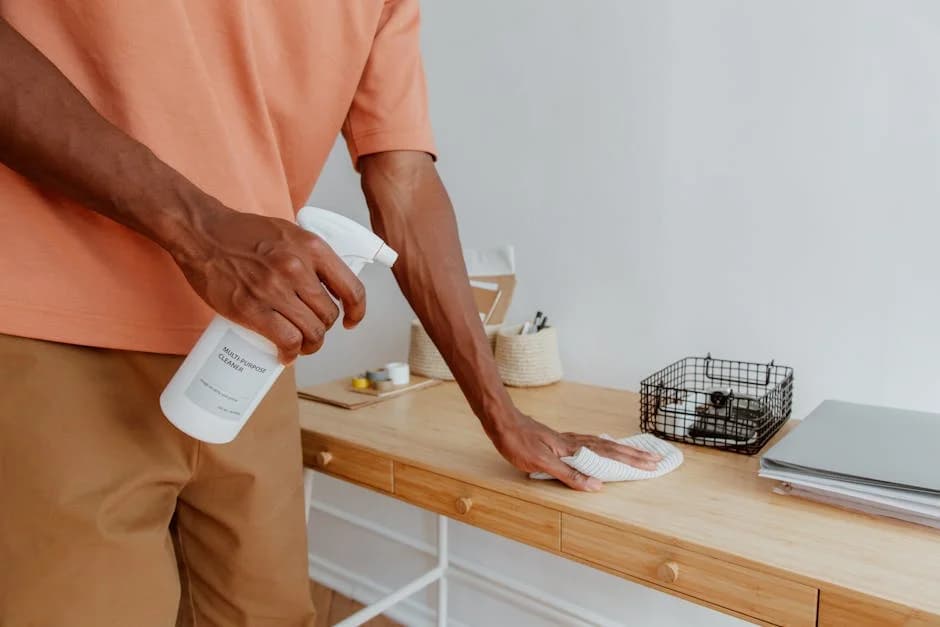
Workstations require attention to surfaces that routine wiping does not address.
Tasks:
- Move everything off desk surfaces and clean underneath
- Clean monitor screens with appropriate screen-safe product
- Wipe keyboard and mouse with disinfectant (electronics require low-moisture application)
- Clean underneath keyboards — significant debris accumulates and is never addressed in routine service
- Wipe chair upholstery, including arms, seat edges, and caster wheels
- Move chairs to reach floor beneath desk
- Dust and wipe monitor arms, CPU housings, and any AV equipment
In open office environments, coordinate with staff to clear desks before the deep clean date.
Zone 4: Break Rooms and Kitchen Areas
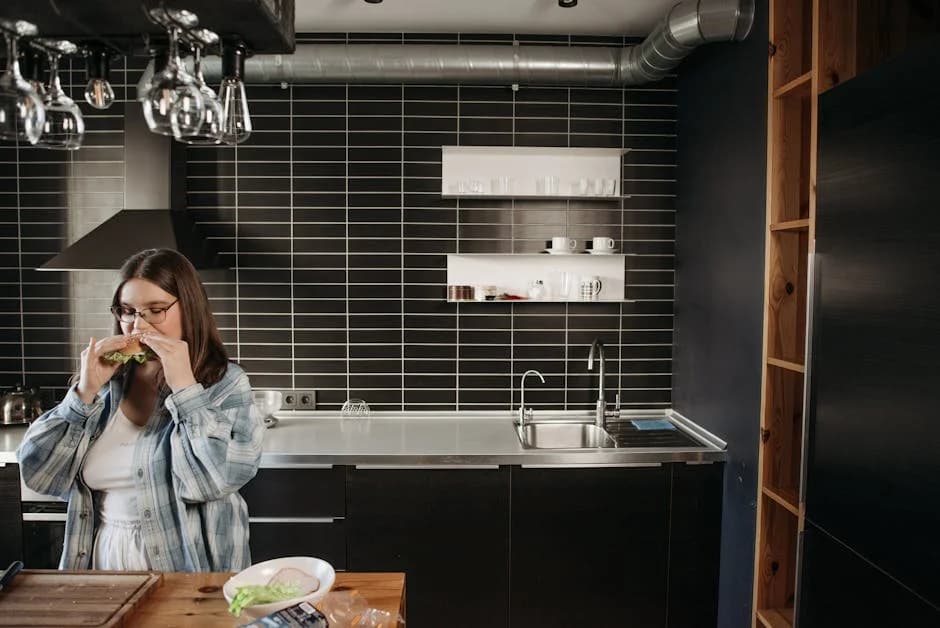
Break rooms are one of the highest-contamination areas in commercial facilities and one of the areas most frequently under-cleaned in routine service.
Tasks (in order):
- Empty all cabinets and drawers; wipe cabinet interiors
- Remove refrigerator contents and clean interior thoroughly — wipe all shelves and drawers, clean door gaskets, wipe exterior
- Clean microwave interior thoroughly including ceiling, walls, and door seals
- Degrease range or cooktop surfaces
- Descale coffee maker per manufacturer instructions
- Clean inside dishwasher (wipe door interior, clean drain trap, run cleaning cycle)
- Clean sink basin, faucet, and garbage disposal
- Wipe backsplash and tile grout
- Clean exterior of all appliances including controls and handles
- Wipe countertops thoroughly including under appliances and at wall seams
- Mop floor with degreaser
A note on grease: Kitchen and break room floor grease cannot be removed with standard mopping. Degreaser product must be applied, allowed to dwell, and physically scrubbed before rinsing. A visual inspection after mopping should confirm grease is removed — if the floor still feels slippery or looks shiny with residue, degreaser action was insufficient.
Zone 5: Restrooms
Restrooms require the most thorough disinfection protocol of any zone. Use a separate equipment set (mop, bucket, cloths, scrub brushes) from equipment used elsewhere.
Tasks:
- Apply EPA-registered disinfectant to all surfaces and allow to dwell per product label
- Scrub toilet bowl and under rim
- Wipe toilet exterior including base, handles, and hinges
- Wipe urinal exteriors and descale if mineral deposits present
- Clean sink basins, faucets, and soap dispensers
- Scrub grout lines on floor and wall tile
- Clean partitions including hardware and door latches
- Clean mirrors and any glass surfaces
- Mop floor with disinfectant product
- Clean door hardware on exit side (frequently missed)
For facilities that require disinfection services beyond standard cleaning, restrooms are typically the area where enhanced protocols — extended dwell times, broader product coverage, or electrostatic application — are most valuable.
Zone 6: Flooring
Floor work is the final major step in deep cleaning, and requires the most specialized equipment.
Carpeted areas:
- Pre-treat visible stains with appropriate stain treatment product
- Pre-vacuum thoroughly with commercial vacuum
- Hot-water extract (steam clean) entire carpeted area
- Allow adequate drying time — typically 2–4 hours minimum; adequate ventilation reduces drying time
Deep cleaning of carpet removes the embedded particulate and biological material that routine vacuuming cannot reach. The appearance improvement after extraction is typically significant, and the air quality improvement from removal of allergen load is measurable.
Hard surface floors (VCT, luxury vinyl, polished concrete):
For floors receiving a full strip-and-wax, the sequence is:
- Apply stripper in sections and allow to dwell
- Scrub with floor machine
- Remove stripper solution and residue thoroughly
- Allow floor to dry completely
- Apply multiple coats of finish with adequate drying time between coats
For floors receiving a scrub-and-recoat (existing finish is sound but needs refreshing):
- Machine scrub with appropriate pad
- Remove debris and rinse
- Allow to dry
- Apply new finish coats
See the floor care service guide for detailed guidance on choosing between these treatments based on floor condition.
Zone 7: Exterior Areas
If the deep cleaning scope includes exterior areas, pressure washing is the primary tool.
Tasks:
- Pressure wash building entry areas, sidewalks, and walkways
- Clean exterior windows if included
- Pressure wash parking lot or driveway areas if organic growth or staining is present
- Clean dumpster enclosure areas
- Inspect building perimeter for pest entry points or structural issues to report
Documentation After Deep Cleaning
A professional deep cleaning should produce documentation:
- Written record of areas cleaned and tasks completed
- Photos of completed work in key areas
- Any findings requiring follow-up — areas with damage, pest evidence, mold, or maintenance issues discovered during cleaning
- Product information for any specialty products used
This documentation is useful for owner reporting, tenant communication, and building a baseline for the next deep cleaning cycle.
Determining Frequency
Deep cleaning frequency depends on facility type and traffic volume:
- High-traffic commercial facilities: quarterly deep cleaning of high-wear areas; annual full facility deep clean
- Medical and healthcare-adjacent: more frequent per the clinical requirements of the facility
- Food service: quarterly or semi-annual with kitchen-specific intervals per NFPA 96
- Standard commercial offices: minimum twice yearly; quarterly for heavy-use areas
If your facility has not received a professional deep cleaning recently, or if you want to establish a periodic deep cleaning program that works alongside your regular janitorial service, request a quote from Mega Service Solutions. We provide comprehensive deep cleaning for commercial facilities throughout Tampa Bay.
Frequently Asked Questions
What is included in a commercial deep clean?
A commercial deep clean from Mega Service Solutions covers everything in a standard janitorial visit plus high dusting, vent and baseboard cleaning, grout scrubbing, appliance cleaning, detail work on fixtures and hardware, and treatment of problem areas that regular maintenance misses. It is typically scheduled quarterly or semi-annually.
How long does a commercial deep cleaning take?
Time depends on facility size and condition. A 5,000 sq ft office typically takes 4–8 hours; a 20,000 sq ft retail or healthcare facility may take a full day with a larger crew. Mega Service Solutions conducts an assessment before scheduling so you get an accurate estimate.
Does Mega Service Solutions serve businesses throughout Florida?
Yes. Mega Service Solutions is headquartered in Tampa, FL and serves businesses statewide — including Tampa, Orlando, Miami, Jacksonville, Fort Lauderdale, Clearwater, St. Petersburg, Sarasota, Fort Myers, Naples, Tallahassee, Boca Raton, and Hollywood. We also serve clients nationwide. Call (813) 501-5001 or visit megasvs.com/get-a-quote to request a free assessment.
How do I get a quote from Mega Service Solutions?
Getting a quote is simple. Call us at (813) 501-5001 (available 24/7) or submit a request at megasvs.com/get-a-quote. We'll schedule a free, no-obligation facility walkthrough, assess your needs, and provide a custom proposal within 24–48 hours. There's no commitment required.
Written by
Mega Service Solutions
Tampa’s SBE & MBE certified commercial cleaning experts. Serving 500+ businesses across Florida. Learn more about our team and commitment to quality.
About our team →