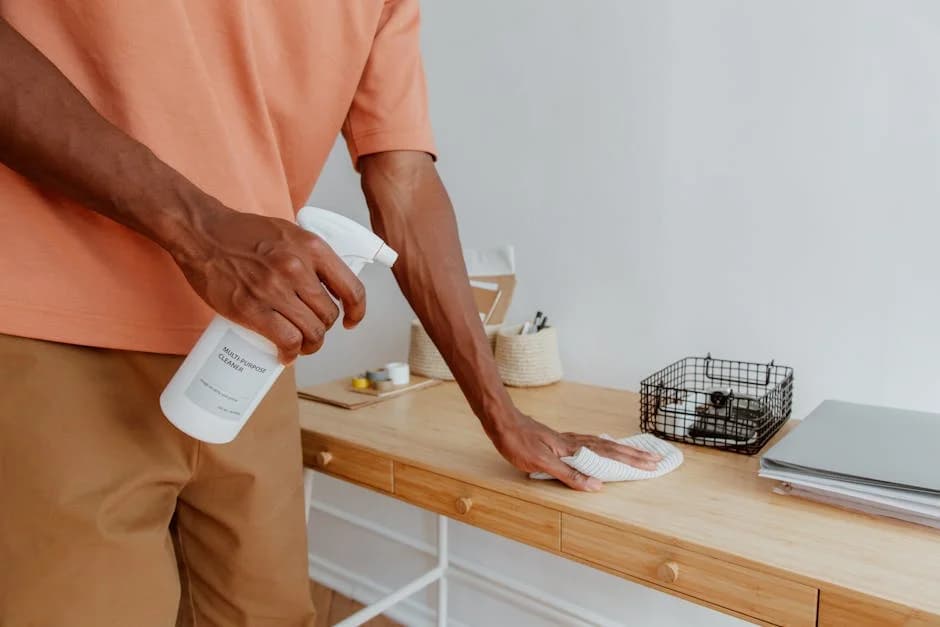

Enhancing porter services in a commercial facility is not simply adding cleaning staff to a building. It is a strategic investment that affects operational efficiency, customer satisfaction, brand reputation, employee morale, and safety — when done correctly.
Businesses that get the most from porter services approach them through a structured process that identifies specific needs, designs appropriate solutions, and builds in accountability from the start. Here is a proven five-step framework for enhancing porter services in your facility.
Step 1: Strategic Assessment
Before any changes to porter services can be meaningful, the facility's specific needs must be clearly understood. A strategic assessment examines:
Current state analysis. What porter services are currently in place? Where are the gaps between current service and desired outcomes? What complaints, incidents, or observations point to areas where daytime maintenance is falling short?
Traffic pattern mapping. Where and when do peak activity periods occur? Which areas see the most foot traffic? Which times of day generate the most maintenance needs? These patterns determine where porter coverage is most needed and when.
Pain point identification. What specific problems does the facility consistently face during operating hours? Restroom conditions that decline through the day? Common areas that deteriorate by afternoon? Entrance areas that lose their morning condition by noon? Delivery management that creates congestion or clutter?
Stakeholder input. What do employees, tenants, or customers say about facility conditions? What do cleaning staff observe that management may not see? What does building management identify as the highest-priority improvements?
This assessment creates the factual foundation for a porter service enhancement that addresses real needs rather than assumed needs.
Step 2: Customized Solutions Design
The output of a strategic assessment is a service design that addresses the specific facility's actual needs. One size does not fit all in porter services — a 300-room hotel, a 50,000 sq ft office building, and a 10,000 sq ft medical office have completely different porter service requirements.
Customized solution design addresses:
Coverage hours and zones. When does porter coverage begin and end? Which areas of the facility does the porter serve? Are there zones that need more intensive attention than others?
Task specification. What specific tasks does the porter perform? At what frequencies? To what standard? This is not a general description ("maintain common areas") but a specific task list aligned with the facility's actual pain points.
Response protocols. When incidents occur — spills, maintenance issues, guest requests — what is the porter's response protocol? What can they handle independently and what requires escalation?
Staffing levels. How many porter staff are needed to cover the facility's requirements within the designated hours? This calculation must be realistic — understaffed porter programs cannot deliver the required outcomes regardless of how good the service design looks on paper.
Janitorial service coordination. How does the porter service interface with the nightly janitorial program? What does each program handle, and what coordination prevents gaps or duplication?
Step 3: Professional Training
Porter staff who are assigned to your facility represent your organization to the customers, employees, and visitors they encounter throughout the day. The quality of that representation depends directly on the quality of their training.
Professional porter training covers:
Technical cleaning skills. Proper use of cleaning products for different surfaces, correct mopping and floor care techniques, restroom maintenance protocols, and spill response procedures. Technical competence ensures that when the porter cleans, surfaces are actually cleaned.
Customer and staff interaction. Porters interact with building occupants throughout their shift. Training on professional communication, appropriate responsiveness to requests, and knowing when to involve management ensures that these interactions are positive rather than awkward or inconsistent.
Safety procedures. Wet floor signage, chemical storage, proper lifting techniques, and awareness of slip and fall prevention. Porter staff who work in active facilities with the public must understand and apply safety procedures consistently.
Facility-specific knowledge. Every facility has specific characteristics that porters need to understand: which areas have special requirements, where supplies are stored, who to contact for different types of issues, and what standards are expected in each area.
Emergency response. Who does the porter contact for plumbing emergencies, electrical issues, medical situations, or security concerns? Clear protocols prevent frozen response when something serious occurs.
Step 4: Technology Integration
Modern porter service programs benefit from technology tools that improve efficiency, communication, and accountability:
Digital service logs. Mobile applications or tablet-based service logs allow porter staff to document completed tasks in real time, creating verifiable records of service delivery. These records support accountability discussions and provide documentation for regulatory or contractual purposes.
Work order systems. When porters identify maintenance issues — a leaking fixture, a broken tile, a burned-out light — a work order system allows immediate reporting to the maintenance team without requiring the porter to leave their assigned area or interrupt management staff.
Scheduling and routing tools. For facilities with complex layouts or multiple zones, routing tools help porter staff manage their time efficiently and ensure all areas receive appropriate attention within coverage hours.
Communication platforms. Clear communication channels between porter staff and facility management — whether through dedicated radio, messaging applications, or work order systems — enable rapid response to situations that require management involvement.
Quality monitoring tools. Inspection checklists completed digitally by supervisors create trend data that identifies service improvement opportunities and documents accountability for contract management purposes.
Step 5: Continuous Improvement
Porter service enhancement is not a one-time project — it is an ongoing process that requires regular evaluation and refinement.
Regular performance reviews. Monthly or quarterly reviews that examine service log data, complaint records, inspection scores, and occupant feedback identify what is working and what needs adjustment. These reviews should be structured and consistent, not ad-hoc.
Feedback integration. Input from building occupants, management observations, and porter staff themselves surfaces issues and opportunities that structured metrics may miss. A system for capturing and acting on this feedback is an essential part of the improvement cycle.
Scope and frequency adjustments. As facility use patterns change — new tenants, occupancy changes, renovation projects, seasonal patterns — porter service scope and frequency should be adjusted to match. A program designed for one set of conditions that is never updated will gradually fall out of alignment with actual needs.
Staff development. Porter staff who receive ongoing training, feedback, and recognition perform better and stay longer. Turnover in porter positions is costly — experienced staff who know the facility deliver better service than new hires who are still learning. Investing in staff development reduces turnover and improves service quality simultaneously.
The Six Business Reasons to Enhance Porter Services
When businesses invest in enhancing their porter services through this five-step framework, they achieve measurable outcomes across six dimensions:
- Positive first impressions — facility appearance that consistently reflects the brand's standards, not just at opening but throughout the operating day
- Operational efficiency — facilities that function smoothly because common area management, delivery handling, and incident response happen without disrupting core staff
- Customer satisfaction — customers who experience consistently clean, organized environments throughout their interaction with the facility
- Brand reputation — physical environment quality that reinforces professional standards and builds client and customer confidence
- Safety and security — well-maintained pathways, prompt spill response, and an on-site presence that maintains awareness of facility conditions
- Employee productivity and morale — staff who work in well-maintained environments perform better and express higher job satisfaction
These outcomes compound over time — a consistently well-maintained facility builds the reputation that attracts quality tenants, loyal customers, and talented employees.
Contact Mega Service Solutions to begin with a strategic assessment of your facility's porter service needs. We will work through this five-step process with you to design and implement a porter service enhancement that delivers on all six of these business outcomes.
Frequently Asked Questions
What does a commercial day porter do?
A day porter from Mega Service Solutions handles ongoing daytime facility maintenance — restroom checks and restocking, lobby and common area tidying, spill response, trash rounds, and light cleaning tasks throughout the day. Porters keep high-traffic facilities presentable during business hours without interrupting operations.
What types of facilities benefit most from day porter services?
High-traffic commercial facilities benefit most: shopping centers, airports, hospitals, large office buildings, hotels, universities, and corporate campuses. Any facility with continuous foot traffic and a need to maintain appearance and hygiene throughout the day is a good candidate for porter services.
Does Mega Service Solutions serve businesses throughout Florida?
Yes. Mega Service Solutions is headquartered in Tampa, FL and serves businesses statewide — including Tampa, Orlando, Miami, Jacksonville, Fort Lauderdale, Clearwater, St. Petersburg, Sarasota, Fort Myers, Naples, Tallahassee, Boca Raton, and Hollywood. We also serve clients nationwide. Call (813) 501-5001 or visit megasvs.com/get-a-quote to request a free assessment.
How do I get a quote from Mega Service Solutions?
Getting a quote is simple. Call us at (813) 501-5001 (available 24/7) or submit a request at megasvs.com/get-a-quote. We'll schedule a free, no-obligation facility walkthrough, assess your needs, and provide a custom proposal within 24–48 hours. There's no commitment required.
Written by
Mega Service Solutions
Tampa’s SBE & MBE certified commercial cleaning experts. Serving 500+ businesses across Florida. Learn more about our team and commitment to quality.
About our team →