
Why Classrooms Are High-Risk Germ Environments
Classrooms concentrate the ideal conditions for germ transmission: dozens of people in close contact for extended periods, shared surfaces touched repeatedly throughout the day, and a population (children) that is still developing hygiene habits and immune responses.
The transmission dynamics in a classroom are genuinely challenging. A student who arrives with a respiratory illness sits at the same desk for 50 minutes, uses the shared pencil sharpener, turns the same door handle as every other student, and touches the water fountain used by the entire school. By the end of a typical school day, a single infected student has had potential contact with dozens of surfaces touched by hundreds of other people.
The consequence — illness spreading through classroom populations, causing absenteeism, reducing learning time, and cycling through families of affected students — is familiar to every school administrator and teacher.
Effective commercial cleaning with appropriate disinfection protocols interrupts these transmission pathways. This is not a minor operational concern. The connection between school environmental hygiene and student health outcomes is well-documented: cleaner schools experience less illness transmission and lower absenteeism.
Mega Service Solutions provides commercial cleaning services for educational facilities, including classroom disinfection programs built around the specific transmission risks of the school environment.
The Highest-Risk Surfaces in Classrooms
Understanding where germs concentrate in classroom environments focuses cleaning efforts where they have the most impact:
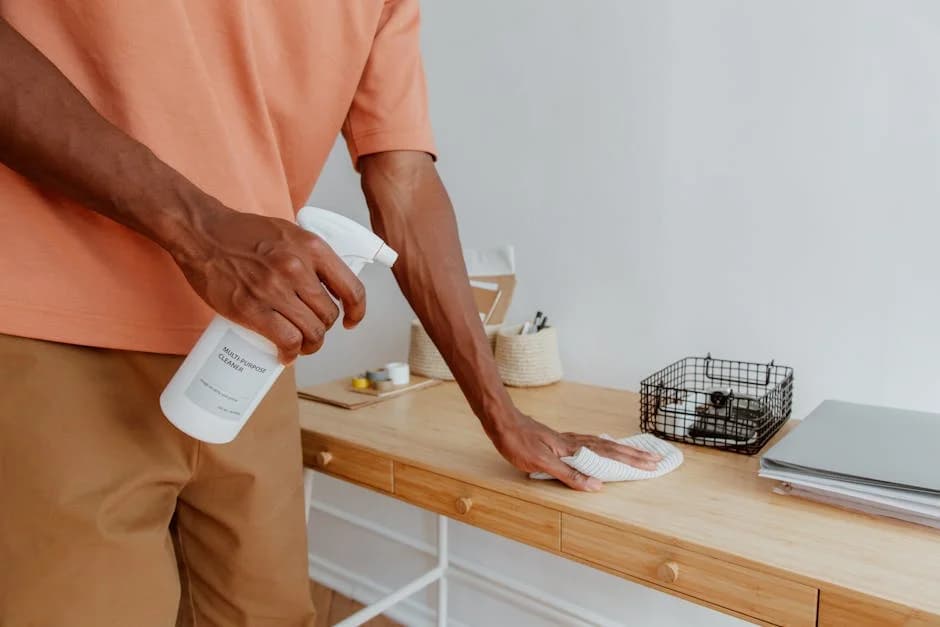
Student desks: Desks are the most obvious high-contact surface in any classroom. Students spend most of the school day in contact with their desk surface — and in many schools, multiple class groups use the same desks throughout the day. The desk surface, edges, and any storage under the desktop all require regular disinfection.
Water fountains: Water fountain mouthpieces, button activators, and surrounding surfaces are touched by every student in the school throughout the day. These are high-traffic transmission points that require disinfection multiple times daily.
Bathroom facilities: School restrooms serve as transmission hubs because of the combination of high traffic, shared surfaces, and the handwashing opportunity that, when not taken, leaves students with contaminated hands they then carry back to classrooms.
Shared equipment and supplies: Classroom materials that are shared between students — markers, scissors, rulers, remote controls, calculators, tablets, and any shared technology — transfer contamination from student to student each time they change hands.
Door handles and light switches: Every room transition involves door handle contact. A single door handle in a school corridor may be touched hundreds of times per day by different students and staff.
The teacher's desk and materials: Teachers interact with students all day — reviewing papers, handing back materials, providing physical assistance. Teacher work surfaces and frequently handled materials transfer contamination bidirectionally between teacher and students.
Professional Disinfection Protocols for Classrooms
Hospital-Grade Disinfectants
The most important element of an effective classroom disinfection program is product selection. Using EPA-registered disinfectants — not multi-purpose cleaners that do not carry disinfectant claims — ensures that the products being applied actually kill the pathogens responsible for illness transmission.
For school environments, appropriate product selection includes:
- Quaternary ammonium-based disinfectants: Effective against respiratory viruses, bacteria, and fungi; appropriate for hard non-porous surfaces like desks, chairs, and door handles
- Hydrogen peroxide formulations: Broad-spectrum, fast-acting, and residue-free; appropriate for electronics and surfaces in areas with sensitive users
- Products safe for school environments: Some disinfectants with strong chemical odors or residues are inappropriate for occupied classrooms — product selection should consider the presence of children with respiratory sensitivities
All products must be applied according to label directions, including required dwell time. This requirement — that the surface remains visibly wet for the full contact period — is the element most frequently skipped in informal cleaning approaches and the one that most significantly determines efficacy.
Color-Coded Cleaning Systems
Cross-contamination is one of the most important issues to manage in any disinfection program, and it is particularly significant in school environments where restroom and classroom cleaning occur within the same facility.
Using color-coded cleaning tools — separate mops, cloths, and spray bottles assigned specific colors for specific areas — prevents contamination from restrooms (highest biological risk) from being transferred to classrooms via shared cleaning equipment.
A typical school color-coding system:
- Red: Restroom fixtures and high-contact restroom surfaces
- Blue: Classrooms and common areas
- Green: Food service areas (cafeteria, kitchen)
- Yellow: Isolation areas or high-concern areas
Consistent adherence to the color-coded system requires staff training and regular reinforcement. The system is only as effective as its consistent implementation.
Regular Disinfection Schedules
Classroom disinfection is most effective when performed consistently on a documented schedule rather than reactively in response to visible contamination. A comprehensive schedule for classroom disinfection:
During the school day (between class periods or during transitions):
- High-touch surfaces in high-use areas including water fountain surfaces, door handles on main corridors, and restroom surfaces
- Any area where a visibly ill student was present
End of each school day:
- Full classroom desk disinfection — surfaces, edges, and chair contact surfaces
- Door handles and light switches
- Teacher's desk and work surfaces
- Shared classroom equipment and supplies
- Technology surfaces including keyboards, tablets, and touchscreens
Weekly:
- Deep cleaning of shared classroom equipment
- Window sill and ledge cleaning (dust accumulation)
- Floor deep cleaning beyond daily maintenance
Beyond Disinfection: Reducing Germ Transmission
Disinfection protocols are more effective in combination with practices that reduce transmission between cleaning cycles:
Hand hygiene support: Hand sanitizer dispensers should be positioned in every classroom and at every entry point. Students who sanitize hands upon entering and before handling shared materials significantly reduce surface contamination between cleaning cycles.
Tissue availability: Tissues and lined waste containers in every classroom allow students to address respiratory symptoms hygienically without contaminating shared surfaces.
Desk assignment during illness season: Assigned seating — during periods of elevated illness — reduces the number of students each desk surface contacts and makes cleaning contact tracing more feasible if a sick student needs to be identified.
Regular replacement of high-use supplies: Markers, erasers, and other supplies that are shared extensively become contaminated over time. Replacing these items on a scheduled basis reduces the contamination load of shared classroom materials.
What Clean Classrooms Deliver
The benefits of a rigorously maintained germ-free classroom extend beyond the obvious:
Fewer sick days: Healthy students attend school more consistently. Less absenteeism means more instructional time, more continuity in learning, and less disruption for families.
Sharper focus: Illness — even mild illness — degrades cognitive performance. Students who are healthy concentrate better, retain information more effectively, and perform better academically.
Safer teachers: Teachers who work in consistently clean classrooms experience lower illness rates. Lower teacher absenteeism reduces the disruption and cost associated with substitute coverage.
Better school reputation: Parents care about the hygiene standards of the schools their children attend. Schools with visible, communicated cleaning standards earn trust and positive community relationships.
Partner with Mega Service Solutions for Educational Facility Cleaning
Mega Service Solutions provides professional cleaning services for K-12 schools, charter facilities, and educational campuses throughout Tampa Bay. Our classroom disinfection programs use EPA-registered products, color-coded cleaning systems, and documented schedules that maintain hygiene standards consistently across every school day.
Contact us today to schedule a school facility assessment. We will evaluate your current cleaning program, identify the highest-risk areas, and build a disinfection protocol that protects your students and staff.
Frequently Asked Questions
What is the difference between cleaning, sanitizing, and disinfecting?
Cleaning removes visible dirt and debris. Sanitizing reduces bacteria to safe levels on food-contact surfaces. Disinfecting kills a broader spectrum of pathogens — bacteria, viruses, and fungi — on surfaces. For commercial facilities, Mega Service Solutions uses EPA-registered disinfectants and electrostatic application technology to achieve thorough, documented disinfection.
How often do commercial facilities need professional disinfection services?
High-touch commercial environments — healthcare, schools, gyms, food service — benefit from daily disinfection of contact surfaces. Office environments may schedule weekly or monthly disinfection programs. Mega Service Solutions can integrate disinfection into your regular janitorial program or provide standalone services.
Does Mega Service Solutions serve businesses throughout Florida?
Yes. Mega Service Solutions is headquartered in Tampa, FL and serves businesses statewide — including Tampa, Orlando, Miami, Jacksonville, Fort Lauderdale, Clearwater, St. Petersburg, Sarasota, Fort Myers, Naples, Tallahassee, Boca Raton, and Hollywood. We also serve clients nationwide. Call (813) 501-5001 or visit megasvs.com/get-a-quote to request a free assessment.
How do I get a quote from Mega Service Solutions?
Getting a quote is simple. Call us at (813) 501-5001 (available 24/7) or submit a request at megasvs.com/get-a-quote. We'll schedule a free, no-obligation facility walkthrough, assess your needs, and provide a custom proposal within 24–48 hours. There's no commitment required.
Written by
Mega Service Solutions
Tampa’s SBE & MBE certified commercial cleaning experts. Serving 500+ businesses across Florida. Learn more about our team and commitment to quality.
About our team →