Many businesses sign a janitorial contract and assume the details will take care of themselves. When the results fall short, they are often unsure why — because the scope of what professional office cleaning actually covers is rarely defined clearly upfront. This post addresses that gap.
Whether you are evaluating your first cleaning vendor or reassessing an existing service that is not meeting expectations, this breakdown of what professional office cleaning should include will help you set the right expectations and ask the right questions.
The Baseline: What Routine Office Cleaning Covers
A well-structured janitorial service for an office building typically covers the following on a daily or several-times-per-week basis:
Trash and recycling All waste receptacles emptied, bags replaced, and recycling sorted. This includes bins under individual desks, shared bins in common areas, and restroom waste.
Restroom service Toilets and urinals cleaned and disinfected, sinks wiped down, mirrors cleaned, floors mopped, soap and paper dispensers restocked.
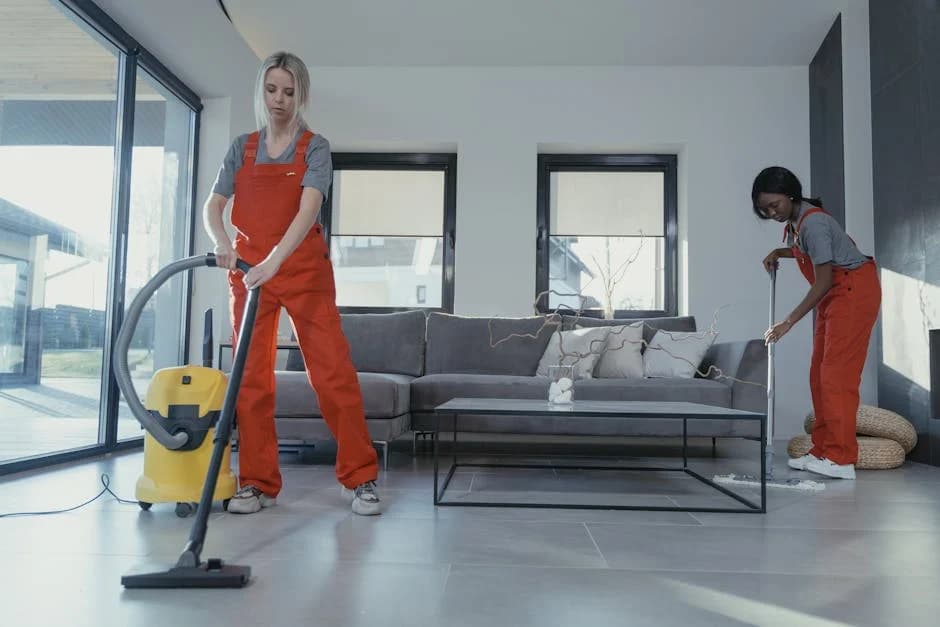
Common area floors Vacuuming of carpeted areas and mopping of hard surface floors in lobbies, hallways, break rooms, and restrooms.
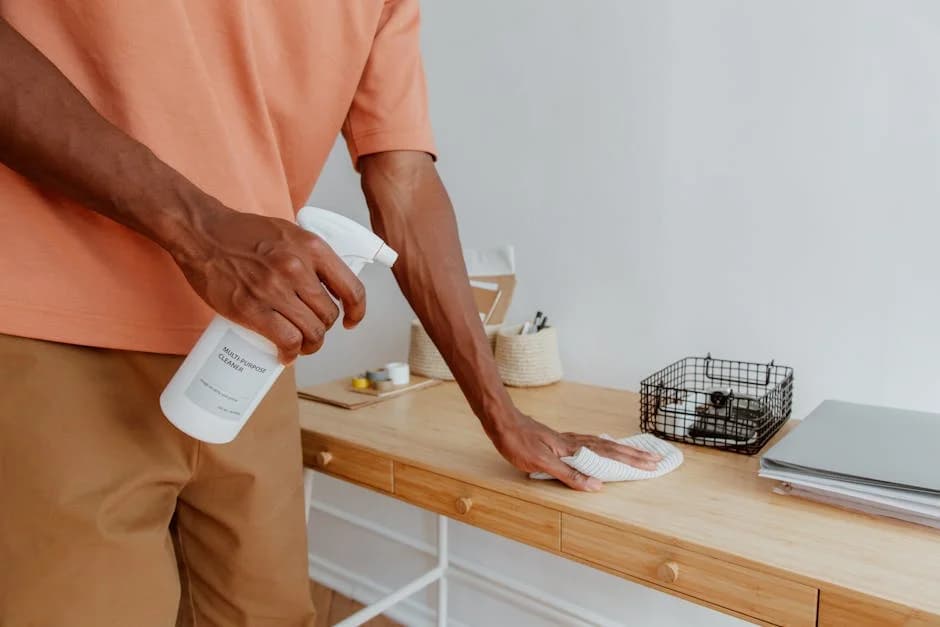
Surface wiping Reception desks, countertops, and shared surfaces wiped down with appropriate cleaning agents.
Break room and kitchenette Exterior surfaces of appliances wiped, sink cleaned, tables and chairs wiped down, floor mopped.
These tasks happen consistently and on schedule. The frequency depends on your contracted service — nightly service is common for high-traffic office buildings, while smaller offices may operate on a three-day or weekly schedule.
What Routine Service Does Not Cover
This is where confusion typically arises. Standard janitorial contracts are priced to cover routine maintenance. They do not include:
- Moving furniture to clean underneath or behind
- Deep extraction of carpet (vacuuming is included; hot water extraction is not)
- Floor stripping, waxing, or refinishing
- Interior window cleaning
- Cleaning inside refrigerators, microwaves, or other appliances
- High dusting of ceilings, vents, and light fixtures
- Exterior pressure washing
Tasks in this second category require periodic scheduling as add-on services or as part of a separate deep cleaning plan. A professional vendor will distinguish between routine and periodic services clearly in the contract.
If a vendor quotes you an all-inclusive price without breaking out these categories, ask specifically what is and is not included. Ambiguity in contracts tends to resolve in the vendor's favor.
How Professional Office Cleaning Is Scheduled
Scheduling depends on occupancy patterns and service requirements. Most office cleaning happens after-hours or in the early morning before staff arrive — this allows technicians to work without disrupting operations and ensures surfaces are dry and presentable when people arrive.
For large buildings with multiple floors, cleaning crews are typically assigned by zone to maintain consistency. The same technician assigned to your floor learns the layout, the specific requirements of that space, and any concerns you raise over time. Consistency in staffing reduces the need for repeated direction and makes quality problems easier to identify and correct.
Service frequency options:
- Nightly: Standard for high-traffic offices, medical buildings, and buildings with shared restrooms
- Three-day service: Common for smaller offices, co-working spaces, or lower-traffic environments
- Weekly: Appropriate for low-occupancy spaces or as a baseline with periodic add-ons
Your vendor should recommend frequency based on your actual occupancy and traffic patterns, not a standard template.
The Equipment and Products Professional Services Use
One of the clearest indicators of a quality office buildings cleaning vendor is what they bring with them. Professional-grade service uses equipment that produces measurably better results than consumer products:
Backpack or commercial vacuums with HEPA filtration capture fine particulates that standard upright vacuums recirculate into the air. This matters particularly for employees with allergies or respiratory conditions.
Microfiber cloths and mops trap significantly more bacteria and fine particles than conventional cotton cloths. Cross-contamination between surfaces is reduced when microfiber cloths are color-coded by zone — for example, a separate color for restrooms versus common areas.
EPA-registered disinfectants used at correct dwell times are required to deliver the kill rates listed on their labels. A product that is sprayed and immediately wiped has not had sufficient contact time to work effectively. Professional technicians know the difference.
Mechanized floor equipment — auto-scrubbers, burnishers, and extraction machines — produces outcomes that manual mopping and vacuuming cannot replicate. For any space with significant hard flooring, a vendor using mechanized equipment will deliver noticeably better results.
What You Should Receive in a Service Agreement
A professional office cleaning contract should include the following components clearly in writing:
Scope of work: A specific list of tasks, by area, at each service frequency. Vague language like "general cleaning" is not acceptable.
Service schedule: Days and approximate times of service, including any flexibility around your operations.
Staffing: Whether service will be performed by employees or subcontractors, and what background screening standards apply.
Quality assurance: How the vendor monitors quality — inspection frequency, reporting mechanisms, and what happens when work is substandard.
Communication protocol: Who to contact for urgent issues, missed service, or scope changes.
Insurance and bonding: Proof of general liability and workers' compensation coverage. This protects your business if a technician is injured on your property or if property damage occurs.
If a vendor is reluctant to provide any of these in writing, that is a meaningful signal about how they operate.
Evaluating Quality After Service Begins
Even a well-constructed contract requires active management in the early months. During the first 90 days of a new service relationship, conduct regular walk-throughs immediately after cleaning is completed. Look specifically for:
- Areas consistently missed or done poorly (typically corners, baseboards, under-desk areas)
- Restroom supply levels — are dispensers actually being checked and restocked, or just wiped?
- Floor quality — are mopped floors drying streak-free, or are dirty mop heads leaving residue?
- Odors — break rooms and restrooms should smell clean, not just masked with fragrance
Document findings with photos when possible and raise them promptly with your vendor. Problems that go unreported for weeks become normalized and harder to correct.
The Role of Periodic Deep Cleaning
Routine service maintains a clean building. Periodic deep cleaning resets it. The two work together.
A building maintained exclusively through routine service will show cumulative degradation over time — carpet that never gets extracted, floors that never get stripped, grout that never gets scrubbed. These tasks require different equipment, more time, and often a different service window than routine cleaning.
Scheduling periodic deep cleaning — typically quarterly for high-traffic areas and annually for lower-traffic spaces — extends the life of your flooring, upholstery, and finishes while addressing the health-relevant buildup that routine service cannot reach.
Specialty Services That May Apply to Your Facility
Depending on your building type, you may need services beyond standard janitorial:
- Floor care: Strip-and-wax or scrub-and-recoat for VCT tile, burnishing for vinyl composite tile, extraction for carpet
- Disinfection services: Enhanced pathogen reduction for high-touch surfaces, particularly relevant in healthcare-adjacent offices or when illness outbreaks occur
- Window cleaning: Interior and exterior glass, particularly for buildings with significant glass exposure
- Pressure washing: Building entry, parking areas, and exterior concrete
- Porter services: Daytime presence for buildings that need ongoing maintenance during business hours
A full-service commercial cleaning vendor can coordinate all of these under a single relationship, which simplifies vendor management and accountability.
Making a Decision
Professional office cleaning is a recurring operational expense. Getting it right requires clarity on scope, realistic service frequency for your traffic patterns, equipment standards, and an active quality management process.
When evaluating vendors, prioritize those who inspect your facility before quoting, provide specific written scope rather than generic service descriptions, and can demonstrate tenure with comparable accounts.
Mega Service Solutions provides janitorial service and specialty cleaning across commercial office buildings throughout Tampa Bay. If you want to understand what service level is appropriate for your facility, request a quote and we will conduct a walkthrough and provide a detailed, scope-specific proposal.
Frequently Asked Questions
What does a commercial janitorial service do?
Commercial janitorial services cover daily or nightly cleaning of restrooms, common areas, offices, breakrooms, and lobbies — including trash removal, vacuuming, mopping, surface wiping, and restroom restocking. Mega Service Solutions provides nightly, weekly, or custom-schedule janitorial programs with documented quality checks.
How do I choose a reliable commercial janitorial company?
Look for a company that is licensed, bonded, and insured; has verifiable references in your industry; uses background-checked employees; and provides a written service agreement with defined scope and accountability. Mega Service Solutions is SBE and MBE certified with 15+ years of experience serving 500+ Florida businesses.
Does Mega Service Solutions serve businesses throughout Florida?
Yes. Mega Service Solutions is headquartered in Tampa, FL and serves businesses statewide — including Tampa, Orlando, Miami, Jacksonville, Fort Lauderdale, Clearwater, St. Petersburg, Sarasota, Fort Myers, Naples, Tallahassee, Boca Raton, and Hollywood. We also serve clients nationwide. Call (813) 501-5001 or visit megasvs.com/get-a-quote to request a free assessment.
How do I get a quote from Mega Service Solutions?
Getting a quote is simple. Call us at (813) 501-5001 (available 24/7) or submit a request at megasvs.com/get-a-quote. We'll schedule a free, no-obligation facility walkthrough, assess your needs, and provide a custom proposal within 24–48 hours. There's no commitment required.
Written by
Mega Service Solutions
Tampa’s SBE & MBE certified commercial cleaning experts. Serving 500+ businesses across Florida. Learn more about our team and commitment to quality.
About our team →