Hospital cleanliness is not a matter of aesthetics. In healthcare environments, environmental hygiene is a clinical function directly linked to patient outcomes. Healthcare-associated infections (HAIs) kill tens of thousands of patients annually in the United States, and environmental contamination is a documented contributor to their transmission.
Professional commercial cleaning in hospital environments requires a fundamentally different level of expertise, protocol adherence, and accountability than general commercial janitorial service. Understanding why helps hospital administrators and facilities directors make better decisions about their environmental services programs.
The Infection Control Imperative
Hospitals concentrate patients who are uniquely vulnerable to infection — their immune systems are compromised by illness, surgery, or treatment. At the same time, hospitals concentrate pathogens, including some of the most treatment-resistant organisms that exist: Clostridioides difficile (C. diff), methicillin-resistant Staphylococcus aureus (MRSA), carbapenem-resistant Enterobacteriaceae (CRE), and vancomycin-resistant Enterococcus (VRE).
The environmental surfaces of hospital rooms — bed rails, call buttons, door handles, IV poles, over-bed tables, and bathroom fixtures — serve as reservoirs for these organisms. When patients or staff touch contaminated surfaces and then touch mucous membranes, wounds, or medical devices, transmission occurs.
Environmental cleaning that reduces surface contamination levels reduces HAI transmission. This is not theoretical — multiple studies have documented reduced HAI rates following implementation of enhanced environmental cleaning programs. The clinical stakes could not be higher.
What Differentiates Hospital Cleaning from General Commercial Cleaning
Hospital environmental services require capabilities and knowledge that general janitorial services do not need to possess.
Pathogen-specific disinfection protocols. Hospital cleaning staff must understand which disinfectants are effective against which organisms, at what contact times, and on which surfaces. C. diff, for example, requires sporicidal agents rather than standard quaternary ammonium disinfectants — a distinction that general cleaning staff may not be trained to make. Using the wrong product does not clean the surface; it provides false assurance while leaving dangerous contamination in place.
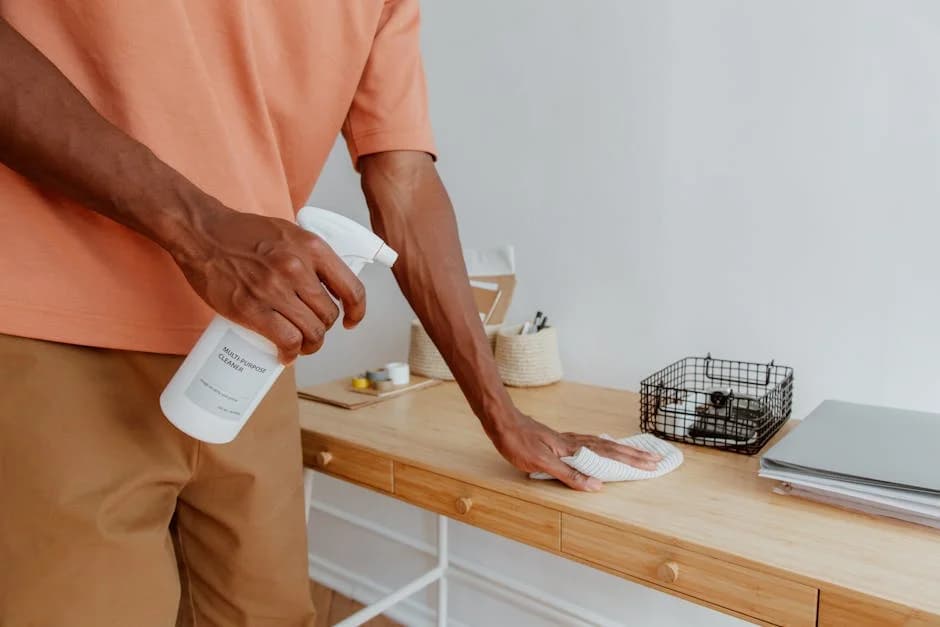
Contact time compliance. Disinfectants only work when maintained in contact with surfaces for the time specified by the manufacturer — typically 1–10 minutes depending on the product and organism. Hospital cleaning staff must apply products and allow proper contact time before wiping, not spray-and-immediately-wipe as often occurs in general commercial cleaning.
Terminal room cleaning. When a patient with an infectious condition is discharged, the room requires a "terminal clean" — a comprehensive top-to-bottom disinfection of all surfaces, including high-touch points, fixtures, floors, and high-touch horizontal surfaces. Terminal cleaning protocols in hospitals are explicit and detailed, and their proper execution directly affects whether the next patient in that room is at risk.
ICU and isolation protocols. Intensive care units and isolation rooms require elevated cleaning frequency and specific precaution procedures. Staff entering isolation rooms must follow donning and doffing procedures for personal protective equipment (PPE) and must not transfer contamination between rooms. These requirements involve training and discipline beyond standard commercial cleaning.
High-touch surface prioritization. Hospital cleaning protocols prioritize high-touch surfaces in a way that reflects their infection risk, not just their visibility. Cleaning staff who are not trained in healthcare settings may focus on floors and visible surfaces while underperforming on the smaller, less visible high-touch surfaces — door handles, call buttons, light switches, TV remotes — that have the greatest infection transmission significance.
Risk Zones in Hospital Environments
Hospital environmental services teams manage cleaning risk by zone, applying different protocols based on the risk level of each area.
Highest risk — Intensive care units, operating rooms, procedure rooms, isolation rooms. These areas require the most rigorous protocols, highest-grade disinfectants, highest cleaning frequency, and most thorough documentation. A single cross-contamination event in these areas can have severe patient consequences.
High risk — Patient rooms, patient bathrooms, nurse stations, medication rooms. Daily terminal cleaning of patient bathrooms and high-touch surfaces in patient rooms is standard. High-traffic staff areas like nurse stations see frequent hand contact and require regular disinfection.
Moderate risk — Waiting areas, hallways, elevators, common restrooms. These areas have high foot traffic and significant surface contact from patients, visitors, and staff. Regular cleaning and disinfection maintains acceptable hygiene levels, but the protocol intensity is lower than clinical areas.
Lower risk — Administrative areas, staff offices, break rooms. These areas receive general commercial cleaning protocols with the understanding that clinical contamination risk is lower than in patient care areas.
Regulatory and Accreditation Requirements
Hospitals operate under regulatory and accreditation frameworks that create explicit obligations around environmental hygiene.
The Joint Commission accreditation standards address infection prevention and control, including environmental cleanliness. Surveyors evaluate cleaning protocols, staff training, and documentation during accreditation visits. Deficiencies in environmental services create survey findings that require remediation.
CMS Conditions of Participation require that hospitals maintain a safe, sanitary environment. Environmental cleaning deficiencies identified by CMS surveyors can jeopardize Medicare and Medicaid participation — with financial consequences that dwarf any cleaning program cost.
State health department licensing. Florida's Agency for Health Care Administration (AHCA) regulates hospitals and conducts inspections that include environmental condition evaluation. AHCA findings related to environmental hygiene carry remediation requirements and can affect licensure.
Infection control committee requirements. Hospital infection control programs typically have oversight responsibility for environmental services and may conduct internal audits, monitoring, and outcome tracking related to environmental cleaning performance.
Documentation and Accountability
Professional healthcare cleaning requires documentation at a level that general commercial cleaning does not. Hospital environmental services programs should maintain:
- Service logs documenting cleaning activities, times, and areas for each shift
- Product logs showing which disinfectants were used in which areas
- Training records for all environmental services staff
- Monitoring data from direct observation or environmental sampling programs
- Corrective action records when performance falls short of standards
This documentation supports regulatory compliance, internal quality improvement, and liability protection. It also creates accountability — cleaning activities that are documented and monitored are performed at higher quality than those that are not.
The Cost of Inadequate Hospital Cleaning
The financial case for investing in high-quality hospital environmental services is compelling.
HAI direct costs. Healthcare-associated infections extend patient stays, require additional treatment, and in many cases are no longer reimbursed by CMS — meaning hospitals absorb the cost directly. The average HAI adds thousands to tens of thousands of dollars in treatment costs per patient.
Accreditation risk. Losing accreditation or CMS participation has catastrophic financial consequences for a hospital. Environmental cleaning deficiencies that contribute to accreditation issues create liability far exceeding any savings from under-investing in cleaning services.
Litigation exposure. Patients who acquire HAIs during hospital stays and their families may pursue litigation. Documentation of rigorous environmental cleaning programs is a material factor in defending against such claims.
Reputation and volume. Hospital quality ratings, HAI report cards, and online reviews increasingly reflect patient safety performance. Hospitals with high HAI rates see volume shifts as patients make informed choices about where they receive care.
Investing in a qualified, experienced commercial cleaning partner for hospital environmental services is a risk management decision with clear financial justification — not just an operational cost.
Ready to evaluate your hospital's environmental services program? Contact Mega Service Solutions for a healthcare cleaning assessment. We design hospital cleaning programs that meet regulatory requirements and support your infection control objectives.
Frequently Asked Questions
What cleaning standards apply to healthcare facilities in Florida?
Florida healthcare facilities are regulated by the Agency for Health Care Administration (AHCA) and must meet infection control standards including OSHA bloodborne pathogen protocols, CDC environmental hygiene guidelines, and accreditation standards from The Joint Commission or AAAHC. Mega Service Solutions trains crews in healthcare-specific protocols and uses EPA-registered hospital-grade disinfectants.
How is cleaning a medical facility different from regular commercial cleaning?
Healthcare cleaning requires higher disinfection standards, proper handling of potentially contaminated materials, knowledge of infection control zones, and use of hospital-grade products. Technicians must understand isolation room protocols, sterile field boundaries, and proper PPE usage. Mega Service Solutions specializes in healthcare cleaning with trained, background-checked crews.
Does Mega Service Solutions serve businesses throughout Florida?
Yes. Mega Service Solutions is headquartered in Tampa, FL and serves businesses statewide — including Tampa, Orlando, Miami, Jacksonville, Fort Lauderdale, Clearwater, St. Petersburg, Sarasota, Fort Myers, Naples, Tallahassee, Boca Raton, and Hollywood. We also serve clients nationwide. Call (813) 501-5001 or visit megasvs.com/get-a-quote to request a free assessment.
How do I get a quote from Mega Service Solutions?
Getting a quote is simple. Call us at (813) 501-5001 (available 24/7) or submit a request at megasvs.com/get-a-quote. We'll schedule a free, no-obligation facility walkthrough, assess your needs, and provide a custom proposal within 24–48 hours. There's no commitment required.
Written by
Mega Service Solutions
Tampa’s SBE & MBE certified commercial cleaning experts. Serving 500+ businesses across Florida. Learn more about our team and commitment to quality.
About our team →