A clean workplace does not happen accidentally. It happens because someone has defined what clean means, put a program in place to achieve it, and built accountability mechanisms that ensure the standard is actually met day to day. In commercial facilities, that discipline is what separates buildings that look consistently professional from those that cycle between acceptable and embarrassing.
This guide covers the practical elements of workplace cleanliness standards — what benchmarks to use, how professional standards are defined, how to hold vendors accountable, and how to build a facility culture that supports rather than undermines your cleaning program.
Defining Workplace Cleanliness Standards
The starting point for any effective workplace cleanliness program is definition. "Clean" is not a useful operating standard because it means different things to different people. The cleaning vendor who thinks the lobby looks fine and the building manager who thinks it is inadequate are not working from the same standard — and without a shared, documented definition, that gap will never close.
Effective cleanliness standards are:
Zone-specific: The restroom standard is different from the conference room standard, which is different from the mechanical room standard. Each zone has distinct cleaning requirements, appropriate products, and expected outcomes.
Observable and inspectable: A standard that cannot be verified during an inspection is not a useful standard. "Toilets cleaned" is not inspectable — "toilet bowl, exterior, and seat disinfected with EPA-registered product; no visible scale or staining" is inspectable.
Frequency-defined: Standards must specify how often each task is performed. A once-daily restroom service may be entirely inadequate for a high-occupancy facility. Frequency must match the actual contamination rate of the space.
Product-specified: Where compliance matters — healthcare environments, food service, facilities with green building certification — the specific products used are part of the standard. "Clean with appropriate product" is insufficient when the product matters for regulatory or health reasons.
Common Standards by Zone
Lobby and Entry Areas
The lobby is the first thing every visitor and employee experiences. Cleanliness standards here should be higher than any other non-critical area because the impression it creates is immediate and lasting.
Standard elements:
- Floor visibly clean, free of debris, without visible scuffs or tracked material
- Entry glass clean, streak-free, without fingerprints at handle height
- Entry mats clean, without accumulated debris along edges
- Reception surfaces wiped and free of dust accumulation
- Visible surfaces (countertops, signage, furniture) free of dust and visible soil
Inspection protocol: Walk-through within the first 30 minutes of business hours. Any deficiency found at this time indicates cleaning did not meet standard — either incomplete work or service that was done too early for the conditions that develop before business opens.
Restrooms
Restrooms are the highest-consequence zone for cleanliness failures. Standards must be specific and inspectable.
Standard elements:
- All touch surfaces (handles, flush levers, faucets, soap dispensers, paper dispensers, door hardware) disinfected with EPA-registered product
- Toilet bowls clean with no visible scale, staining, or residue under rim
- Sink basins clean and dry with no toothpaste or soap residue
- Mirror clean and streak-free
- Floor clean and dry, no hair or debris in corners
- Consumables stocked — soap, paper towels or hand dryer operational, toilet paper at minimum half full
- Odor appropriate — should smell clean, not masked with fragrance or musty
Inspection frequency: Daily in-person inspection of all restrooms. High-occupancy buildings require midday inspection in addition to post-cleaning verification.
For facilities requiring disinfection standards beyond routine janitorial service, ATP (adenosine triphosphate) testing provides an objective, quantifiable cleanliness measurement. ATP testing kits are available commercially and give a numeric contamination reading that can be benchmarked against clean/unclean thresholds.
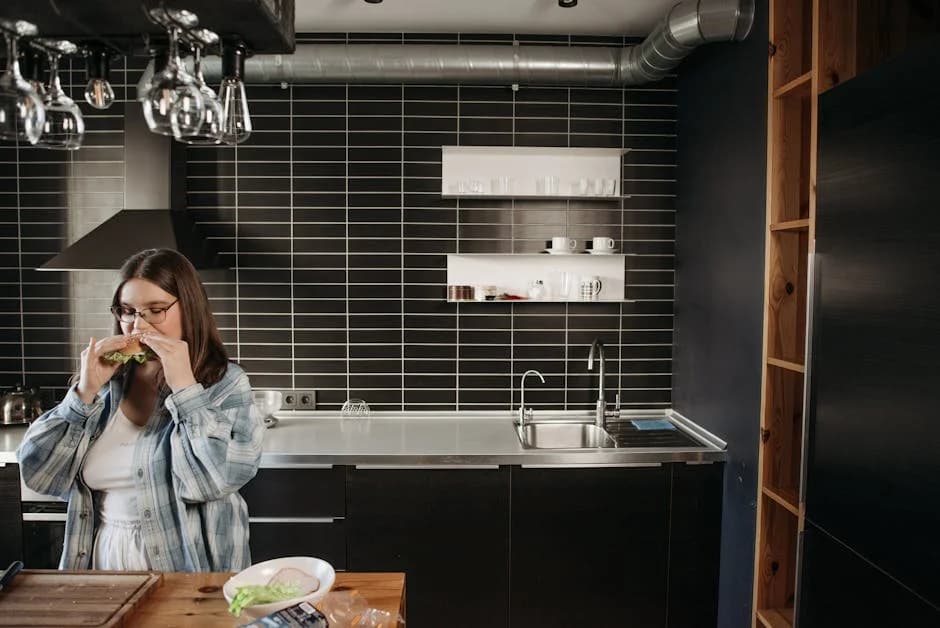
Break Rooms and Kitchenettes
Shared food spaces require daily cleaning and periodic deep cleaning.
Daily standard:
- All countertops wiped and sanitized
- Sink cleaned
- Exterior of all appliances wiped
- Refrigerator door handle sanitized
- Microwave exterior clean
- Floors mopped
- Tables and chairs cleaned
Periodic (at least monthly) standard:
- Interior of refrigerator cleaned
- Interior of microwave cleaned
- Cabinet interiors wiped
- Behind and under appliances cleaned
- Drain cleaned with enzymatic treatment
Common Areas and Corridors
Standard elements:
- Floors vacuumed or mopped as appropriate to floor type, free of visible debris
- Walls free of visible scuff marks and handprints at common contact heights
- Doors and door frames clean
- Baseboards free of dust accumulation
- Light fixtures and ceiling elements free of visible dust accumulation (verified on deep clean cycle)
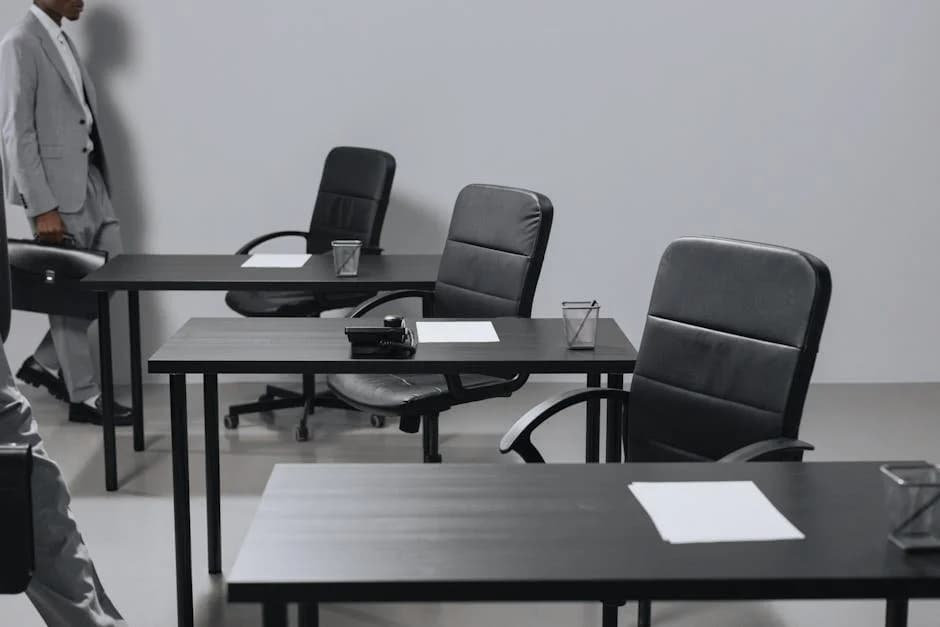
Workstations in Open Offices
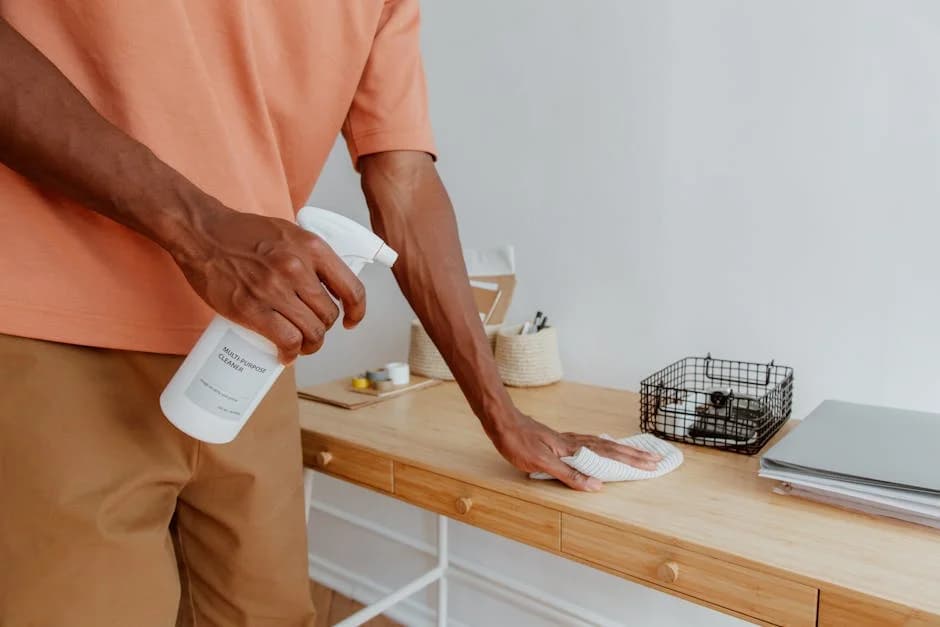
Individual workstation standards are a shared responsibility between employees and the cleaning program. The cleaning program covers:
- Floors beneath and around desks vacuumed
- Accessible desk surfaces wiped (employee should clear desk for this to be possible)
- Trash removed and bin liner replaced
Employees maintain:
- Personal items organized to allow surface cleaning
- Food and beverage cleaned up after use
- Shared equipment (printers, copiers, shared monitors) left accessible
Building Vendor Accountability
Standards are only useful if someone is checking them. Without an accountability system, vendor performance tends to drift toward minimum effort over time — particularly as novelty wears off and the vendor relationship becomes routine.
Practical accountability mechanisms:
Scheduled post-service inspections: Conduct walk-throughs after cleaning service is complete on a regular schedule — not announced to the vendor in advance. Document findings with photos. Share findings with the vendor with specific corrective action requirements and timelines.
Service logs: Require the vendor to maintain daily service logs documenting what was cleaned, by whom, and at what time. These logs should be accessible to your management team and reviewed regularly.
Escalation protocol: Define what happens when cleaning does not meet standard. A missed area can be corrected on the next service. A pattern of missed areas requires a corrective action conversation with the vendor's management. A persistent pattern is grounds for contract remedy.
Quality improvement meetings: Schedule quarterly meetings with your vendor's account manager to review performance, address any patterns, and plan upcoming periodic services. This meeting is not a formality — it is where accountability gets exercised.
ATP testing for high-stakes areas: For restrooms, food contact areas, or healthcare-adjacent zones where cleanliness has compliance consequences, periodic ATP testing provides objective verification that cleaning is achieving microbial reduction, not just surface appearance.
The Culture Dimension
Building occupants affect workplace cleanliness. A professional cleaning program in a building where people routinely leave food debris in workstations, allow mold to grow in the break room refrigerator, and do not clean up after themselves in shared spaces will struggle to maintain standard.
Facility managers can influence building culture around cleanliness through:
Clear policies: Written expectations for how shared spaces are to be left — break rooms cleaned after use, food stored appropriately in refrigerators, workstations accessible for cleaning.
Visible standards: A clean building maintains itself better than a dirty one. When cleaning standards are high and occupants can see it, they are more likely to maintain their share of the standard. The inverse compounds just as surely.
Communication: When cleaning standards change — new vendor, new products, higher frequency — communicate it. Occupants who understand that the facility cares about cleanliness standards are more engaged with maintaining them.
Feedback mechanism: Give occupants a clear way to report cleanliness concerns. Issues caught early are cheaper to address than those that become entrenched problems.
Specialty Services That Support Ongoing Standards
Maintaining workplace cleanliness standards over time requires more than routine janitorial service. Supporting services include:
Floor care services: Periodic scrub-and-recoat or strip-and-wax for hard floors, carpet extraction for carpeted areas — these prevent the gradual degradation that routine cleaning cannot reverse.
Deep cleaning: Periodic full-facility deep cleaning to address accumulation that routine service cannot reach, resetting the baseline for ongoing maintenance.
Disinfection services: Enhanced disinfection protocols for high-touch surfaces, particularly valuable in health-sensitive environments or following illness events.
Pressure washing: Exterior surfaces, parking areas, and building entry areas require periodic commercial pressure washing to maintain appearance and safety.
Pest control: Organic material accumulation in cleaning-neglected areas attracts pests. Preventive pest management coordinates with the cleaning program to address root causes.
A comprehensive cleanliness program integrates all these elements under a coordinated maintenance calendar. The result is a facility that looks professionally maintained day-to-day and maintains its appearance over years, rather than cycling between clean and degraded.
If you need to establish or improve cleanliness standards for your commercial facility, request a quote from Mega Service Solutions. We work with commercial facilities throughout Tampa Bay on janitorial programs, periodic specialty services, and maintenance programs designed to keep defined cleanliness standards consistently met.
Frequently Asked Questions
What does a commercial janitorial service do?
Commercial janitorial services cover daily or nightly cleaning of restrooms, common areas, offices, breakrooms, and lobbies — including trash removal, vacuuming, mopping, surface wiping, and restroom restocking. Mega Service Solutions provides nightly, weekly, or custom-schedule janitorial programs with documented quality checks.
How do I choose a reliable commercial janitorial company?
Look for a company that is licensed, bonded, and insured; has verifiable references in your industry; uses background-checked employees; and provides a written service agreement with defined scope and accountability. Mega Service Solutions is SBE and MBE certified with 15+ years of experience serving 500+ Florida businesses.
Does Mega Service Solutions serve businesses throughout Florida?
Yes. Mega Service Solutions is headquartered in Tampa, FL and serves businesses statewide — including Tampa, Orlando, Miami, Jacksonville, Fort Lauderdale, Clearwater, St. Petersburg, Sarasota, Fort Myers, Naples, Tallahassee, Boca Raton, and Hollywood. We also serve clients nationwide. Call (813) 501-5001 or visit megasvs.com/get-a-quote to request a free assessment.
How do I get a quote from Mega Service Solutions?
Getting a quote is simple. Call us at (813) 501-5001 (available 24/7) or submit a request at megasvs.com/get-a-quote. We'll schedule a free, no-obligation facility walkthrough, assess your needs, and provide a custom proposal within 24–48 hours. There's no commitment required.
Written by
Mega Service Solutions
Tampa’s SBE & MBE certified commercial cleaning experts. Serving 500+ businesses across Florida. Learn more about our team and commitment to quality.
About our team →