Why Hotel Disinfection Standards Matter
Hotel guests entrust their health and wellbeing to the facilities where they stay. A hotel room is used by dozens of different guests over the course of a month — each bringing different pathogen exposures, each contacting the same surfaces. Without rigorous disinfection protocols, these surfaces accumulate microbial contamination that creates real risk for subsequent guests.
Beyond direct health impact, guest perception of cleanliness and hygiene in hotels has become a primary driver of review scores and booking decisions. Online travel platforms prominently display cleanliness ratings, and guest reviews consistently reference hygiene — positively when standards are maintained, and critically when they are not. The reputational and revenue consequences of perceived disinfection failures are significant.
Effective hotel disinfection is not simply a housekeeping function — it is a service quality and brand protection strategy that requires the same rigor applied to any other core hotel operation.
Mega Service Solutions provides commercial cleaning and disinfection services for hotels throughout Tampa Bay. Here are five essential standards for hotel disinfection.
Standard 1: Strategic Surface Disinfection Targeting
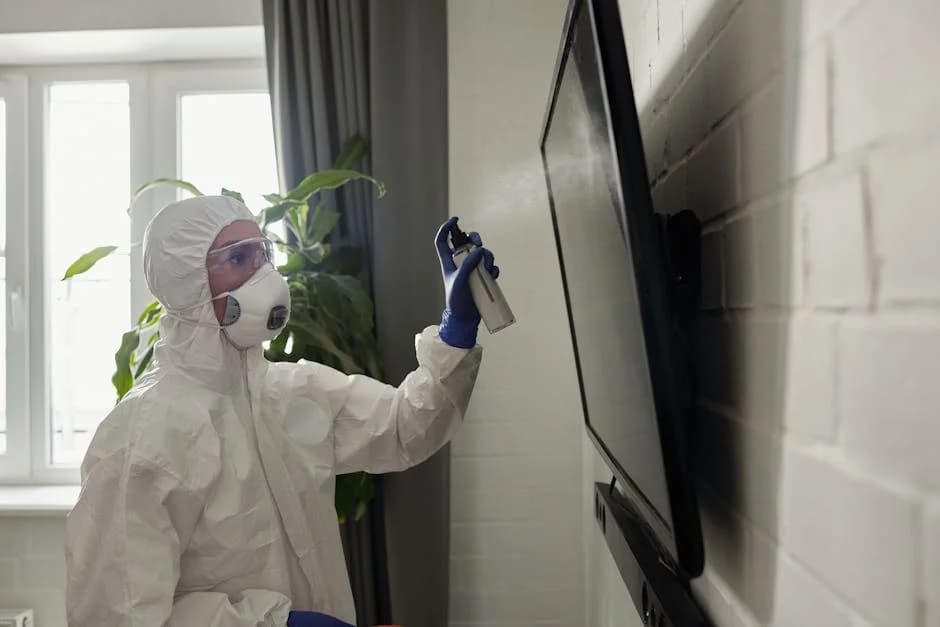
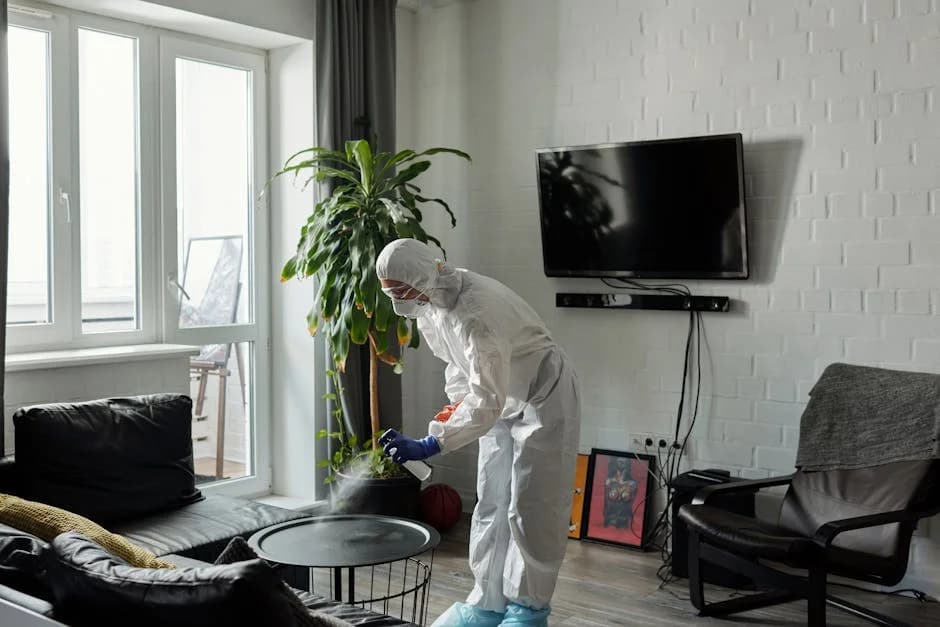
Not all hotel surfaces present equal risk. Effective disinfection programs prioritize resources on the surfaces with the highest cross-contamination potential — those contacted frequently by multiple guests or staff.
Highest priority surfaces in guest rooms:
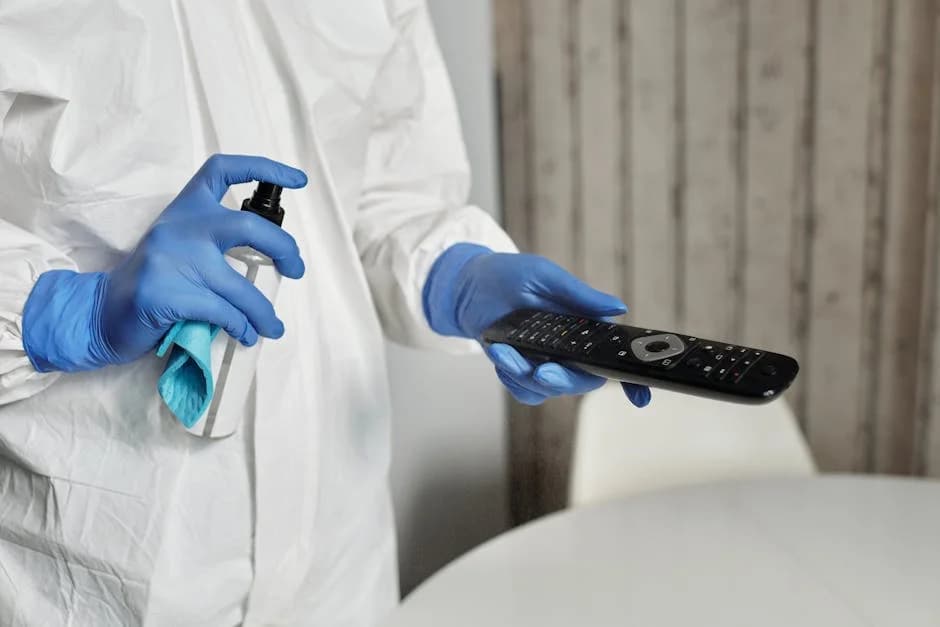
- TV remote control: Among the highest bacterial-load surfaces in hotel rooms according to multiple research studies. Touched by every guest. Requires complete surface disinfection including back of remote and between all buttons.
- Light switches: Every entry, exit, and transition in the room involves a light switch.
- Door handles — interior and exterior: Touched on every room entry and exit, by guests and housekeeping staff.
- Telephone handset and keypad: Particularly the earpiece and mouthpiece surfaces.
- Bedside clock radio or alarm controls
- HVAC thermostat controls
- Bathroom fixtures: Toilet flush handle, sink faucet handles, shower controls, and grab bars
- Dresser and nightstand drawer handles
Highest priority surfaces in common areas:
- Elevator buttons (interior and exterior, all floors)
- Lobby door handles and push plates
- Reception desk and check-in equipment
- Business center keyboards and touchscreens
- Fitness center equipment
- Pool area gate handles and locker room fixtures
Targeting disinfection efforts on these surfaces — at appropriate frequency — is more effective than attempting to disinfect every surface in the hotel at insufficient frequency.
Standard 2: Advanced Cleaning Agents
Product selection is foundational to disinfection effectiveness. Using cleaning products that are not EPA-registered disinfectants, or using disinfectants that are not effective against the relevant pathogens, produces the appearance of compliance without the actual pathogen reduction.
Requirements for hotel disinfection products:
EPA registration: Products must carry EPA registration as disinfectants. EPA List N identifies products effective against specific viral pathogens. EPA registration verifies that the product has been tested and demonstrated effective against the claimed pathogens at the stated concentration.
Appropriate pathogen spectrum: Hotel environments require disinfectants effective against bacterial pathogens (Staphylococcus aureus, E. coli, Salmonella), respiratory viruses, and in bathroom environments, fungal pathogens.
Surface compatibility: Products must be compatible with the surfaces where they are used. Certain disinfectants can damage electronics, leather, certain metals, and specialty finishes used in upscale hotel environments. Confirming compatibility before application prevents surface damage that creates maintenance costs.
Dwell time feasibility: The required contact time for efficacy must be practical for hotel turnover timelines. Products with 10-minute dwell times are difficult to apply consistently in room turnover situations. Products with 30-second to 2-minute contact times are more compatible with operational realities while still achieving disinfection.
Standard 3: Proactive Air Disinfection
Surface disinfection addresses the most documented transmission pathway in hotel environments, but air quality management contributes to the overall hygiene environment guests experience.
HVAC maintenance: Hotel HVAC systems distribute air throughout guest rooms and common areas. HVAC filters must be replaced on a schedule that prevents the filter from becoming a contamination source rather than a contamination control measure. In-room HVAC units — particularly the fan coil units common in hotel rooms — require periodic coil cleaning to prevent mold growth that the unit then circulates into the room.
In-room air quality: The characteristic smell of a hotel room is often attributed to HVAC coils, carpet, and upholstery that harbor organic contamination. Regular deep cleaning of these surfaces — professional carpet extraction, upholstery cleaning — addresses air quality at the source.
Common area ventilation: Fitness centers, pools, and lobby areas require ventilation systems sized and maintained for their specific use. Inadequate ventilation in fitness areas creates the persistent odor problems that generate negative reviews. Pool area ventilation affects both air quality and the structural condition of the facility.
UV-C supplemental treatment: Some hotels have implemented UV-C light systems in HVAC ductwork or as standalone room treatment units. UV-C at appropriate wavelengths inactivates microorganisms in air passing through the treatment zone. These systems function as supplements to, not replacements for, surface disinfection and ventilation maintenance.
Standard 4: Regular Deep Cleaning Schedules
Routine housekeeping turnover maintains guest-ready room condition between stays but does not address the accumulated contamination that develops over weeks and months in carpet, upholstery, grout, and HVAC components.
Periodic deep cleaning is required to address what routine cleaning cannot:
Room deep cleaning schedule:
- Carpet extraction: Quarterly in high-occupancy rooms; semi-annually in lower-occupancy rooms
- Upholstered furniture deep cleaning: Semi-annually
- Mattress surface treatment and protector inspection: Quarterly
- Bathroom grout deep cleaning and sealing: Annually
- Behind-furniture and under-furniture cleaning: Monthly
- HVAC coil cleaning: Annually
Common area deep cleaning schedule:
- Lobby carpet or floor deep cleaning: Monthly
- Fitness center equipment deep clean: Monthly
- Pool area grout and surface deep clean: Quarterly
- Exterior pressure washing: Quarterly
Professional deep cleaning services for hotel environments address the accumulated contamination that creates the long-term hygiene problems that routine cleaning cannot prevent.
Standard 5: Tailored Disinfection Plans
Standard hotel disinfection templates provide a starting point, but effective programs must be customized to each property's specific layout, guest profile, and operational patterns.
Factors that should customize a hotel disinfection plan:
Occupancy patterns: A resort hotel with long average stays (3–5 nights) has different disinfection requirements than a business hotel with primarily 1-night stays. Higher turnover means more frequent deep disinfection events per room per month.
Guest profile: A hotel primarily serving elderly guests has a more vulnerable population than a business transient hotel. Risk-appropriate disinfection frequency and intensity should reflect the guest population.
Facility configuration: Smaller boutique hotels with limited common space have different disinfection requirements than large convention hotels with extensive common areas, multiple food and beverage outlets, and large fitness facilities.
Seasonal patterns: Florida's tourism seasons concentrate high occupancy periods and may require increased disinfection frequency and resources during peak periods.
Past health events: Facilities that have experienced guest complaints related to cleanliness or illness should increase disinfection protocols in the affected areas until the pattern is resolved and the underlying cause addressed.
An effective hotel disinfection plan is reviewed and updated at least annually — and whenever operational circumstances change significantly.
Why Professional Disinfection Services Support Hotel Standards
Professional commercial cleaning services for hotels provide several advantages over in-house programs for maintaining disinfection standards:
Product expertise: Professional cleaning companies maintain current knowledge of EPA-registered disinfectants, appropriate application methods, and surface compatibility — ensuring products are used correctly for effective outcomes.
Consistent execution: Professional programs with trained staff and documented protocols deliver consistent results regardless of individual staff turnover or day-to-day variability in in-house staffing.
Deep cleaning capability: Professional equipment — auto-scrubbers, carpet extractors, upholstery cleaning systems — is required for effective deep cleaning that in-house programs typically cannot match.
Documentation: Professional cleaning partners maintain cleaning logs, product use records, and quality inspection documentation that supports hotel management oversight and provides evidence for guest relations situations.
Elevate Your Hotel's Disinfection Standards
The guest experience begins with a clean, safe room and facility. The investment in professional disinfection programs that meet or exceed the standards guests expect pays back through better reviews, stronger loyalty, and the reputation that drives bookings.
Contact Mega Service Solutions today to schedule a hotel consultation and assessment. We will evaluate your current disinfection program and develop a plan that protects your guests and your property's reputation.
Frequently Asked Questions
What is the difference between cleaning, sanitizing, and disinfecting?
Cleaning removes visible dirt and debris. Sanitizing reduces bacteria to safe levels on food-contact surfaces. Disinfecting kills a broader spectrum of pathogens — bacteria, viruses, and fungi — on surfaces. For commercial facilities, Mega Service Solutions uses EPA-registered disinfectants and electrostatic application technology to achieve thorough, documented disinfection.
How often do commercial facilities need professional disinfection services?
High-touch commercial environments — healthcare, schools, gyms, food service — benefit from daily disinfection of contact surfaces. Office environments may schedule weekly or monthly disinfection programs. Mega Service Solutions can integrate disinfection into your regular janitorial program or provide standalone services.
Does Mega Service Solutions serve businesses throughout Florida?
Yes. Mega Service Solutions is headquartered in Tampa, FL and serves businesses statewide — including Tampa, Orlando, Miami, Jacksonville, Fort Lauderdale, Clearwater, St. Petersburg, Sarasota, Fort Myers, Naples, Tallahassee, Boca Raton, and Hollywood. We also serve clients nationwide. Call (813) 501-5001 or visit megasvs.com/get-a-quote to request a free assessment.
How do I get a quote from Mega Service Solutions?
Getting a quote is simple. Call us at (813) 501-5001 (available 24/7) or submit a request at megasvs.com/get-a-quote. We'll schedule a free, no-obligation facility walkthrough, assess your needs, and provide a custom proposal within 24–48 hours. There's no commitment required.
Written by
Mega Service Solutions
Tampa’s SBE & MBE certified commercial cleaning experts. Serving 500+ businesses across Florida. Learn more about our team and commitment to quality.
About our team →