Workplace hygiene compliance has moved from a background concern to a front-line operational expectation. Facility managers, building owners, and business operators are now expected to maintain documented, defensible disinfection programs — not only during illness outbreaks but as a continuous standard of facility care.
This guide covers the regulatory framework, product standards, surface prioritization, and operational practices that constitute a sound workplace disinfection program. It applies to commercial offices, healthcare-adjacent facilities, schools, food service environments, and any other setting where pathogen transmission is an operational concern.
The Regulatory Foundation
Workplace disinfection in the United States operates within a framework governed by three primary authorities:
EPA Registration Requirements
Disinfectants used in commercial settings must be registered with the Environmental Protection Agency. EPA registration confirms that the product has been tested and proven effective against the specific pathogens listed on its label, when used as directed. Using a product marketed as a "cleaner" or "sanitizer" is not equivalent to using a registered disinfectant — the terms have distinct regulatory meanings.
Products are registered under EPA List designations based on pathogen type. Facilities with specific pathogen concerns should verify that their chosen products appear on the appropriate EPA list for the pathogens of concern. Your cleaning vendor should be able to produce the EPA registration number and label for any disinfectant used in your facility.
OSHA General Duty Clause
OSHA's General Duty Clause (Section 5(a)(1) of the Occupational Safety and Health Act) requires employers to maintain workplaces free from recognized hazards that are causing or likely to cause death or serious physical harm. Inadequate workplace hygiene programs — particularly in facilities where employees have significant exposure to pathogens — can be cited under this provision.
More specifically, OSHA's Bloodborne Pathogen Standard (29 CFR 1910.1030) applies to facilities where employees may be exposed to blood or other potentially infectious materials. This includes healthcare settings, first aid stations, and facilities where injuries may occur.
CDC Environmental Cleaning Guidance
The CDC provides guidance on environmental cleaning in institutional settings that, while not legally binding for most commercial facilities, represents the recognized professional standard. Facilities that follow CDC guidance have a strong basis for demonstrating that their program meets industry expectations.
Cleaning vs. Sanitizing vs. Disinfecting
These three terms are not interchangeable, and the distinctions matter for compliance and effectiveness:
Cleaning removes visible dirt, debris, and organic matter from surfaces. Cleaning does not reliably kill pathogens, but it is a prerequisite for effective disinfection — organic matter on surfaces can neutralize disinfectants and prevent contact with the surface beneath.
Sanitizing reduces the bacterial count on surfaces to levels considered safe by public health standards. Sanitizing products are typically used on food contact surfaces and are tested against bacteria but not necessarily viruses or fungi.
Disinfecting kills or inactivates a specified range of pathogens as listed on the product label. EPA-registered disinfectants must achieve a 99.999% reduction (5-log) in bacterial populations. Disinfection is appropriate for non-food contact surfaces in high-risk environments.
A proper workplace hygiene protocol uses cleaning as a first step, followed by disinfection of high-touch surfaces, with sanitization reserved specifically for food contact applications.
Surface Prioritization
Not all surfaces present equal transmission risk. Effective disinfection programs concentrate attention on high-touch surfaces — those contacted frequently by multiple people — while maintaining routine cleaning elsewhere.
High Priority: High-Touch Surfaces
These surfaces receive the most frequent disinfection and must use EPA-registered products:
- Door handles and push plates (entry doors, restrooms, stairwells)
- Elevator buttons
- Light switches and thermostat controls
- Restroom fixtures (toilet handles, faucets, paper dispenser handles)
- Kitchen and break room surfaces: countertops, microwave touchpads, refrigerator handles, coffee machine controls
- Reception and check-in surfaces
- Shared equipment: copier touchscreens, badge readers, shared keyboards and mice
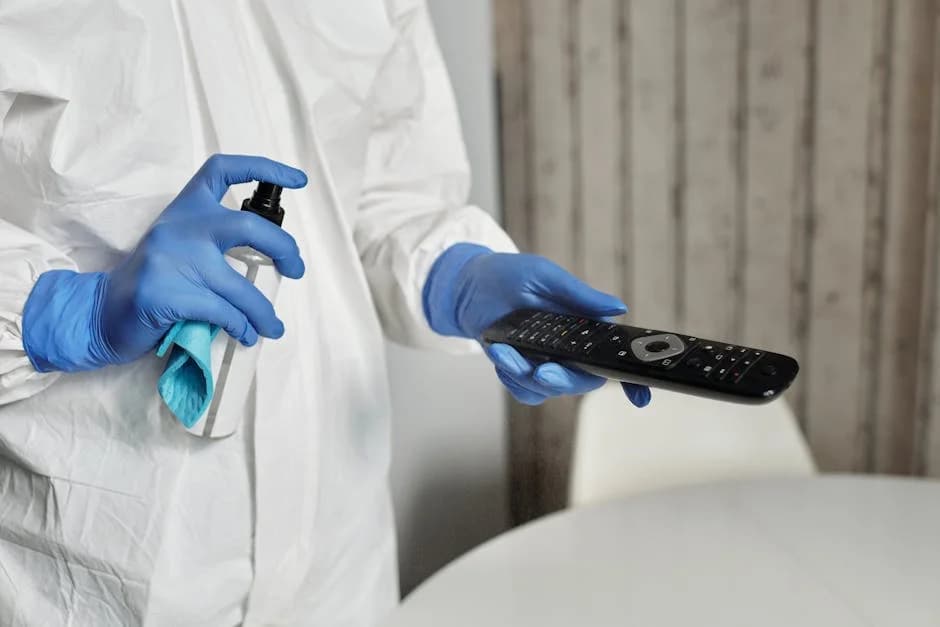
- Conference room surfaces: table edges, remote controls, whiteboard markers and trays
These surfaces should be disinfected at least daily in a typical office environment and more frequently in high-traffic or higher-risk settings.
Moderate Priority: Regularly Touched Surfaces
- Individual desk surfaces (where applicable)
- Chair arms in common areas
- Stair railings
- Storage cabinet handles in common areas
These surfaces should receive attention as part of routine cleaning or at a minimum weekly disinfection cycle.
Standard Priority: Infrequently Touched Surfaces
- Walls
- Floors (except restrooms)
- Ceilings
These surfaces require cleaning but not necessarily routine disinfection under normal operating conditions.
Disinfection Protocols: Key Requirements
Dwell Time
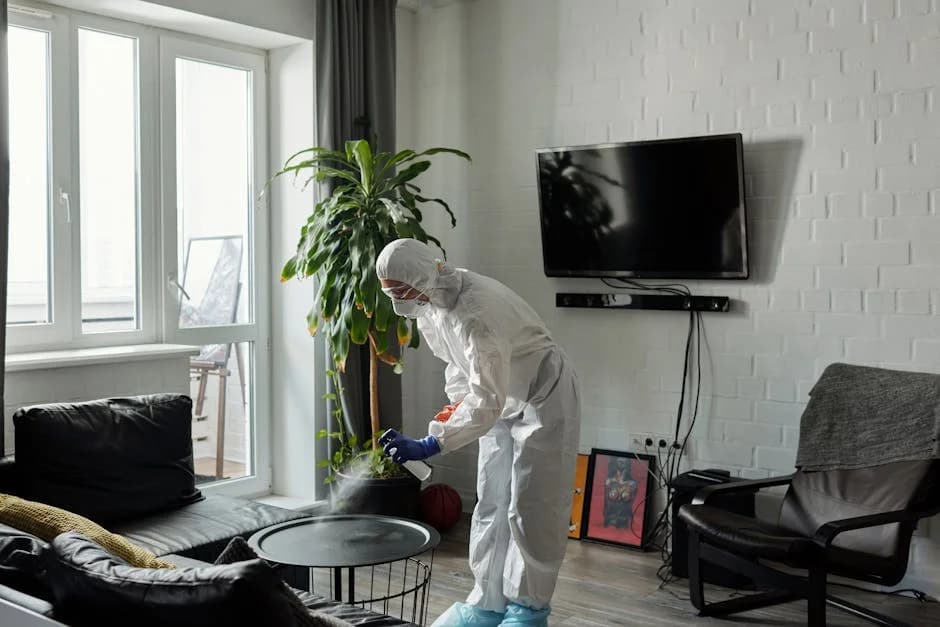
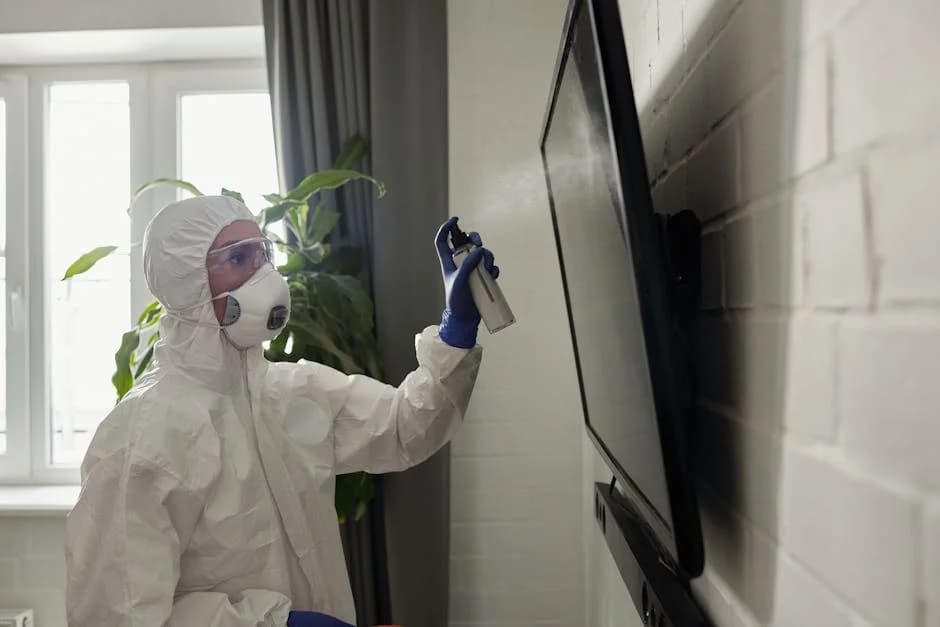
This is the most commonly neglected requirement in commercial disinfection. Every EPA-registered disinfectant has a specified dwell time — the period the treated surface must remain visibly wet with the product to achieve the kill rates stated on the label.
Dwell times range from as short as 30 seconds for some quaternary ammonium products to as long as 10 minutes for products targeting more resistant pathogens. A surface that is sprayed and immediately wiped dry has not been disinfected — it has only been cleaned. Compliance with dwell time is non-negotiable for effective disinfection.
Professional disinfection services use products selected in part for their dwell time characteristics, and trained technicians understand the requirement to allow products to dwell before wiping or air drying.
Pre-Cleaning
As noted, organic material on surfaces interferes with disinfectant chemistry. In practical terms, this means visibly soiled surfaces must be cleaned before disinfection. In office environments, this usually means wiping with a damp cloth before applying disinfectant. In higher-risk environments, it may mean a dedicated cleaning step with a separate product.
Product Rotation
Using the same disinfectant product continuously in a facility can contribute to the development of tolerance in some bacterial populations over time. Some hygiene programs incorporate planned rotation between chemically distinct disinfectant classes — for example, alternating between quaternary ammonium compounds and hydrogen peroxide-based products.
This practice is more critical in healthcare settings than in standard commercial offices, but it is worth discussing with your cleaning vendor if pathogen resistance is a documented concern in your industry.
PPE Requirements
Personnel applying disinfectants must use appropriate personal protective equipment as specified on the product label. For most commercial disinfectants used in office settings, this means gloves and adequate ventilation. Products with higher chemical activity — chlorine-based, hydrogen peroxide at higher concentrations — may require additional respiratory protection.
Building a Documented Disinfection Program
Regulatory compliance requires documentation. A defensible workplace hygiene program includes:
Written protocols: A written document specifying which surfaces are disinfected, what products are used, at what frequency, and by whom. This document should reference the EPA registration numbers of the products used.
Training records: Documentation that cleaning staff have been trained on product use, dwell time requirements, PPE requirements, and application procedures.
Service logs: Records of when disinfection was performed, by whom, and any deviations from the standard schedule.
Product documentation: Safety Data Sheets (SDS) for all products used, accessible in the facility.
Incident procedures: A written procedure for enhanced disinfection in response to a confirmed illness in the workplace, including notification protocols, enhanced frequency, and return-to-work criteria.
If your current cleaning vendor cannot produce or support this documentation framework, they are not operating at a compliance standard. A professional vendor providing janitorial services to compliance-sensitive facilities maintains these records as a standard part of service delivery.
Frequency Guidelines by Facility Type
Commercial office (standard):
- High-touch surfaces: daily disinfection
- Restrooms: daily cleaning and disinfection with multiple daily attention points for high-use facilities
- General surfaces: routine cleaning at service frequency; disinfection weekly or as needed
Healthcare-adjacent offices (medical, dental, therapy):
- Exam room and treatment area surfaces: between-patient disinfection, daily comprehensive protocol
- Waiting area high-touch surfaces: multiple times daily
- Restrooms: several times daily
- Full facility: see medical office cleaning guide for detailed protocols
Food service and restaurant:
- Food contact surfaces: before each use, after contamination, at regular intervals during service
- Kitchen surfaces: daily comprehensive cleaning and disinfection
- Dining area high-touch surfaces: between seatings, at minimum
Educational facilities:
- Classroom surfaces and shared equipment: daily disinfection
- Restrooms: at minimum two to three times daily
Common Failures in Commercial Disinfection Programs
Using consumer products in commercial settings. Consumer-grade disinfecting wipes and sprays are not designed for institutional use volumes and may not meet the frequency requirements of a commercial facility. They also may not carry EPA registration for all pathogen types relevant to your setting.
No dwell time compliance. The single most common failure — products sprayed and immediately wiped without allowing the required contact time.
Surface omissions. Programs that address desks and restrooms but overlook elevator buttons, HVAC controls, break room appliances, and shared equipment create significant coverage gaps.
No documentation. A verbal commitment from a cleaning vendor that disinfection is being performed does not constitute a documented compliance record.
Inconsistent frequency. Disinfection programs that are rigorous when concerns are elevated and absent during routine operations are not defensible as a continuous hygiene standard.
Working With Your Cleaning Vendor
Your cleaning vendor is a critical partner in workplace hygiene compliance. They should be able to:
- Identify the specific EPA-registered products they use and produce the product labels
- Confirm their training program for disinfection protocols including dwell time
- Provide written documentation of service including which surfaces were treated
- Respond to elevated disinfection needs (employee illness, suspected contamination events) with an enhanced service protocol
- Advise on appropriate disinfection frequency for your facility type and occupancy
If your current vendor cannot do these things, or if your facility lacks a formal documented disinfection program, request a quote from Mega Service Solutions. We provide disinfection services and janitorial programs with documented protocols for commercial facilities throughout Tampa Bay.
Frequently Asked Questions
What is the difference between cleaning, sanitizing, and disinfecting?
Cleaning removes visible dirt and debris. Sanitizing reduces bacteria to safe levels on food-contact surfaces. Disinfecting kills a broader spectrum of pathogens — bacteria, viruses, and fungi — on surfaces. For commercial facilities, Mega Service Solutions uses EPA-registered disinfectants and electrostatic application technology to achieve thorough, documented disinfection.
How often do commercial facilities need professional disinfection services?
High-touch commercial environments — healthcare, schools, gyms, food service — benefit from daily disinfection of contact surfaces. Office environments may schedule weekly or monthly disinfection programs. Mega Service Solutions can integrate disinfection into your regular janitorial program or provide standalone services.
Does Mega Service Solutions serve businesses throughout Florida?
Yes. Mega Service Solutions is headquartered in Tampa, FL and serves businesses statewide — including Tampa, Orlando, Miami, Jacksonville, Fort Lauderdale, Clearwater, St. Petersburg, Sarasota, Fort Myers, Naples, Tallahassee, Boca Raton, and Hollywood. We also serve clients nationwide. Call (813) 501-5001 or visit megasvs.com/get-a-quote to request a free assessment.
How do I get a quote from Mega Service Solutions?
Getting a quote is simple. Call us at (813) 501-5001 (available 24/7) or submit a request at megasvs.com/get-a-quote. We'll schedule a free, no-obligation facility walkthrough, assess your needs, and provide a custom proposal within 24–48 hours. There's no commitment required.
Written by
Mega Service Solutions
Tampa’s SBE & MBE certified commercial cleaning experts. Serving 500+ businesses across Florida. Learn more about our team and commitment to quality.
About our team →