Why Standard Cleaning Cannot Address Grease
Commercial floor cleaning in food service, industrial, and automotive environments faces a challenge that routine mopping cannot solve: grease. Petroleum-based contamination from machinery and vehicles, cooking grease in commercial kitchens, and hydraulic fluid in industrial settings create a bond with floor surfaces that water-based cleaning agents do not break.
When floor mopping is applied over grease contamination, it often spreads the grease rather than removing it — creating a thin, invisible film on the floor surface that is far more hazardous than visible grease accumulation. This is one of the leading causes of slip and fall incidents in commercial environments where mopping is applied as the primary cleaning method without prior degreasing.
Professional floor degreasing is the specific, targeted process that removes petroleum and cooking grease contamination from commercial floors — creating a surface that is genuinely safe for foot and vehicle traffic, and that subsequent cleaning can maintain effectively.
Mega Service Solutions provides commercial floor care services including professional degreasing for food service, industrial, and automotive facilities throughout Tampa Bay.
Where Commercial Floor Degreasing Is Required
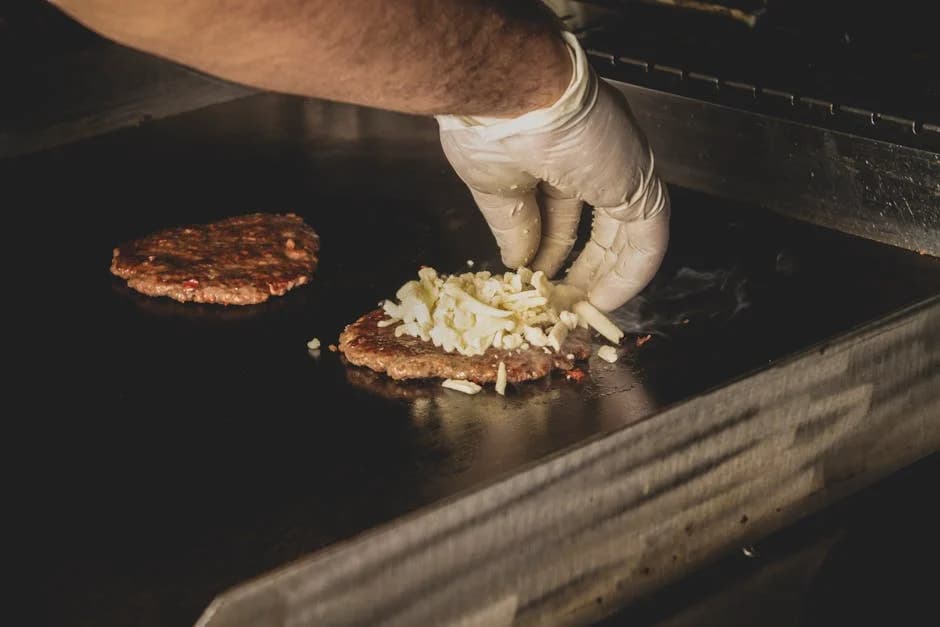
Commercial and Restaurant Kitchens
Commercial kitchen floors accumulate cooking grease from multiple sources:
- Spatter from frying operations: Oil from fryers creates fine aerosol that settles on floor surfaces throughout the kitchen
- Drips from cooking equipment: Grease that collects in and around ranges, fryers, and griddles drips onto floors during cooking operations
- Waste water from washing: Dishwashing and sink waste carries grease onto floor surfaces
- Foot traffic distribution: Kitchen staff who step in grease-contaminated areas track contamination throughout the kitchen
Kitchen floors that are mopped without degreasing become progressively more contaminated with each mop cycle — the mop water distributes grease across the entire floor rather than removing it. The result is a uniform, thin grease film that creates serious slip hazard across the entire floor surface.
Effective commercial kitchen floor maintenance requires degreasing before any wet mopping. Our commercial kitchen cleaning services include proper degreasing as a foundational step.
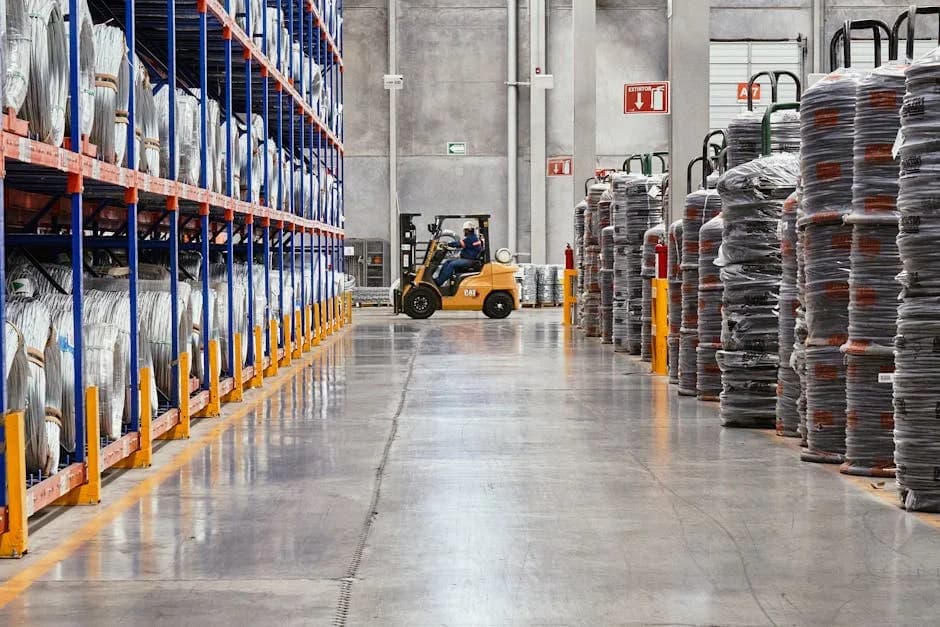
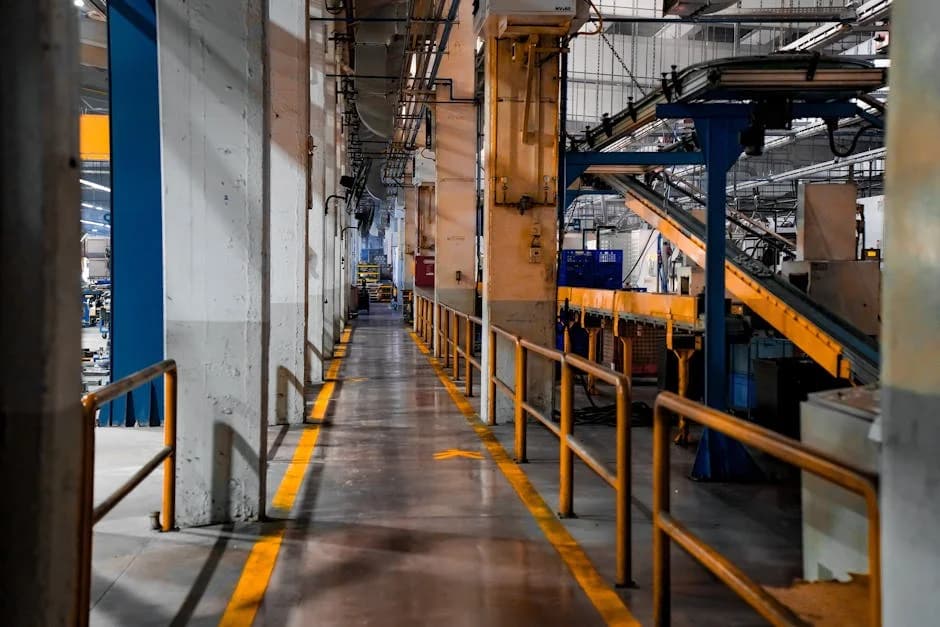
Industrial and Warehouse Facilities
Forklift operations, manufacturing machinery, and vehicle maintenance activities introduce petroleum-based contamination to warehouse and industrial floors continuously:
- Forklift hydraulic leaks: Even well-maintained forklifts develop minor hydraulic fluid leaks that contaminate floor surfaces on forklift travel paths
- Engine oil and transmission fluid: Vehicles and equipment that are maintained in the facility drip petroleum-based fluids during parking and operation
- Machining coolant: CNC machining and other precision manufacturing processes use coolant that collects on floors around machinery
Industrial floor areas with petroleum contamination create OSHA-recognized slip hazards. Forklifts operating on contaminated floors are subject to stability and braking concerns that increase accident risk. Petroleum contamination also attracts and retains dirt, accelerating floor surface wear.
Industrial floor maintenance that includes regular degreasing is a core safety and asset protection measure for any warehouse or manufacturing facility.
Automotive Dealerships and Service Facilities
Auto dealership service bays accumulate oil, transmission fluid, brake fluid, and hydraulic fluid from every vehicle that receives service. Without proper degreasing:
- Technicians working on vehicles are exposed to slip hazard from floor contamination
- Petroleum staining penetrates unsealed concrete and becomes increasingly difficult to remove over time
- Environmental compliance for petroleum waste management is complicated by contamination spread across the floor
Service bay floor degreasing should be performed regularly — the frequency depending on service volume — with full extraction of degreasing solution and contaminated material before the floor is returned to service.
Restaurant Loading Docks and Exterior Areas
Loading dock areas at restaurants and food service operations accumulate food waste, cooking oil residue, and grease from waste management activities. Exterior concrete in these areas becomes contaminated with grease that creates both slip hazard and environmental compliance concerns (grease in storm drains is a regulatory issue in most jurisdictions).
Pressure washing services combined with appropriate degreasing chemicals address exterior grease contamination on loading docks and surrounding concrete areas.
The Degreasing Process: How It Works
Professional floor degreasing is a multi-step process that physically removes grease from floor surfaces rather than simply distributing it:
Step 1: Application of Degreaser
Commercial degreasers are alkaline (high-pH) chemical solutions that saponify (chemically convert) petroleum-based grease — breaking it from a water-insoluble oily substance into a water-miscible soap that can be removed with water.
The appropriate degreaser concentration depends on:
- The degree of grease contamination
- The flooring material (certain degreasers can attack epoxy coatings at high concentrations)
- The specific type of grease (cooking grease vs. petroleum grease respond differently to degreaser chemistry)
Degreaser is applied generously to the contaminated area and allowed to dwell — maintaining wet contact with the surface — for a specified period. The dwell time allows the chemical reaction to occur: grease conversion from insoluble to miscible form.
Step 2: Agitation
After appropriate dwell time, the degreasing solution is agitated using a floor machine with appropriate pads or brushes, or a pressure washer. Mechanical agitation breaks the bond between grease and the floor surface and ensures complete contact between the degreaser and all contaminated surfaces.
In kitchen environments, this may involve scrubbing the floor surface under the degreasing solution by hand in areas adjacent to cooking equipment, where contamination is heaviest.
Step 3: Rinse and Extraction
The emulsified grease — now suspended in the degreasing solution — must be completely removed from the floor surface. Inadequate rinsing and extraction leaves a residue of the degreaser-grease mixture on the floor surface, which is itself a slip hazard.
Proper extraction uses:
- Wet-dry vacuums or industrial floor vacuums to remove degreasing solution and suspended grease
- Mop-and-bucket with clean water for final rinse in accessible areas
- Pressure washer rinse followed by extraction in appropriate outdoor or drain-equipped areas
In enclosed areas, proper drainage or extraction is critical — pooling degreasing solution is a slip hazard.
Step 4: Final Inspection
After degreasing and rinsing, the floor surface should be inspected under adequate lighting to verify that grease contamination has been removed. Residual grease often appears as shiny or darker areas on the floor surface in low-angle lighting.
Any areas where contamination remains should receive a second degreasing treatment before the floor is returned to service.
Degreasing Frequency for Different Facilities
The appropriate degreasing frequency depends on contamination generation rate:
| Facility Type | Recommended Frequency |
|---|---|
| High-volume commercial kitchen | Weekly (floors), Monthly (full degreasing) |
| Moderate-volume restaurant | Monthly |
| Industrial facility with heavy machinery | Monthly or Quarterly |
| Automotive service bay | Monthly |
| Loading dock (food service) | Weekly or Bi-weekly |
| Warehouse with forklift traffic | Quarterly |
These are baseline recommendations. Facilities with observed grease accumulation should increase frequency until the baseline maintenance schedule is adequate to prevent significant buildup.
The Safety and Compliance Case for Degreasing
OSHA compliance: OSHA's General Duty Clause requires employers to provide workplaces free from recognized hazards. Grease-contaminated floors are a recognized hazard for slip and fall incidents. Facilities with documented slip incidents on floors without evidence of regular degreasing face heightened OSHA citation risk.
Workers' compensation: Slip and fall incidents in commercial kitchens and industrial facilities are a significant source of workers' compensation claims. A single claim typically exceeds the annual cost of a professional floor degreasing program many times over.
Facility asset protection: Petroleum contamination that penetrates floor coatings and unsealed concrete accelerates surface deterioration and increases the frequency and cost of floor maintenance interventions over time. Regular degreasing before contamination reaches this level of penetration extends floor life.
Environmental compliance: Grease that enters floor drains and storm drain systems is regulated under EPA and local stormwater management rules. Facilities with documented grease management programs — including floor degreasing — demonstrate compliance intent that is relevant if environmental compliance is questioned.
Partner with Mega Service Solutions for Floor Degreasing
Mega Service Solutions provides professional floor degreasing services for commercial kitchens, industrial facilities, automotive service operations, and any commercial environment with grease contamination challenges throughout Tampa Bay.
Our floor care programs include degreasing as a core component — not an add-on — for appropriate facility types. We use commercial-grade degreasers appropriate for each flooring system, with proper extraction and disposal to ensure the degreasing process removes rather than redistributes contamination.
Contact us today to schedule a facility assessment and floor care consultation. We will evaluate your current floor condition, degreasing needs, and build a maintenance program that keeps your floors safe, clean, and protected.
Frequently Asked Questions
What does professional commercial floor care include?
Professional commercial floor care from Mega Service Solutions includes stripping and waxing VCT floors, burnishing, top scrub recoating, carpet cleaning, grout cleaning, and preventive maintenance programs. Services are tailored to your floor type and traffic levels. We use commercial-grade equipment and products to restore and protect flooring surfaces.
How often should commercial floors be professionally serviced?
Most commercial facilities benefit from monthly or quarterly deep floor care, with daily or weekly maintenance cleaning in between. High-traffic areas like lobbies, corridors, and restrooms typically require more frequent service. Mega Service Solutions will assess your facility and recommend a schedule that protects your flooring investment.
Does Mega Service Solutions serve businesses throughout Florida?
Yes. Mega Service Solutions is headquartered in Tampa, FL and serves businesses statewide — including Tampa, Orlando, Miami, Jacksonville, Fort Lauderdale, Clearwater, St. Petersburg, Sarasota, Fort Myers, Naples, Tallahassee, Boca Raton, and Hollywood. We also serve clients nationwide. Call (813) 501-5001 or visit megasvs.com/get-a-quote to request a free assessment.
How do I get a quote from Mega Service Solutions?
Getting a quote is simple. Call us at (813) 501-5001 (available 24/7) or submit a request at megasvs.com/get-a-quote. We'll schedule a free, no-obligation facility walkthrough, assess your needs, and provide a custom proposal within 24–48 hours. There's no commitment required.
Written by
Mega Service Solutions
Tampa’s SBE & MBE certified commercial cleaning experts. Serving 500+ businesses across Florida. Learn more about our team and commitment to quality.
About our team →