Why Industrial Floors Require Specialized Maintenance
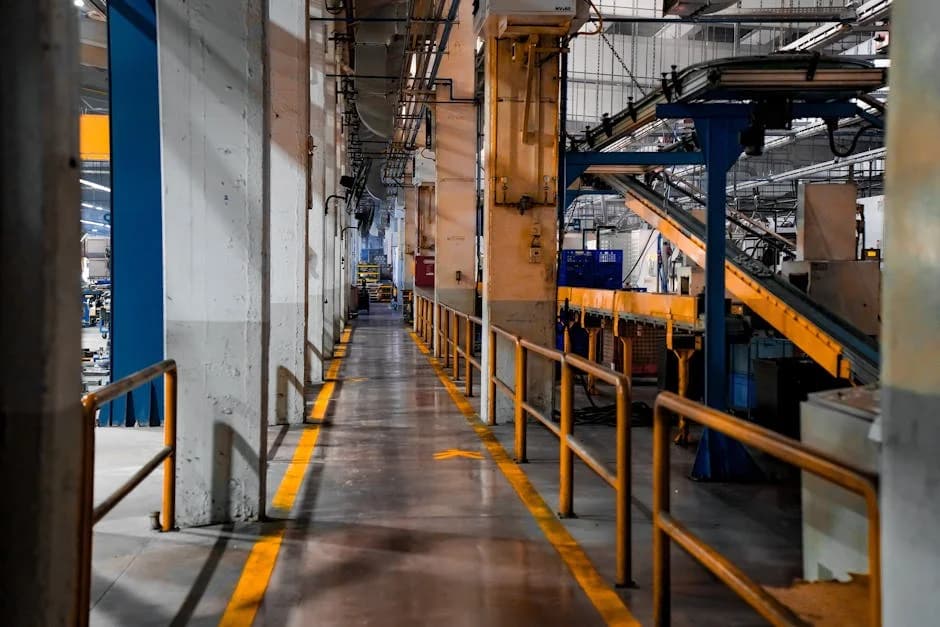
Industrial flooring in warehouses, manufacturing plants, and distribution centers is engineered for durability — but durability is not self-maintaining. The same heavy use that justifies the investment in industrial-grade flooring creates maintenance requirements that standard commercial cleaning approaches cannot adequately address.
Concrete, epoxy-coated concrete, and specialty industrial floors face daily assault from forklift traffic, pallet drops, chemical spills, and constant foot traffic. Without systematic maintenance, surface coatings degrade, bare concrete becomes porous and difficult to clean, and slip hazards develop from accumulated contamination in surface irregularities.
The cost of replacing an industrial floor coating on a large facility runs into the hundreds of thousands of dollars. The cost of a maintenance program that extends that coating's life by 5–10 years is a fraction of that figure. The math consistently favors maintenance investment.
Mega Service Solutions provides professional commercial floor care services for industrial facilities throughout Tampa Bay, using equipment and techniques calibrated for industrial environments.
Tips for Long-Lasting Industrial Floors
Regular Cleaning
The most fundamental floor maintenance practice is also the most important: consistent, frequent cleaning to prevent the accumulation of abrasive materials and contamination that damage floor surfaces over time.
Abrasive grit — sand, metal shavings, aggregate from outdoor traffic — acts as sandpaper under forklift tires and equipment wheels. Each pass over contaminated floors accelerates wear. Daily sweeping or auto-scrubbing removes this grit before it causes surface damage.
Industrial cleaning frequency by area:
- High-traffic corridors and shipping areas: Daily sweeping, two to three times per week scrubbing
- Machine areas: Daily spot cleaning of oil and fluid contamination, weekly scrubbing
- Storage aisles with moderate traffic: Weekly sweeping and bi-weekly scrubbing
- Maintenance areas: Immediate spill response, weekly scrubbing
The key principle: match cleaning frequency to contamination generation rate. Areas that generate high contamination require proportionally more frequent cleaning.
Proper Equipment Selection
Industrial floor cleaning equipment must be matched to the flooring type and the contamination being addressed:
Auto-scrubbers: The primary tool for industrial floor maintenance. Selection criteria include:
- Size/coverage: Ride-on units for large spaces; walk-behind for smaller or more congested areas
- Brush/pad type: Harder brushes for rough concrete; softer pads for epoxy and coated surfaces
- Solution and recovery tank capacity: Larger tanks reduce refill frequency in large facilities
- Battery runtime: Battery-operated units must have sufficient runtime to complete floor cleaning routes without mid-shift recharge
Floor sweepers: For facilities with significant debris generation, mechanical sweepers efficiently collect debris before scrubbing. Sweeping debris onto a clean floor being scrubbed defeats the purpose.
Industrial pressure washers: For periodic deep cleaning of areas with petroleum contamination, pressure washers with appropriate degreasers address contamination that scrubbing alone cannot remove.
Avoiding Harsh Chemicals
Chemical compatibility is critical in industrial floor maintenance. Using the wrong product can:
- Degrade epoxy coatings — alkaline cleaners above certain pH can attack epoxy binders
- Leave residue that creates slip hazards — certain cleaning agents leave films that reduce traction
- Accelerate concrete carbonation — inappropriate acids can damage concrete surfaces
- Contaminate floor drains — certain solvents and chemicals require specific disposal approaches
Neutral pH cleaners (pH 7.0–8.0) are appropriate for most industrial floor surfaces including epoxy, polyurethane coatings, and general concrete. They clean effectively without attacking coating systems or leaving hazardous residue.
Degreasers for petroleum contamination should be selected with attention to compatibility with the floor coating system. Many solvent-based degreasers attack epoxy — alkaline (water-based) degreasers are generally safer for coated floors.
Floor waxes and finishes used in industrial environments must be compatible with the base coating system and appropriate for the traffic load. Using commercial floor wax on heavy industrial traffic areas produces a finish that degrades rapidly and looks worse than no finish.
Prompt Repairs
Surface damage — cracks, coating failures, chips, and delamination — accelerates when left unaddressed. A small crack in concrete or epoxy coating becomes a larger problem when:
- Forklifts pass over the edge repeatedly, chipping the coating
- Water and cleaning solution penetrate the crack and undermine the surrounding coating from below
- Grit accumulates in the crack and acts as an abrasive on surrounding surfaces
A floor maintenance program that includes regular condition inspections identifies developing damage and schedules repair before small issues become large ones. Crack filling, patch application, and coating spot repairs are dramatically less expensive than section resurfacing or full floor re-coating.
Protective Measures at Entry Points
Entry points — doors, dock doors, and personnel entrances — are the primary pathway for exterior contamination entering the facility. Grit and debris tracked in from exterior surfaces is one of the leading causes of floor wear in high-traffic areas.
Entrance mat systems at all facility access points trap and retain debris before it reaches the floor:
- Scraper mats immediately at the entrance remove gross contamination from footwear and equipment tires
- Absorber mats inside the entrance capture residual moisture and fine particles
- Extended mat runs (10–15 feet recommended) provide sufficient contact distance to remove contamination from foot traffic
Entrance mats must be cleaned regularly — a dirty mat redistributes rather than captures contamination. Schedule mat cleaning in coordination with floor cleaning to maintain consistent effectiveness.
Best Cleaning Products for Industrial Floors
Neutral pH Cleaners
For routine industrial floor scrubbing, neutral pH cleaners are the professional choice:
- Effective against the typical contamination found on industrial floors (general dirt, tire marks, light petroleum residue)
- Safe for epoxy, polyurethane, and other coating systems
- Leave no harmful residue and require no special disposal
- Available in concentrates that reduce packaging waste and per-use cost
Microfiber Mop Systems
For spot cleaning and areas not serviced by auto-scrubbers, flat microfiber mop systems outperform traditional string mops:
- Capture and retain rather than spread contamination
- Reduce water usage compared to conventional mop-and-bucket
- Maintain separate pads for each use, preventing cross-contamination between areas
- More hygienic overall — pads are laundered rather than recycled contaminated water
Specialized Floor Cleaners by Surface Type
Concrete floors: Concrete is alkaline and requires cleaners that are compatible with the pH of the substrate. For bare or sealed concrete, neutral-to-mildly-alkaline cleaners are appropriate. Acidic cleaners that etch the concrete surface should be avoided except as specific surface preparation treatments.
Epoxy-coated floors: Neutral pH cleaners protect the epoxy binder. Avoid solvents, strong alkaline cleaners, and anything that visibly dulls or streaks the coating. Confirm compatibility of any new cleaning product by testing in an inconspicuous area before facility-wide use.
VCT and specialty tile: VCT in industrial environments is less common but present in some office-adjacent manufacturing areas. These floors require appropriate stripping and finish programs — industrial floor finishes formulated for VCT and applied by trained technicians.
Quarry tile: Common in food production and processing areas, quarry tile is durable but requires grout maintenance. Grout lines in industrial environments accumulate contamination and can become bacterial harbors if not properly maintained with periodic professional treatment.
Environmentally Responsible Options
Sustainable floor cleaning choices reduce environmental impact without sacrificing results:
- Concentrated formulas — reduce packaging volume and transportation footprint
- Biodegradable surfactants — break down after use rather than persisting in wastewater systems
- Waterless or low-water technologies — reduce total water consumption in facilities with sustainability targets
Mega Service Solutions offers eco-friendly cleaning product options for industrial accounts with environmental commitment requirements.
Why Professional Floor Care Delivers Better Results
The combination of proper product selection, appropriate equipment, and trained technique is what separates professional industrial floor care from in-house maintenance programs:
- Equipment investment: Auto-scrubbers, sweepers, and specialized tools that in-house programs rarely have access to
- Technical knowledge: Understanding of coating system compatibility, appropriate chemical selection, and the cleaning processes that protect rather than damage floors
- Consistent execution: Professional cleaning programs deliver consistent results regardless of individual staff turnover
- Documentation: Maintenance records that support warranty claims, compliance, and facility condition management
Schedule a consultation with Mega Service Solutions to discuss your industrial floor maintenance program. We will assess your flooring system, contamination profile, and usage patterns — then build a customized maintenance program that extends your floor's life and keeps your facility safe.
Frequently Asked Questions
What does professional commercial floor care include?
Professional commercial floor care from Mega Service Solutions includes stripping and waxing VCT floors, burnishing, top scrub recoating, carpet cleaning, grout cleaning, and preventive maintenance programs. Services are tailored to your floor type and traffic levels. We use commercial-grade equipment and products to restore and protect flooring surfaces.
How often should commercial floors be professionally serviced?
Most commercial facilities benefit from monthly or quarterly deep floor care, with daily or weekly maintenance cleaning in between. High-traffic areas like lobbies, corridors, and restrooms typically require more frequent service. Mega Service Solutions will assess your facility and recommend a schedule that protects your flooring investment.
Does Mega Service Solutions serve businesses throughout Florida?
Yes. Mega Service Solutions is headquartered in Tampa, FL and serves businesses statewide — including Tampa, Orlando, Miami, Jacksonville, Fort Lauderdale, Clearwater, St. Petersburg, Sarasota, Fort Myers, Naples, Tallahassee, Boca Raton, and Hollywood. We also serve clients nationwide. Call (813) 501-5001 or visit megasvs.com/get-a-quote to request a free assessment.
How do I get a quote from Mega Service Solutions?
Getting a quote is simple. Call us at (813) 501-5001 (available 24/7) or submit a request at megasvs.com/get-a-quote. We'll schedule a free, no-obligation facility walkthrough, assess your needs, and provide a custom proposal within 24–48 hours. There's no commitment required.
Written by
Mega Service Solutions
Tampa’s SBE & MBE certified commercial cleaning experts. Serving 500+ businesses across Florida. Learn more about our team and commitment to quality.
About our team →