Property owners often use "pressure washing" as a catch-all term for exterior surface cleaning. But professional exterior cleaning involves two distinct methods — pressure washing and soft washing — and choosing the wrong one for a given surface can cause significant damage, void roofing or siding warranties, and produce inferior results.
Understanding the difference between these methods, and when each is appropriate, helps property managers make informed decisions about commercial exterior maintenance.
What Is Pressure Washing?
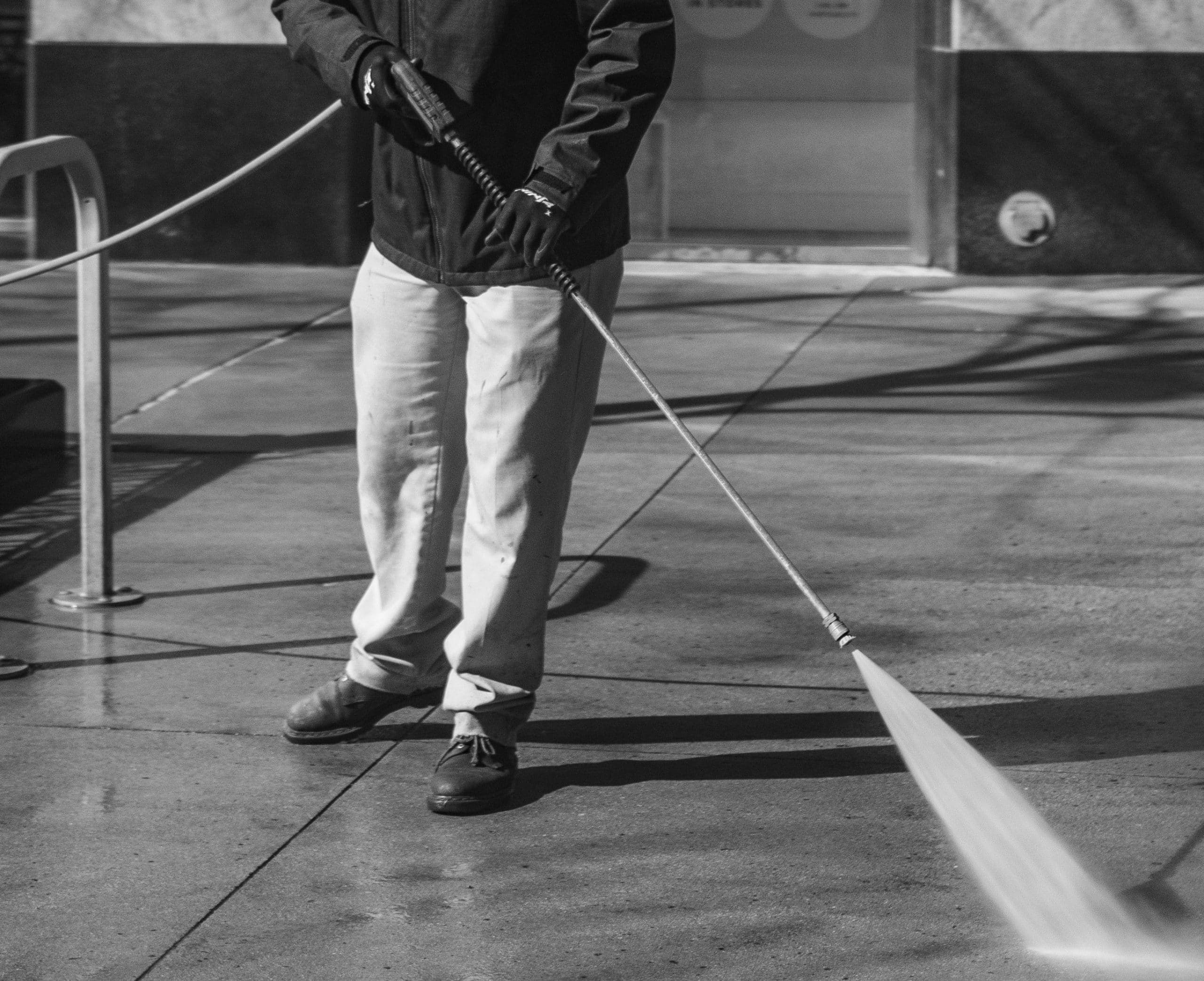
Pressure washing uses high-pressure water — typically 1,500–4,000 PSI (pounds per square inch) — to physically blast contaminants off surfaces. The cleaning action is primarily mechanical: the force of the water dislodges soil, algae, gum, paint, and other materials.
Pressure washing is effective and fast for surfaces that can withstand the force. It does not rely heavily on chemical agents — the pressure is the primary cleaning mechanism.
What Is Soft Washing?
Soft washing uses low-pressure water — typically 100–500 PSI, roughly equivalent to a garden hose — combined with specific cleaning solutions (typically sodium hypochlorite-based biocides and surfactants) to clean and treat surfaces. The cleaning action is primarily chemical: the solution kills biological growth (algae, mold, mildew, lichen, bacteria) and breaks down surface soil, then is rinsed away at low pressure.
Soft washing addresses the underlying cause of biological discoloration, not just the surface appearance. Because the biocide treatment actually kills the organisms rather than just removing them, surfaces treated with soft washing stay clean longer than pressure-washed surfaces.
Why the Distinction Matters for Commercial Properties
Commercial properties include a wide range of surface types — roofing, siding, concrete, pavers, brick, EIFS (synthetic stucco), painted surfaces, and more. Each has specific pressure tolerances, and exceeding them causes damage.
Common damage caused by using high pressure on wrong surfaces:
- Granule loss on asphalt shingles, shortening roof life
- Etching or pitting in soft stone (limestone, sandstone)
- Stripping of mortar between bricks
- Driving water under siding panels or EIFS, causing moisture intrusion
- Splintering or stripping wood surfaces
- Voiding manufacturer warranties on roofing systems
A commercial pressure washing company that uses the same high-pressure approach on every surface is using the wrong tool for many applications — and the resulting damage often costs far more than the cleaning service.
When to Use Pressure Washing
High-pressure washing is the right choice for hard, dense surfaces that can withstand significant force and that have contaminants not easily addressed by chemistry alone:
Concrete flatwork: Driveways, parking lots, sidewalks, loading docks, and concrete pads handle high pressure without damage and often have heavy staining (oil, tire marks, heavy soiling) that benefits from mechanical force. Commercial concrete cleaning commonly uses 2,500–4,000 PSI.
Concrete block and unpainted brick: Dense masonry surfaces can generally withstand pressure washing, though care must be taken with aged or deteriorated mortar.
Bare metal surfaces: Steel decks, metal equipment, and metal railing systems where rust and grime must be removed for painting or coating.
Graffiti removal: Painted surfaces targeted for graffiti removal sometimes require high pressure in combination with graffiti removal chemistry.
When to Use Soft Washing
Soft washing is the appropriate method for surfaces where biological growth is the primary problem and where high pressure would cause damage:
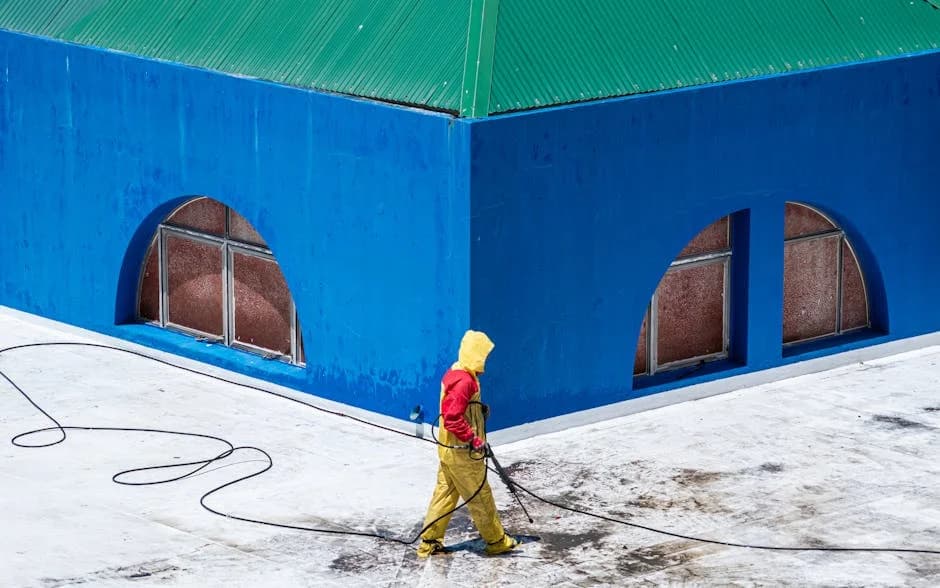
Roofing systems: Any roofing material — asphalt shingles, tile, metal, single-ply membrane — should only be cleaned with soft washing. High-pressure washing on roofs causes direct damage and is specifically excluded from most roofing manufacturer warranties.
Vinyl, composite, and fiber cement siding: Building siding is typically too vulnerable to high pressure. Soft washing removes biological staining without risk of cracking, warping, or driving water behind panels.
EIFS/synthetic stucco: Highly sensitive to pressure. Soft washing is the only appropriate exterior cleaning method for EIFS-clad buildings.
Painted surfaces: High pressure strips paint. Soft washing cleans painted surfaces without damage.
Wood siding, fences, and decks: Wood that will be repainted or refinished may tolerate moderate pressure, but biological growth is better addressed chemically. High pressure on wood opens the grain, raising the fiber and causing surface damage.
Gutters: Exterior gutter cleaning is typically done with soft washing to remove biological staining and oxidation from aluminum gutters without damage.
The Soft Wash Chemistry
Effective soft washing relies on appropriate chemistry matched to the biological organisms present:
Sodium hypochlorite (bleach-based biocide): The industry-standard biocide for biological growth on exterior surfaces. Effective against algae, mold, mildew, lichen, and bacteria. Concentration must be calibrated to the surface type and contamination level — too weak and it will not kill the organisms; too strong and it can damage plants, stain surfaces, or cause corrosion.
Surfactants: Added to the biocide solution to improve adhesion to vertical surfaces and enhance penetration into biological growth.
Neutralizers: Applied to surfaces after treatment (and to surrounding landscaping) to neutralize the chemical and prevent plant damage.
The formulation of soft wash solutions is part of the expertise a professional brings. Off-the-shelf consumer products are not equivalent to properly formulated professional-grade soft wash solutions.
What Stays Clean Longer After Soft Washing?
One of the most significant practical advantages of soft washing is treatment longevity. When algae and mold growth is pressure washed, the visible growth is removed — but spores remain in the surface and in surrounding areas. Regrowth typically begins within 3–6 months.
When soft washing properly treats a surface with biocide chemistry, the organisms are killed — including spores at the surface. Properly treated surfaces typically remain clean for 1–3 years, depending on the surface type, local climate, and biological pressure in the environment.
In Florida's climate — high humidity, frequent moisture, intense sun — biological growth returns faster than in drier climates. Even so, soft-washed surfaces consistently maintain their appearance significantly longer than pressure-washed surfaces.
The Right Approach for Your Commercial Property
Most commercial properties benefit from a combination of both methods:
- Hard surfaces (parking areas, sidewalks, loading docks, concrete): pressure washing
- Building surfaces (siding, roofing, stucco, painted areas): soft washing
- Mixed surfaces (brick, block): professional assessment of condition and appropriate method selection
A professional exterior cleaning company should assess your property's surface types before beginning work and use the appropriate method for each surface — not default to one approach for everything.
Mega Service Solutions provides commercial pressure washing and soft washing services for properties throughout Tampa Bay and Florida. Our crews assess each surface type and apply the correct method to clean effectively without causing damage. Request a quote for your commercial exterior cleaning needs.
Frequently Asked Questions
What surfaces can be pressure washed on a commercial property?
Commercial pressure washing covers parking lots and garages, building exteriors, loading docks, sidewalks, dumpster pads, drive-throughs, concrete, brick, and pavers. Mega Service Solutions uses hot and cold water systems sized for commercial-scale jobs and can treat oil stains, gum, graffiti, and environmental buildup.
How often should commercial facilities schedule pressure washing?
Most commercial properties benefit from pressure washing 2–4 times per year. High-grease areas like drive-throughs and loading docks may need monthly service. Florida's climate — humidity, algae growth, and summer storms — accelerates buildup on building exteriors and parking surfaces, making regular pressure washing especially valuable.
Does Mega Service Solutions serve businesses throughout Florida?
Yes. Mega Service Solutions is headquartered in Tampa, FL and serves businesses statewide — including Tampa, Orlando, Miami, Jacksonville, Fort Lauderdale, Clearwater, St. Petersburg, Sarasota, Fort Myers, Naples, Tallahassee, Boca Raton, and Hollywood. We also serve clients nationwide. Call (813) 501-5001 or visit megasvs.com/get-a-quote to request a free assessment.
How do I get a quote from Mega Service Solutions?
Getting a quote is simple. Call us at (813) 501-5001 (available 24/7) or submit a request at megasvs.com/get-a-quote. We'll schedule a free, no-obligation facility walkthrough, assess your needs, and provide a custom proposal within 24–48 hours. There's no commitment required.
Written by
Mega Service Solutions
Tampa’s SBE & MBE certified commercial cleaning experts. Serving 500+ businesses across Florida. Learn more about our team and commitment to quality.
About our team →